
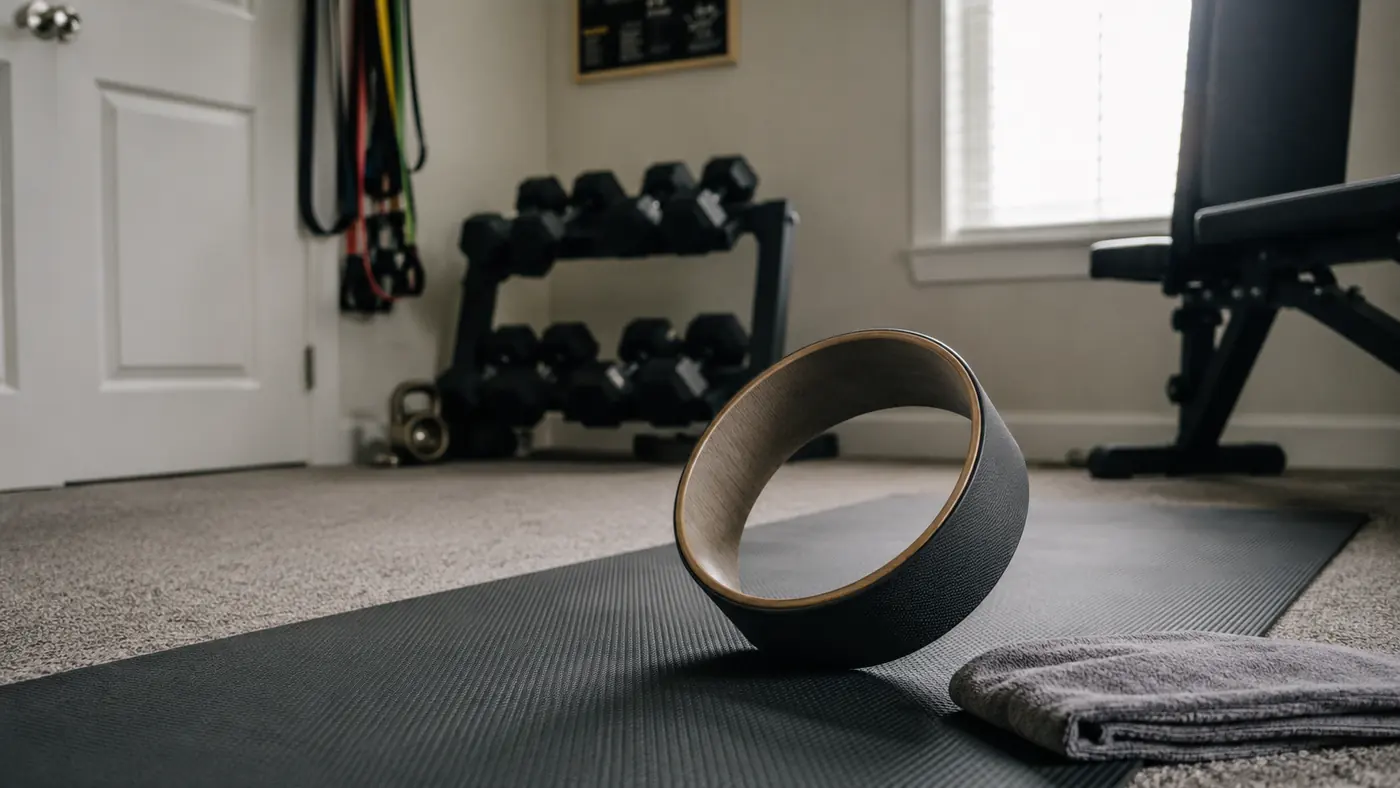
The first time I put my mid-back on Pete's Choice Yoga Wheel, it rolled sideways out from under me before I'd even settled my weight, and I caught myself on one forearm on the hardwood floor outside my mat. Nobody mentions that part in the reviews that talked me into buying it. I'm a licensed sports-massage therapist, I explain how bodies move for a living, and a piece of foam and plastic still caught me off guard on the very first try. This isn't the story of a wheel that fixed my back overnight. It's the story of what actually goes wrong before it starts helping, who it genuinely is not built for, and the specific things I wish someone had told me before I unboxed it.
I already wrote the long-term version of this review, tracking what changed in my thoracic mobility over three straight months if you want that day-by-day account. This one is different on purpose. This is the version with the bruised forearm in it, the client I told not to buy one, and the week I nearly put the thing in a donation box before it ever earned its spot on my shelf.
The Quick Verdict
A genuinely useful thoracic tool once you get past an awkward, occasionally uncomfortable first two weeks, but it demands more care with setup and more honesty about who it isn't for than the glowing reviews let on.
Amazon Check Today's Price →The Five-Star Reviews Skip The Wobble. Here's What Actually Happens Week One.
Pete's Choice Yoga Wheel earned a permanent spot on my recovery shelf, but only after I stopped rushing the setup. Check today's price and current rating on Amazon before you decide.
Amazon Check Today's Price on Amazon →How I Actually Learned to Use It
I did not read the beginner guide that shipped with it. I've spent years telling clients to ease into new equipment, and then I did the exact opposite with my own body, sitting down on my mat, placing the wheel under my mid-back, and trying to extend all the way over the top on day one like I'd seen in a demo video. My balance point was wrong, my hips were too far forward over the wheel, and the whole thing shot backward while I windmilled an arm trying to catch myself. Nothing was hurt except my confidence, but it set the tone for a rockier first two weeks than I expected.
The actual learning curve is smaller than my first session made it look, once you know where to start. Feet flat, hips stacked directly over the wheel before you lean back even an inch, hands on the floor behind you for the first several sessions instead of reaching overhead. I eventually read the guide that came in the box, and the modification I should have started with, using a folded towel under the wheel to shorten the range and control the descent with the included strap, would have saved me that first fall entirely. If you want the full breakdown of proper positioning, I laid it out step by step in a separate walkthrough on relieving thoracic tightness with the wheel.
There's also a detail about torso length that took me longer to work out than it should have. At the wheel's full diameter, my arms could reach the floor for support well before my hips ran out of forward tilt, which meant early on I was catching myself far sooner than necessary and never actually settling into a useful extension. Shortening the range with the folded towel changed that completely, letting me find the same stretch with far less distance to fall if my balance slipped. It's a small adjustment the packaging mentions only briefly, and I'd have found it faster if I'd been looking for it instead of assuming the full-height version was the only way to start.
What surprised me most was how much core control the wheel demands that has nothing to do with flexibility. You can have plenty of range in your thoracic spine and still feel unstable on this thing if you haven't built the small stabilizing tension through your midsection that keeps the wheel from skating out from under you. That's a different skill than stretching, and it's the one piece nobody mentioned to me before I bought it.
The Balance Problem Nobody Mentions
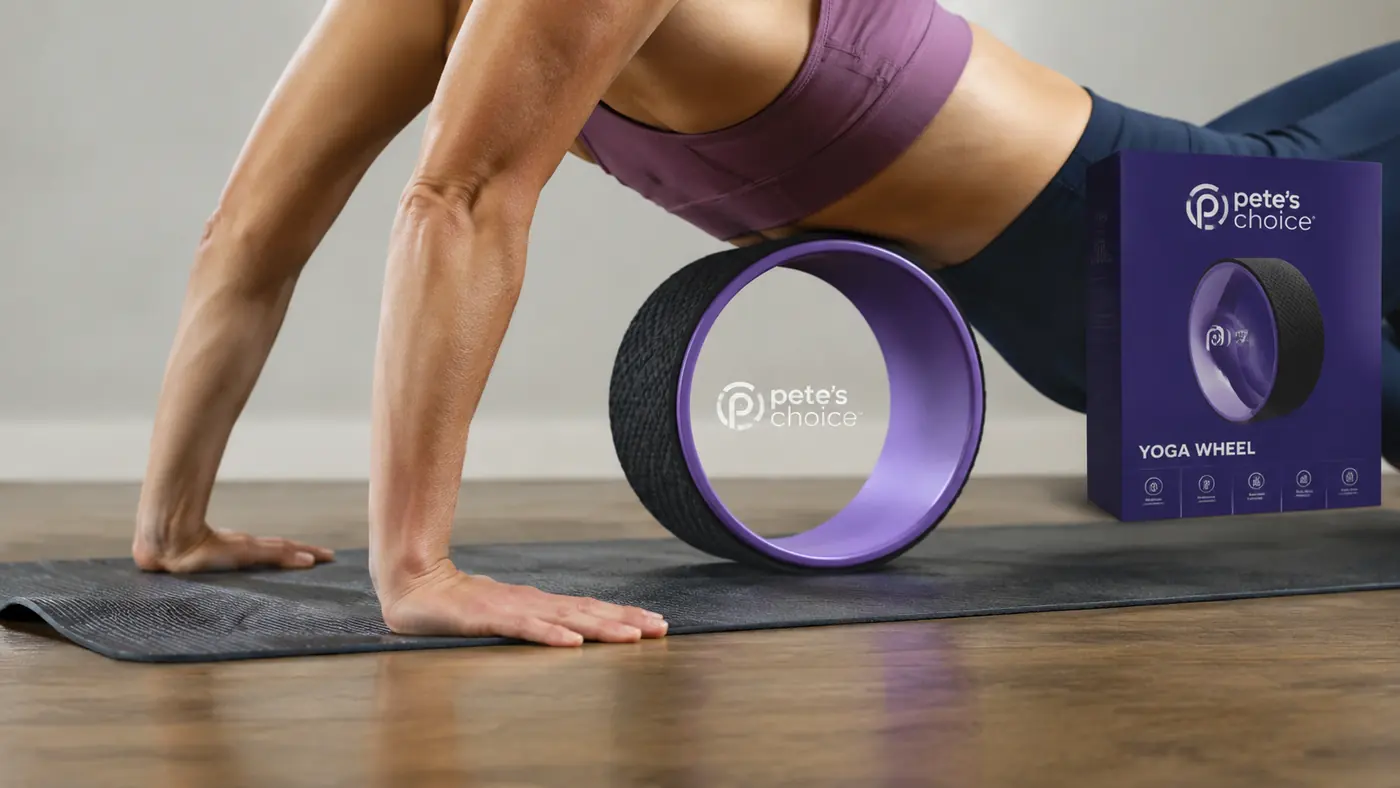
This is the section I most wish existed before I clicked buy. A yoga wheel is not a static prop like a foam roller. It rolls in every direction your weight shifts, and on a hard or slick floor it rolls fast. My spare bedroom has a rubber mat over most of the floor, but the wheel drifted onto the bare hardwood at the edge twice in my first month, and both times it slid rather than gripped. I've since kept it strictly centered on the mat, but that's a habit I had to build, not something the product page warned me about.
A client of mine, a runner in his fifties with decent general fitness, borrowed a friend's wheel after hearing me talk about it and ended up with a sore tailbone after his teenage son tried it without any setup at all, rolling backward too fast and landing hard on the floor when the wheel shot forward out from underneath him. Nobody was hurt badly, but it's exactly the kind of incident that never shows up in a five-star review, because the people writing five-star reviews are usually the ones who got the setup right by luck or by actually reading the instructions.
If you have any history of dizziness, vertigo, or balance impairment, this matters more than a casual reviewer would tell you. The overhead extension position briefly puts your head below your heart and shifts your visual field fast if you lose control of the descent. I would not put a client with active vertigo on this wheel without a wall nearby and close supervision, and I wouldn't recommend it to anyone reading this who knows that description applies to them.
The First Two Weeks Were Genuinely Uncomfortable
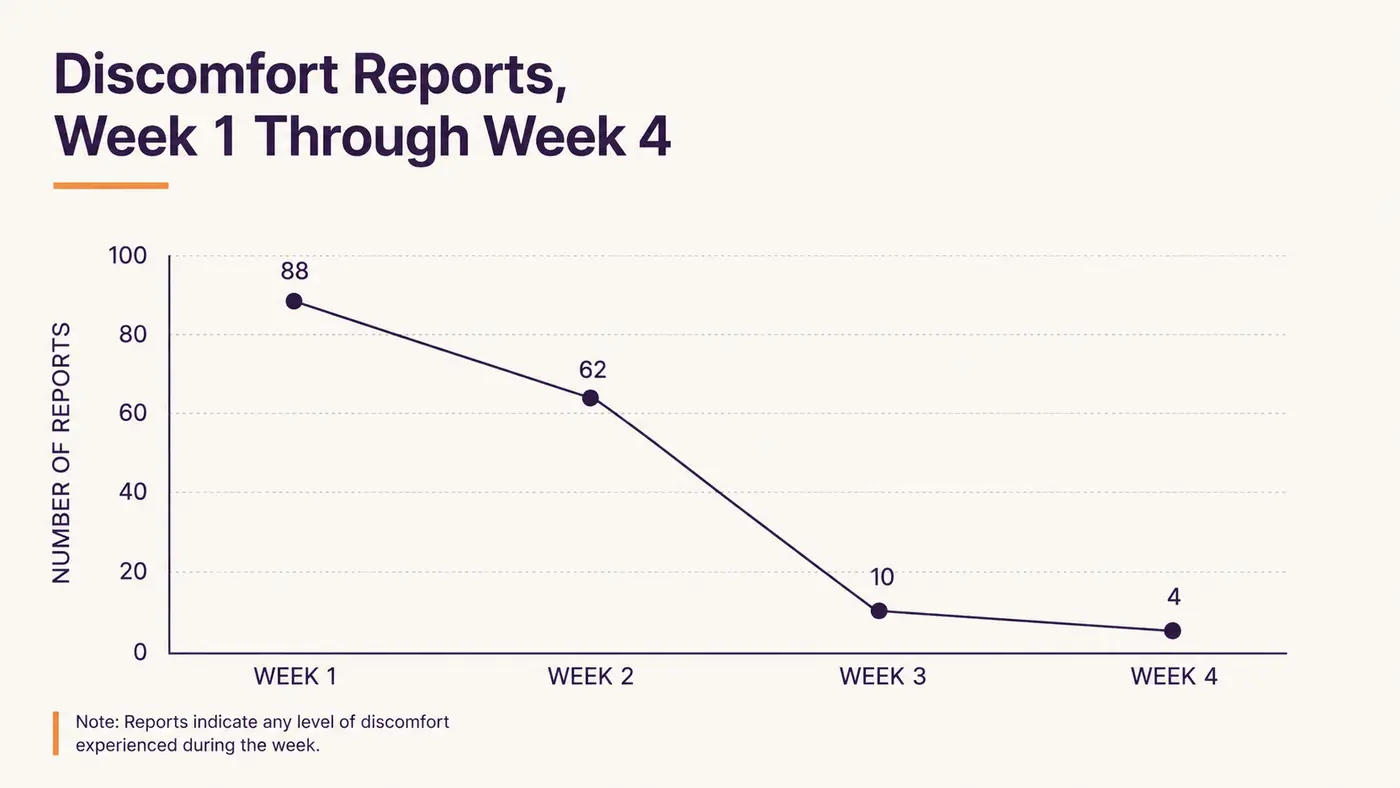
I want to be specific here instead of vague, because vague is how people end up disappointed. For about the first ten days, my sitting bones were sore from the pressure of holding position, my forearms ached from bracing on the floor longer than they were used to, and I picked up a small bruise on one elbow from a session where I let my arm slide out from under me instead of catching my weight cleanly. None of that is dangerous. All of it is the kind of unglamorous discomfort that a lot of reviews conveniently skip over in favor of talking about how great week eight feels.
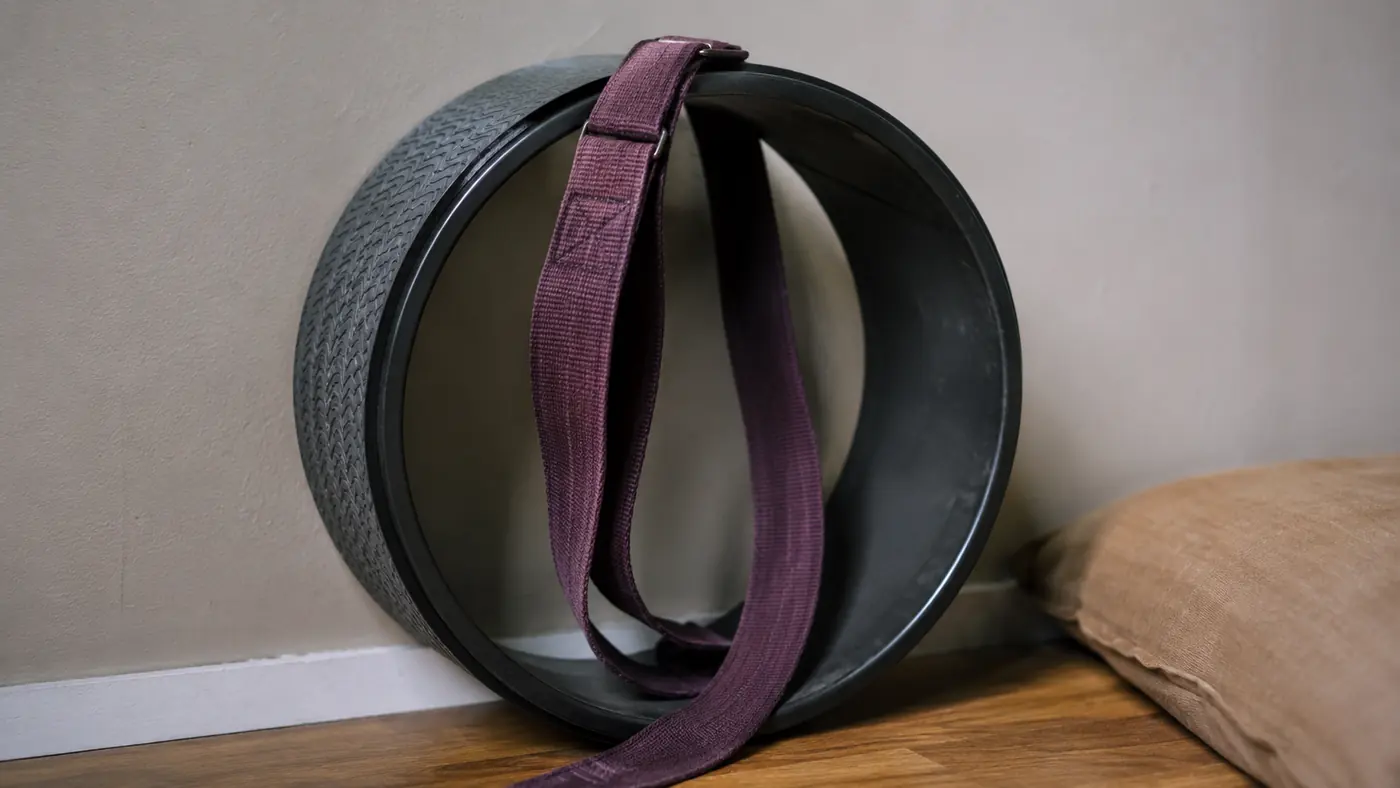
The strap that ships with it chafed against the back of my neck once, during a session where I looped it wrong trying to limit my range of extension. That was user error, not a manufacturing flaw, but it's exactly the kind of small, avoidable mistake that the included instructions could have prevented if I'd bothered to read them before I started improvising.
By around the two-week mark, the soreness dropped off sharply, mostly because my body had adapted to holding a position it wasn't used to and because I'd stopped making the specific mistakes that caused the bruising and chafing in the first place. That's a real, honest pattern, not a marketing timeline. If your first week feels rougher than you expected, that appears to be closer to normal than the smooth, effortless first impressions some reviews describe.
Where It Can Make Things Worse, Not Better
This is the part I feel most obligated to say plainly, because I see the opposite mistake happen in the treatment room. Not every stiff-feeling back needs more extension. Some clients I work with already sit in an excessive arch through their lower back, and piling more passive extension on top of that pattern, thoracic or otherwise, can leave them feeling worse, not looser, by the end of a session. If your low back already feels overly arched or hyperextended rather than stuck and rounded forward, this wheel is not automatically your friend, and layering extension work onto an already-extended spine is a real way to aggravate rather than ease.
I also want to flag hypermobility specifically, because it comes up more than people expect. If you already move more than a typical joint should, adding a tool designed to increase range of motion can push you past a range your surrounding muscles can actually control, which shows up later as instability rather than relief. I don't diagnose hypermobility over the internet and I'm not diagnosing you now, but if a physical therapist or doctor has ever used that word about your joints, that's a conversation to have with them before you add a mobility tool like this one, not after.
And I'll say the obvious thing plainly since the marketing copy never will: anyone with a diagnosed disc herniation, a recent spinal injury, or acute unexplained back pain should get real hands-on clearance before rolling their spine over anything, wheel included. A tool built for general thoracic mobility is not a substitute for an actual evaluation when something is acutely wrong rather than chronically tight.
The Build Quality Complaints I Actually Agree With
I went in expecting to defend the build quality against internet complaints, and instead I found myself agreeing with a few of them. The strap is thinner than I'd like for how much tension gets put through it during a controlled overhead descent, and I could see it fraying eventually with heavy daily use rather than the three-times-a-week pace I actually kept. The surface texture, which grips well early on, picked up a faint sheen after enough sweaty morning sessions, and it took a few weeks before I built wiping it down into my routine instead of skipping it. The little printed beginner guide itself is thinner than I expected too, more of a quick-reference card than a real manual, which is part of why I skipped it in the first place.
None of this struck me as a defect so much as an honest limitation of a mid-range foam and plastic tool. It isn't a piece of gym equipment engineered for a commercial facility, it's a home recovery tool, and it holds up like one. If you're the kind of person who wants something bombproof for years of daily abuse, temper your expectations accordingly rather than being surprised later.
What It Didn't Touch, and I Should Have Said So Sooner
My left plantar fascia has been cranky since a half marathon a couple years back, and this wheel did nothing for it, which makes complete sense given the two aren't mechanically connected. My neck and upper traps, sore from leaning over a massage table most days, got a small secondary benefit from freer thoracic mobility, since a stiff mid-back tends to drag the neck into compensating too, but it was a minor effect, not anything close to a fix. I want to be upfront that a thoracic tool is a specific, narrow instrument. It is not a general answer to whatever hurts, and treating it like one is how people end up writing disappointed reviews about a product that was never built for their actual problem.
What I Liked
- Genuinely eased the thoracic stiffness that was making my lower back overcompensate
- Compact enough to store on a shelf in a small spare bedroom
- Included strap and towel modification work well once you actually use them
- Cheap enough to try against a real training block without much risk
- Held up structurally through months of near-daily use once I stopped abusing it
Where It Falls Short
- The balance challenge in the first two weeks is real and genuinely under-discussed
- Strap material feels thinner than I'd like for the tension it holds
- Not appropriate if you already have an excessively arched lower back or diagnosed hypermobility
- Requires a nearby wall or careful setup if you have any balance or vertigo concerns
- Did nothing at all for plantar fascia or other joint-specific pain, as expected
The wheel never lied to me about what it could do. My ego did, every time I skipped the towel and reached straight for the floor.
Who This Is For
This suits someone whose stiffness genuinely lives in the mid-back, whose posture involves a lot of forward lean, whether that's a desk, a steering wheel, or in my case a massage table, and who is willing to spend the first couple weeks moving slowly and reading the instructions I skipped. It also suits someone who wants a small, specific tool rather than a do-everything device, and who has no diagnosed disc, balance, or hypermobility concerns standing in the way.
It also suits someone who trains consistently enough to notice a slow trend instead of expecting a single session to change anything. A session or two a week gets lost in the noise of everything else your body deals with in a given week. The people I've seen get real value out of this wheel are the ones who treat it like a habit, not a fix, the same way I eventually did once I stopped nursing a bruised elbow and started actually using it on a fixed schedule.
Who Should Skip It
Skip this if you already run hyperextended through your low back rather than stuck and rounded, if a provider has ever used the word hypermobile about your joints, or if you deal with dizziness or balance problems that make an inverted-feeling overhead position risky without supervision. Skip it too if you know yourself well enough to know you'll ignore the setup instructions the way I initially did, because the version of this tool that goes wrong is almost always the version someone rushed. And if your actual pain lives in your feet, hips, or a joint rather than your mid-back, this narrow little tool was never going to be the answer, no matter how good the rest of the reviews sound.
Once I Slowed Down And Read The Instructions, It Actually Earned Its Spot
If your mid-back is the real reason your low back keeps locking up, and you're willing to start slow, Pete's Choice Yoga Wheel is worth testing against your own training block. Check today's price and current rating on Amazon.
Amazon Check Today's Price on Amazon →