
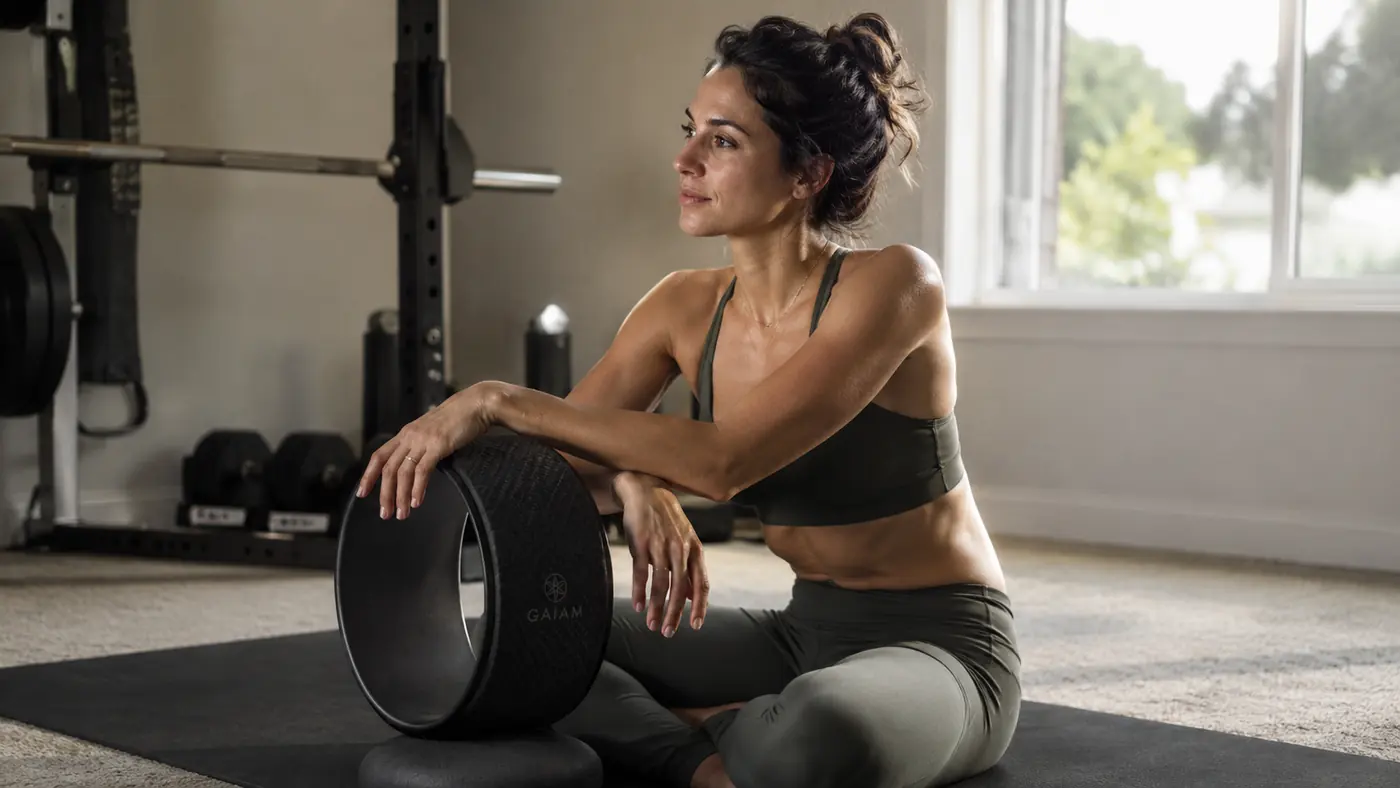
Pete's Choice Yoga Wheel showed up on my porch during the first week of a training block, and it sat in the box for four days because I didn't trust it. I'm a licensed sports-massage therapist, and I've watched a lot of tools promise thoracic mobility and deliver a bruised spine instead. But my upper back was locking up hard after back to back treatment days, so I finally unboxed it and started rolling on it every morning before my lifting sessions, right there in my spare bedroom. Three months later, here's what actually changed and what didn't, without any rounding up.
This isn't a lab test. It's my training log. I'm a former collegiate 800m runner, mid-pack, no records, no championships, who now spends four days a week leaning over a massage table and five days a week trying to keep my own body from falling apart from that same posture. If you want the mechanical breakdown of why a wheel works on thoracic segments, I get into that further down. If you just want to know whether it's worth the counter space, keep reading, because I'm going to tell you exactly where it earned its spot and where it didn't.
The Quick Verdict
A genuinely useful thoracic mobility tool that earned a permanent spot on my recovery shelf, though it won't touch true low-back or joint pain on its own.
Amazon Check Today's Price →Still Stiff After Every Long Drive? This Is What Finally Got Between My Shoulder Blades.
Pete's Choice Yoga Wheel is the tool I reach for before I even touch a barbell now. Check today's price on Amazon and see the current rating for yourself.
Amazon Check Today's Price on Amazon →How I've Used It
My routine is boring, which is exactly why it worked. Three mornings a week, before I lift, I roll on the wheel in my spare bedroom for about five to seven minutes. I've got a rubber mat back there, a half rack, and a shelf that's slowly filled up with recovery tools over the years. The wheel lives on that shelf now, right next to the mat, because if it isn't within arm's reach, I don't use it. I learned that lesson years ago with other tools that ended up in a closet instead of in rotation.
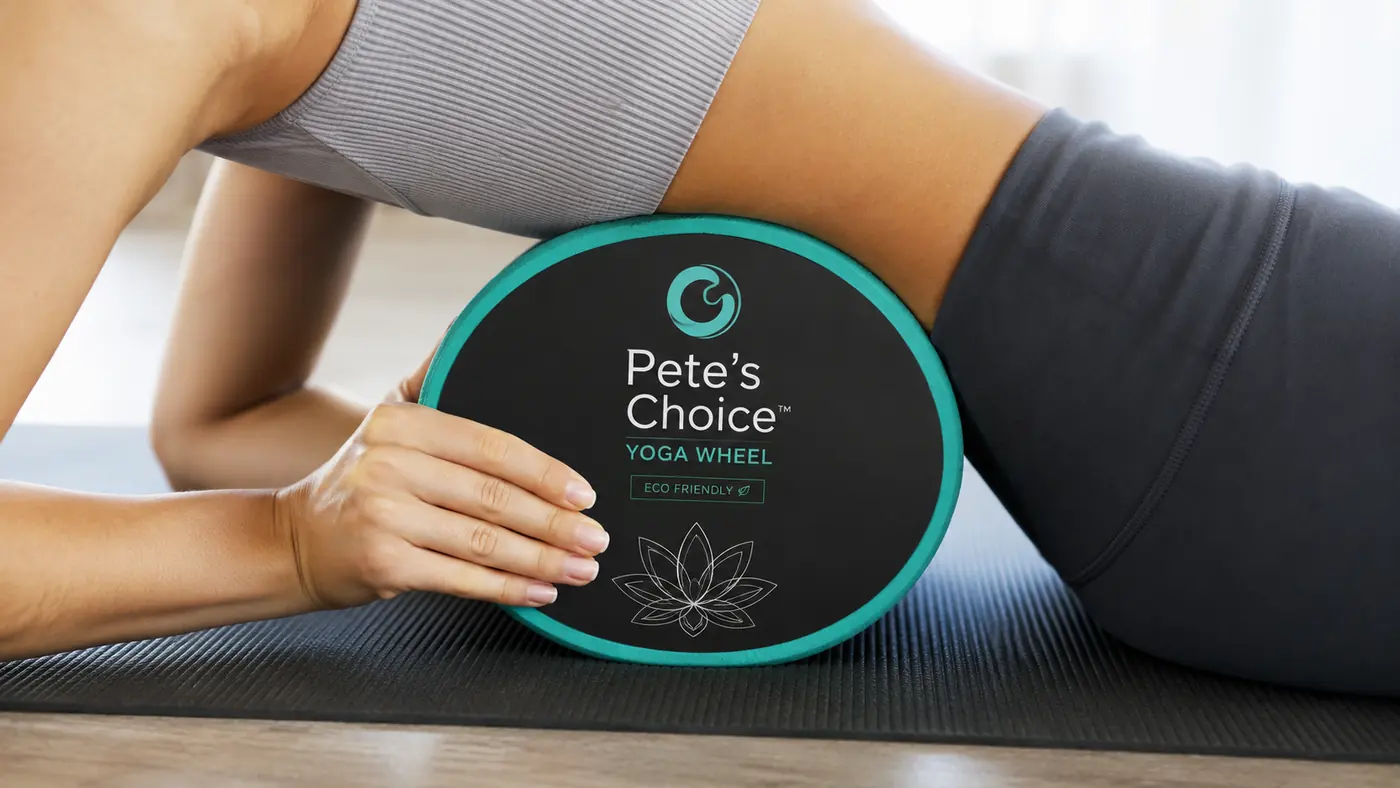
The basic move is simple. Seated on the floor, wheel behind my thoracic spine, hands either flat on the floor for support or reaching overhead once I trusted the position. I roll slowly from about T4 down to T10, pausing wherever a segment feels locked instead of rolling straight through it. Early on I also used it for a longer, more passive extension over the top, letting my upper back drape over the wheel and just breathing there for thirty to sixty seconds. That passive hold ended up mattering more than the active rolling, at least for me.
I didn't use it on my lower back directly, and I don't recommend anyone else does either. My chronic complaint is a lower back that locks up after long drives and long treatment days, and that's a lumbar issue, not a thoracic one. The wheel's real job, at least in my case, was upstream: opening the thoracic spine so my lumbar spine stopped compensating for a stiff mid-back.
What Three Months Actually Changed
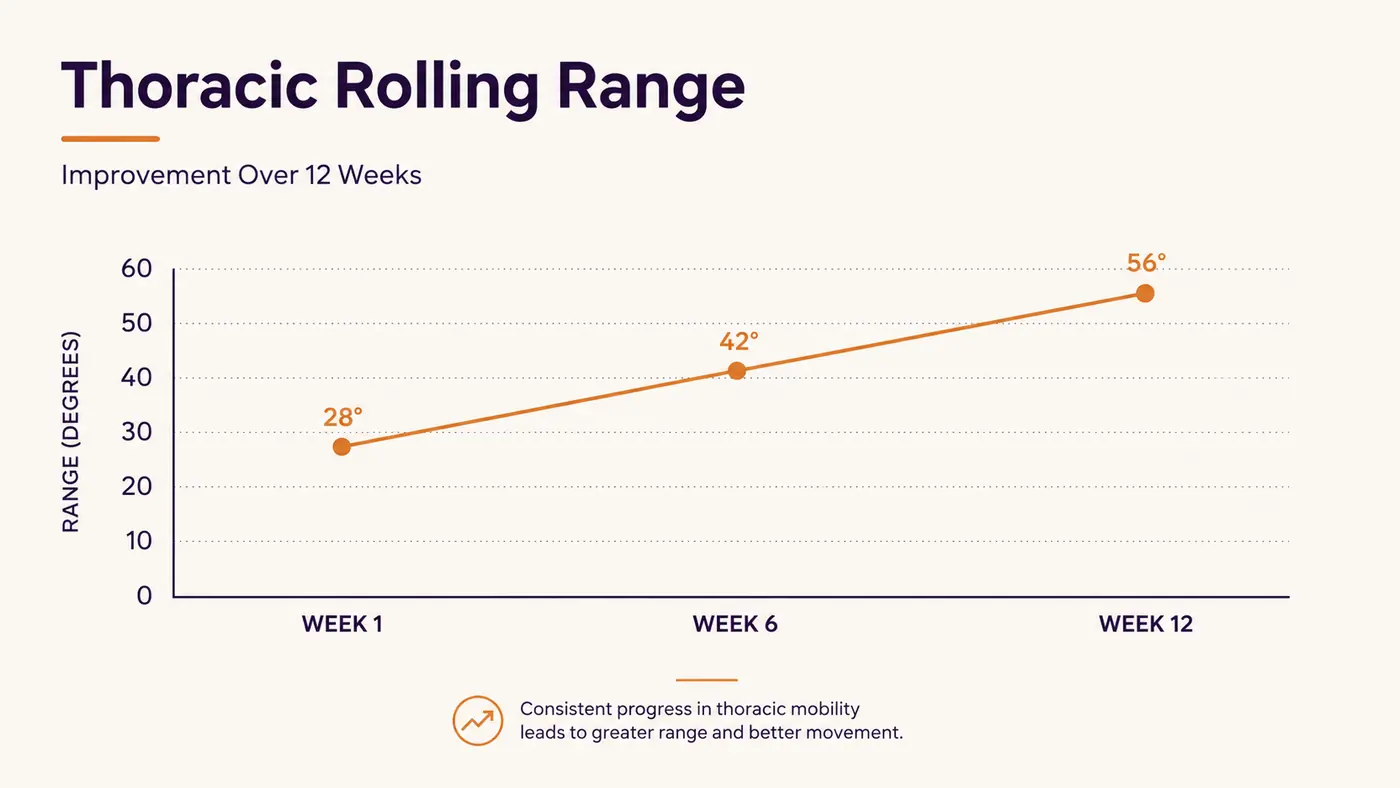
Week one was humbling. My thoracic spine was stiffer than I expected for someone who supposedly knows how bodies move, and the first few sessions felt more like testing a hard plastic edge than anything resembling a stretch. By week three, the rolling motion had smoothed out. I could get from about T5 to T9 without a single catch point, where before there were three or four spots that felt like speed bumps.
By month two, I noticed it outside the spare bedroom. My posture at the table, since I lean over clients rather than sit at a desk, felt less locked at the end of a long client day. I could straighten up fully between sessions instead of spending the first thirty seconds stuck in a hunch. That's the kind of change that doesn't show up on a chart but shows up in how the day actually feels, and honestly it's the change I cared about most, since a hunched-over therapist isn't much use to the next client on the table.
By month three, the biggest shift showed up on my long Sunday runs. My long run sits at eight to ten miles, and I noticed my torso rotation felt looser through the last two miles, right when form usually starts to break down. I can't hand you a study proving cause and effect there. What I can tell you is that the thoracic rotation that used to feel locked by mile seven felt available through mile nine instead, and my arm swing stopped feeling stiff and short late in the run.
The Lower Back Piece
Here's the part I was most skeptical about going in. My chronic complaint is a lower back that locks up after long drives and long treatment days, and I did not expect a thoracic tool to touch that. What actually happened is more nuanced than 'it fixed my back.' The wheel eased a version of low-back tightness that was really coming from a stiff mid-back forcing my lumbar spine to over-move to compensate.
On a week I traveled for continuing education and skipped the wheel entirely, the old pattern came back within about four days: that locked, achy feeling low in my back after a two-hour drive. That's not a controlled experiment, it's one data point from one body, but it lined up closely enough with what I see in clients that I trust it.
I also want to be careful here, because I see clients make this same leap in the treatment room all the time. A thoracic tool did not decompress my lumbar discs and it did not resolve any structural issue. What it did was reduce the amount of extra movement my lower back had to generate to make up for a stiffer mid-back, and less extra movement over months of driving and standing meant less end-of-day irritation.
If you want the deeper explanation of why thoracic extension work eases a certain kind of low-back tension, I wrote a full comparison against plain manual stretching versus rolling on the wheel, and the differences surprised me too. The short version: stretching alone loosened things temporarily, the wheel's passive extension held longer between sessions.
Where It Fits Around My Other Chronic Stuff
I should be honest about what this wheel did not touch. My left plantar fascia has been cranky since a half marathon two years ago, and no amount of thoracic rolling moved that needle, which makes sense since the two aren't connected in any direct way. My neck and upper traps, sore from leaning over a table all day, got a small secondary benefit from better thoracic mobility, since a stiff mid-back tends to push the neck into compensating too, but it was a minor effect, not a fix.
I'm not diagnosing anyone reading this. Everybody's stiffness has a different source, and a wheel is a blunt tool for a specific job: opening thoracic extension and rotation. If your pain is coming from somewhere else, rolling on this thing for three months isn't going to be the answer, and I'd rather tell you that now than have you disappointed at week six after buying it expecting a fix for a foot or a neck problem it was never built to solve.
Build Quality and Setup After Three Months of Daily Use
The wheel itself held up better than I expected for something I use on a rubber mat over a hard floor most days of the week. No cracking, no flat spots, and the surface texture is still grippy enough that I don't slide off it mid-roll, which was my first worry when I unboxed it.
It came with a strap and a beginner's guide, and I'll admit the guide sat unread in the box for those first four days. Once I did read it, the modifications for tighter bodies were genuinely useful, things like starting closer to the floor with a folded towel underneath for extra height, or using the strap to control how far you extend instead of trusting gravity on day one. I've since recommended that exact modification to a couple of clients who own one and were rolling too aggressively too soon.
My one real complaint after three months: the surface picked up a faint sweat and rubber-mat smell by around week six, and I've had to wipe it down more often than I planned for going in. Not a dealbreaker, just a maintenance habit I didn't budget for at first.

What I Considered Instead
Before I bought this, I looked hard at just doing manual thoracic extension drills over a folded towel, no wheel at all, since that costs nothing and it's what I'd suggest to a client on a tight budget. The honest answer, which I go into in more detail in the full comparison, is that manual stretching worked, it just didn't stick as long between sessions, and it was easier to skip on a tired morning because there was no clear tool cueing me to actually do it.
I also thought about skipping any tool at all and just letting my lifting program build enough thoracic mobility on its own. For some people that's plenty. For me, four days a week hunched over a table cancels out a lot of what three lifting sessions build back, so I needed something targeted specifically for the mid-back, and this filled that gap in a way three sets of rows a week never quite managed on its own.
What I Liked
- Noticeably smoothed out thoracic rolling within three weeks of daily use
- Fits in a small spare bedroom without taking real floor space
- Strap and beginner guide make the modifications genuinely usable for a tight body
- Held up structurally after three months of near-daily use
- Cheap enough to try against a real training block
Where It Falls Short
- Did nothing for my left plantar fascia or other joint-specific pain
- Surface holds onto sweat smell faster than I expected, needs regular wipe-downs
- First week is genuinely uncomfortable if your thoracic spine is very stiff
- Requires real consistency, a session or two a week doesn't move the needle
The wheel didn't fix my low back. It fixed the mid-back that was quietly making my low back do all the work.
Who This Is For
This is a good fit for anyone whose stiffness lives in the mid-back and shows up as tightness somewhere else, low-back, neck, even shoulder mobility during a lift. It's especially useful if your day involves a lot of forward lean, whether that's a desk, a steering wheel, or in my case a massage table. If you already have a consistent mobility habit and just need a specific tool for thoracic extension, this earns its spot. For a longer list of exactly what it's good for, I put together ten specific reasons it helps with back pain that goes section by section.
Who Should Skip It
If your pain is squarely in the lower back, the hips, or the feet, like my own plantar fascia, don't expect this wheel to touch it directly. It isn't a substitute for actual manual therapy or a proper assessment if something is acutely painful rather than just tight. And if you know yourself well enough to know a wheel will sit in a closet after week one, save the space and stick with a stretch you'll actually do. I'd rather you skip this than buy another tool you resent.
Three Months In, It's Still Part of My Morning Before I Ever Touch a Barbell
If your mid-back is the real reason your low back keeps locking up, Pete's Choice Yoga Wheel is worth testing against your own training block. Check today's price and current rating on Amazon.
Amazon Check Today's Price on Amazon →