
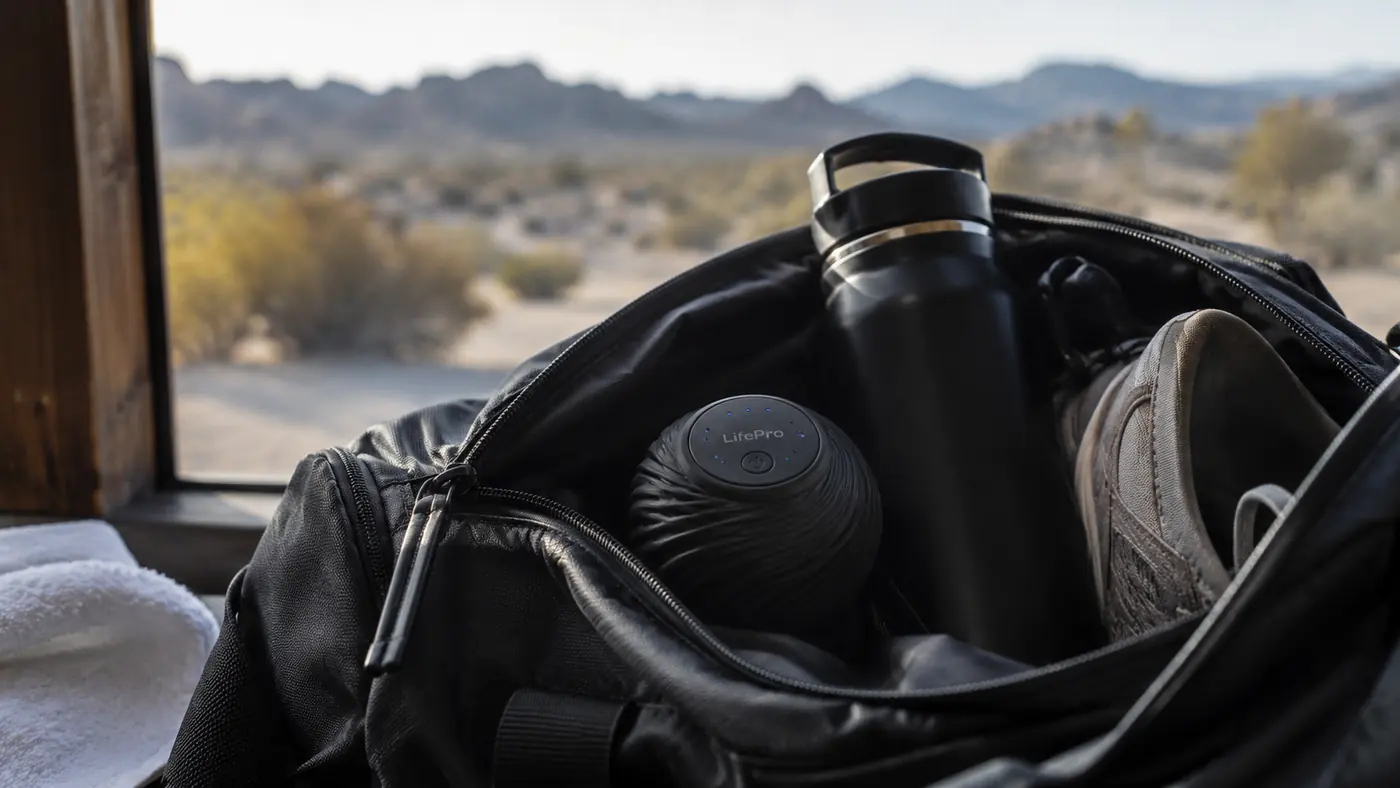
The first time I pressed the LifePro vibrating massage ball into my left calf and switched it to the third speed, I made a sound I am not proud of. I had been rolling on a plain lacrosse ball for years, the same kind half the runners I treat carry in their car door, and I figured a vibrating version was just marketing stacked on a tool that already worked fine. My calves disagreed within about ten seconds. This ball has lived in my gym bag for months now, wedged between a water bottle and a spare pair of socks, and it comes out almost every time I finish a run.
I ran the 800m in college, mid-pack for four years, no records, no championships. I still run three times a week now, three lifting mornings on top of that, and one long run on Sunday that stretches to eight or ten miles depending on the week. I am also a licensed sports-massage therapist, which means four days a week I have my hands on other people's calves and glutes hunting for the exact kind of trigger point I am about to describe in my own legs. Here is what actually changed over a full training block, without rounding anything up.
The Quick Verdict
A genuinely useful upgrade over a plain lacrosse ball for calves and glutes, though the motor noise and short charge window keep it from being a perfect tool.
Amazon Check Today's Price →Sick of Rolling Around on a Cold, Dead Lacrosse Ball After Every Run?
The LifePro vibrating massage ball is the first thing I dig for in my gym bag once a run is done. Check today's price on Amazon and see the current rating for yourself.
Amazon Check Today's Price on Amazon →How I've Used It
My use of this ball is almost entirely post-run. I finish a run, stretch briefly, then sit on the floor of whatever room is closest, my spare bedroom most nights, and work the ball into my calves for two or three minutes a side before moving up to my glutes. I keep it charged in the same gym bag pocket where I used to keep the lacrosse ball, so the habit transferred over easily. If the tool is not within arm's reach the moment I need it, I do not use it, and this one earned its spot by staying in rotation.
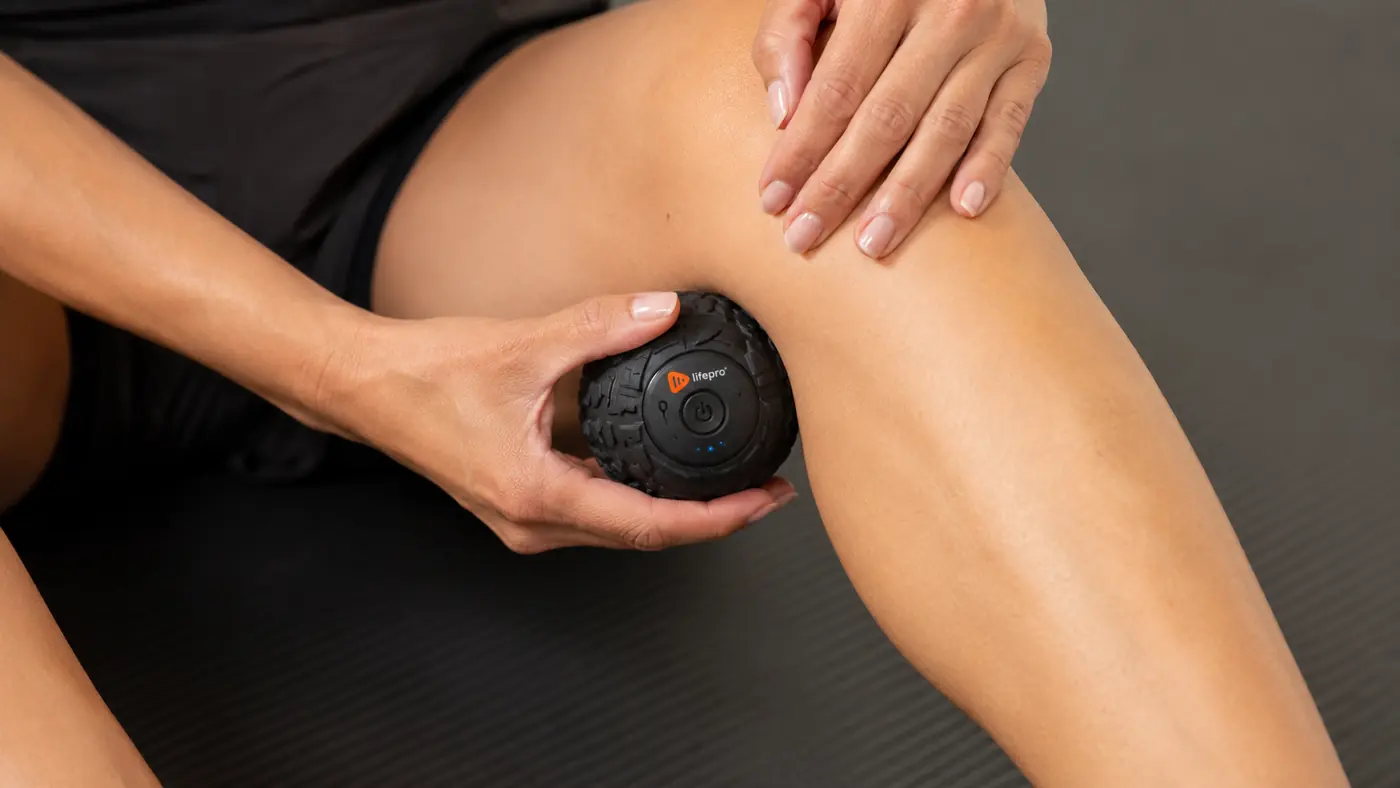
The basic move on a calf is simple. I sit with one leg extended, place the ball under the belly of the gastrocnemius, and lean my body weight down through it, rolling slowly and pausing on any spot that feels like a taut band under my fingers instead of smooth muscle. On glutes I usually lean against a wall or lie on the mat and work the ball into the upper glute and piriformis area, again pausing on the tender spots rather than rolling straight through them. I rarely need more than the second or third speed setting for either area.
I did not start using it on my neck or upper traps, even though that is exactly where I carry tension from leaning over a massage table all day. The ball's size and the way the vibration transmits through it felt too aggressive that close to my cervical spine without someone else controlling the pressure, so I kept it to calves and glutes, which is also where I get the most benefit from my own clients when I use a vibrating tool on them.
What the Four Speeds Actually Do
The four-speed motor is the actual reason this outperforms a plain lacrosse ball for me, not a gimmick bolted onto a familiar shape. Vibration at a moderate frequency seems to distract the nervous system enough that a tender trigger point tolerates more direct pressure before it fires back with that sharp, guarding sensation static pressure alone tends to trigger. In the treatment room I see the same effect with vibrating tools on clients, their muscle relaxes into the pressure faster than it does under a still object pressing into the same spot.
The lowest speed is mild enough that I barely notice it is on, useful for a very tender spot early in a session before I add pressure. The second and third speeds are where I live for calves, glutes, and IT band work. The fourth speed is genuinely strong, strong enough that I only use it on thick, less sensitive tissue like the glutes, and I have never once reached for it on a calf without regretting the intensity a little.
One thing I did not expect: the vibration makes it easier to find a trigger point in the first place, not just easier to tolerate once found. Running my hand over still tissue, a taut band can be subtle. Running the vibrating ball slowly over the same tissue, the spot where the muscle grips back against the vibration is more obvious, almost like the ball itself is telling me where to stop. If you want the full mechanism behind why that works and how to actually find those points step by step, I wrote a longer breakdown in how to release trigger points with a vibrating ball.
What a Full Training Block Actually Changed
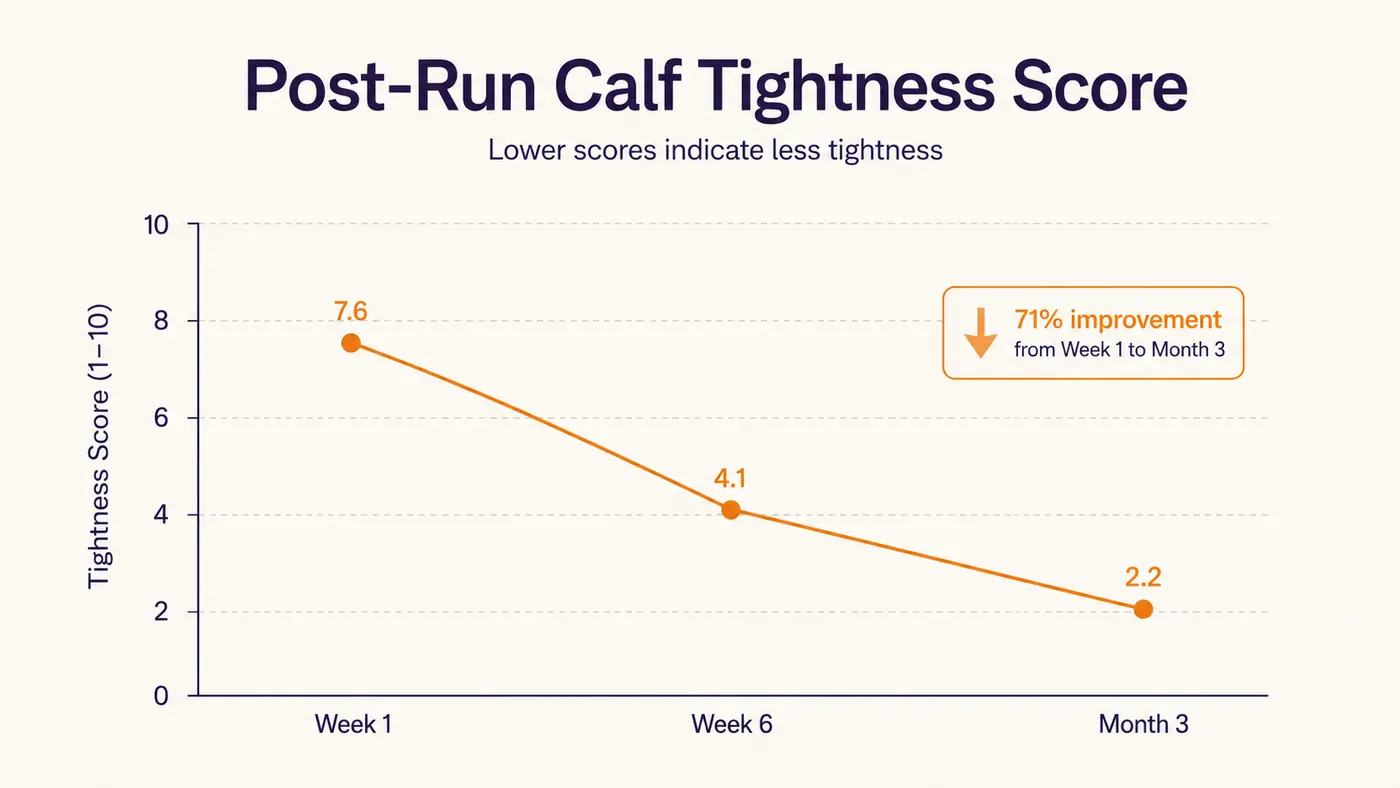
Week one, my calves were tighter after runs than I expected for someone who supposedly knows how to manage her own recovery. The vibration felt intense on tissue that had not been worked in a while, and I stuck to the second speed almost exclusively. By week three, my calves were noticeably looser the morning after a run, the kind of tightness that used to linger into the next day's lift was mostly gone by the time I woke up.
By month two, the biggest change showed up in my glutes rather than my calves. I carry a lot of tension there from years of running plus standing over a table all day, and working the ball into that area after runs seemed to keep the tightness from building the way it used to across a full training week. I noticed it most on my long Sunday runs, which sit at eight to ten miles. My stride felt less restricted through the last two miles, right around the point where form usually starts to break down for me.
By month three, I had settled into a routine I actually trust rather than one I am forcing myself to do. Two to three minutes per calf and per glute after a run, four or five sessions a week, and the difference between a week I skip it and a week I do not is obvious within a couple of days. On a week I traveled for continuing education and left the ball at home, the old post-run tightness in my calves came back almost immediately. That is one data point from one body, not a controlled study, but it lines up with what I see when clients skip their own recovery tools.
The Plantar Fascia Question
My left plantar fascia has been cranky since a half marathon two years ago, and I was curious whether this ball would do anything for it, since the product itself is marketed partly toward plantar fasciitis. The honest answer is mixed. Rolling the ball gently under my arch on the lowest speed did ease some of the tightness in the plantar fascia band itself, especially first thing in the morning before it warms up.
What it did not do is resolve the underlying irritation. My foot still gets cranky after a long day on my feet at the treatment table, and gentle rolling with this ball is a maintenance habit, not a fix. I want to be careful here, because I see clients make this leap constantly in the treatment room. A vibrating ball easing surface tension in the fascia is not the same thing as resolving whatever is driving the irritation in the first place, and I would rather say that plainly than let anyone think a few minutes of rolling replaces a proper assessment.
I also want to flag that the ball's firmness matters here more than anywhere else on the body. It is a hard plastic shell, and pressing it directly into an already inflamed plantar fascia at a high speed setting is more likely to aggravate it than help. I only ever use the lowest setting on my foot, and only for short stretches, which is a very different use pattern than the two or three minutes of firmer pressure I give my calves and glutes.
What I Considered Instead
Before I bought this, I seriously considered just sticking with the plain lacrosse ball I had used for years, since it costs less and does not need charging. I actually ran that comparison in detail, tracking both tools side by side for a stretch of training, and wrote up the full results in vibrating massage ball versus plain lacrosse ball. The short version is that the plain ball still works for a quick pass on a tolerant muscle, but it asks more of my own body weight and patience to get the same release the vibration gives me almost immediately.
I also thought about skipping any dedicated tool at all and relying on stretching alone after runs. For some runners that is genuinely enough. For me, with a job that already asks a lot of my hands and forearms all day, a self-massage tool that does some of the work for me, rather than requiring me to dig in with my own thumbs the way I do for clients, makes more sense than adding another manual task to an already physical job.
What I Liked
- Vibration made tender trigger points noticeably easier to tolerate and to find
- Fits in a gym bag without adding real bulk or weight
- Four speeds cover everything from a sensitive foot to a stubborn glute
- Noticeably reduced next-day calf tightness within three weeks of consistent use
- Cheap enough to try against a real training block
Where It Falls Short
- The motor is genuinely loud on the higher two speeds, not something to use in a quiet room
- Battery life runs shorter than I expected if I forget to charge it after a few sessions
- Too firm and aggressive for direct use on the neck or upper traps
- Requires real consistency, a session once a week barely moves the needle
The vibration did not replace my own hands. It just meant my own hands were not the only thing doing the work after a hard week of running.

Who This Is For
This is a good fit for anyone whose post-training tightness lives mainly in the calves, glutes, or hips, and who already has some kind of self-massage habit but wants a tool that gets there faster than plain static pressure. It is especially useful if you train enough days in a row that you cannot always wait for a professional session between them, which describes most runners and lifters I know. For a longer list of exactly where the vibration helps most, I put together ten specific reasons a vibrating massage ball eases trigger points that goes area by area.
Who Should Skip It
If you are sensitive to noise, or you plan to use this somewhere you cannot run a small motor without disturbing someone else in the house, the higher speeds will bother you more than the muscle relief will feel worth it. If your main complaint is neck or upper-back tension rather than calves, glutes, or feet, I would not lead with this tool, since a hard vibrating ball that close to the cervical spine is not where I would start without someone experienced controlling the pressure. And if you know a tool needs to be plugged in and charged regularly for you to actually use it, be honest with yourself about whether that habit sticks, because an uncharged ball in a drawer does nothing for anyone.
Months In, It's Still the First Thing Out of My Gym Bag After a Run
If your calves and glutes are the ones staying tight long after a training week is over, the LifePro vibrating massage ball is worth testing against your own routine. Check today's price and current rating on Amazon.
Amazon Check Today's Price on Amazon →