
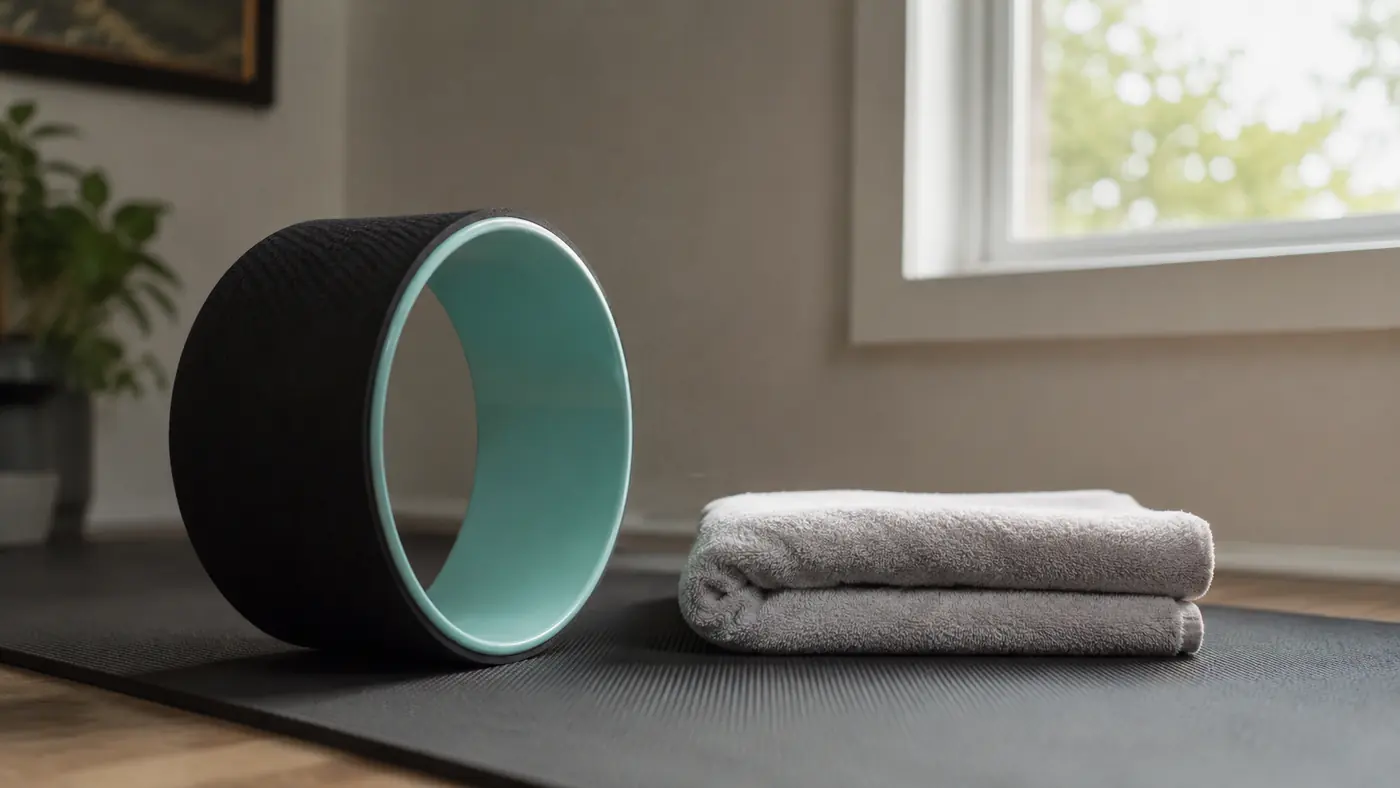
Short answer first, since I know most people clicking on this just want the verdict: if your mid-back is the real source of a stiff lower back, Pete's Choice Yoga Wheel holds the relief longer between sessions than plain manual stretching does, and it's the tool I now put in front of clients who tell me they already 'stretch every day' and still feel locked up by afternoon. Manual stretching isn't useless. It's just easier to do badly, easier to skip, and it fades faster.
I'm a licensed sports-massage therapist who spends four days a week leaning over a table and five days a week training around that same posture, so I've run both approaches on my own body for stretches long enough to actually notice a pattern, not just a good morning. This isn't a lab comparison. It's what happened when I rotated between a folded-towel stretch routine and the wheel over separate blocks of my own training.
| Category | Pete's Choice Yoga Wheel | Manual Stretching Alone |
|---|---|---|
| Equipment needed | The wheel itself, plus a mat | None, just floor space and a folded towel |
| Time per session | Five to seven minutes for a full routine | Ten to fifteen minutes to reach a comparable depth |
| Depth of thoracic extension | Graduated and supported, easy to hold a passive stretch longer | Shallower without something to drape over, harder to sustain |
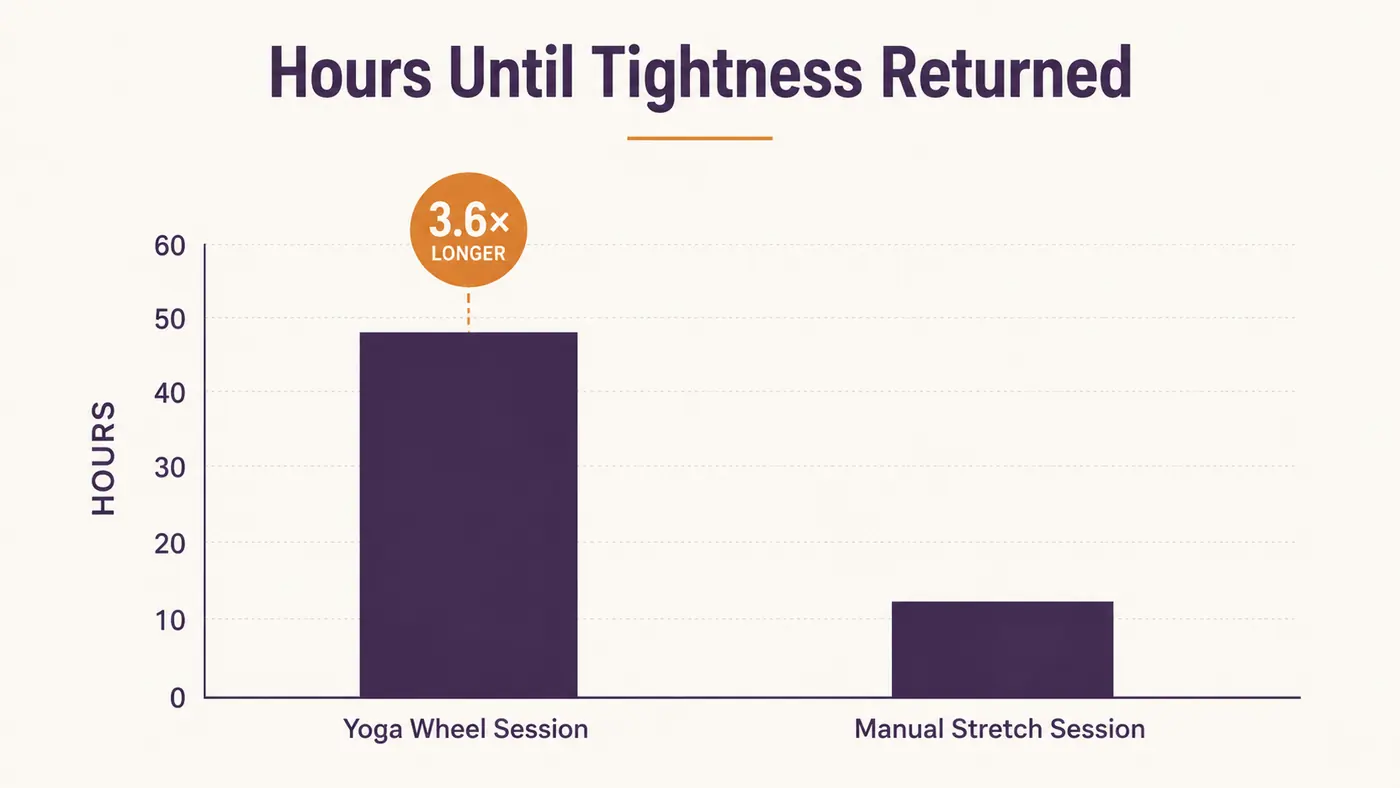
| How long relief lasted for me | Noticeably longer, especially after the passive hold | Shorter, tightness crept back within a day or two |
| Consistency in practice | Easier to stick with, the tool sitting on the shelf cues the habit | Easier to skip on a tired morning with nothing prompting it |
| Learning curve | Genuinely uncomfortable the first week if your spine is stiff | Immediately doable, no positioning to figure out |
| Portability | Takes real shelf or floor space, not something you toss in a bag | Goes anywhere, works in a hotel room or a client's office |
| Cost commitment | One-time purchase, cheap enough to try against a training block | Free, no purchase required at all |
How I Actually Ran the Comparison
Before I ever bought the wheel, manual thoracic extension drills over a folded towel were my default recommendation for clients on a tight budget, and I used the same drills on myself for years. Lie back over a rolled or folded towel placed under the mid-back, arms overhead or crossed on the chest, and let gravity pull the thoracic spine into extension for thirty to sixty seconds at a time, shifting the towel up or down a segment every so often. It costs nothing and it works on the same tissue the wheel targets.
Once the wheel arrived, I didn't run both at once. I gave the towel routine three straight weeks first, tracking how long I felt loose after each session, then swapped to the wheel for three weeks doing the same tracking, then went back to the towel for a final week just to see if the pattern held. It's one body and it's not a controlled study, but running it as a genuine back-to-back swap instead of just remembering how I felt made the difference a lot clearer than I expected.
Where the Yoga Wheel Wins
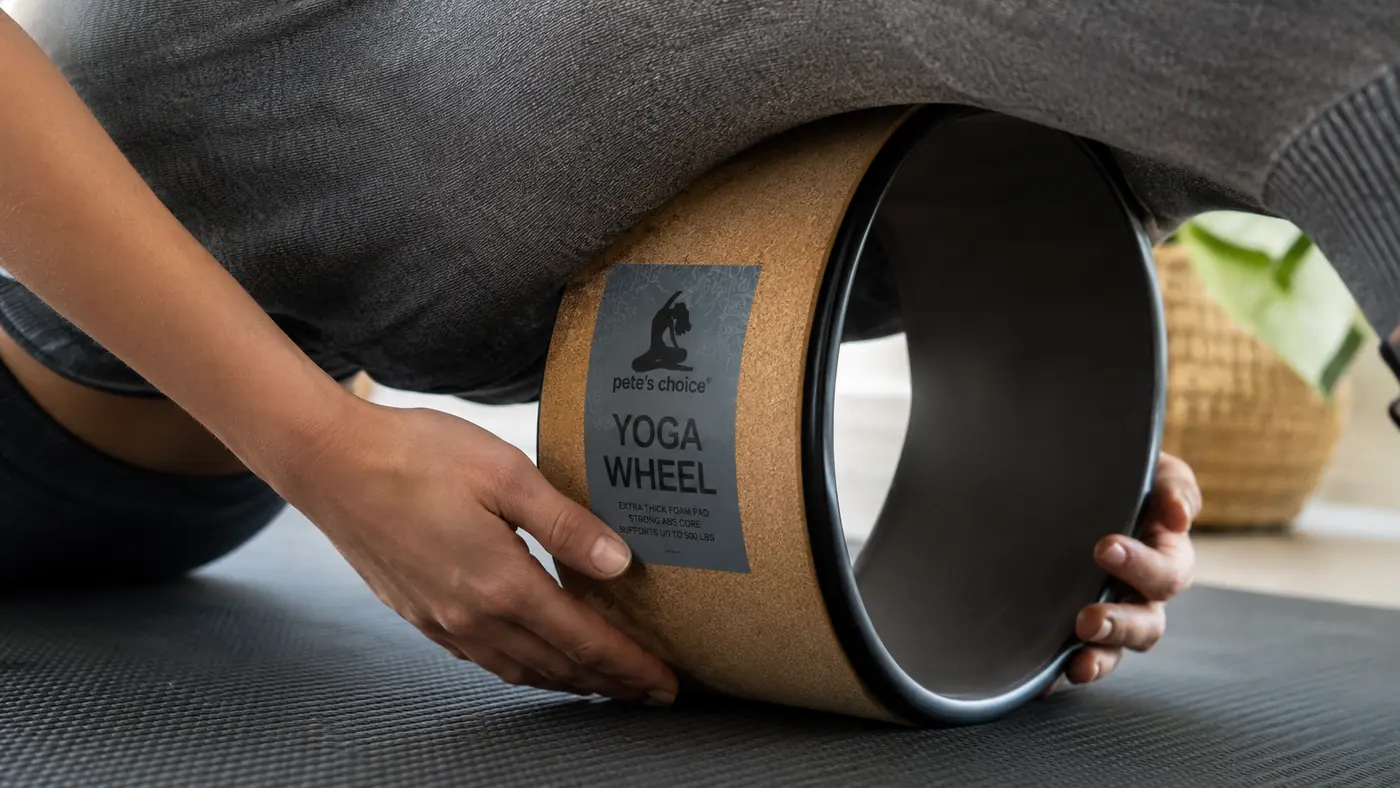
The biggest difference showed up in how long the relief actually held. With the towel, I'd feel loose for the rest of the morning and then notice the old locked-up feeling creeping back in by the next afternoon, especially after a long day leaning over the table. With the wheel, that same looseness carried closer to two full days before I felt it fading, and I think it comes down to depth. The wheel lets my thoracic spine drape over a curved surface and go further into extension than a folded towel ever let me, simply because the shape supports more of the range instead of stopping at whatever height the towel happens to be.
The other place the wheel pulled ahead was consistency, which sounds like a small thing until you track it over weeks. During the towel block, I skipped two mornings out of fifteen because there was nothing physically in front of me cueing the habit. During the wheel block, I skipped zero, because the wheel sits on the shelf in my spare bedroom right next to the mat, and stepping around it to get to the rack every morning is basically a reminder. A tool you have to walk past does more for adherence than most people give it credit for, and adherence is most of what makes any mobility routine actually work over a training block instead of just a good week.
One more thing worth naming honestly: the wheel didn't change the shape of the stretch, it changed how patient I was willing to be inside it. Draped backward over the wheel with my arms overhead, there's a kind of forced stillness that a towel never quite gave me, since the towel lets you shift and fidget your way out of the hold early. The wheel's curve holds the position for you, which sounds minor until you realize most people, myself included on a rushed morning, cut a stretch short the second it stops feeling productive.
Where Manual Stretching Wins
I'm not going to pretend the towel routine has no advantages, because it genuinely does. It costs nothing, which matters if you're not ready to commit to a piece of equipment yet or you just want to test whether thoracic work even helps your particular stiffness before spending anything. It's also instantly portable in a way the wheel isn't. When I travel for continuing education, a folded hand towel from the hotel bathroom does the job in a pinch. The wheel stays home.
There's also no learning curve or discomfort period with manual stretching. The wheel's first week was genuinely uncomfortable for me, more like testing a hard plastic edge than a stretch, and I've had clients describe the same adjustment period. A folded towel is soft from the first session, so if you're someone who's going to quit at the first sign of discomfort, plain stretching removes that failure point entirely. For a client who's never done any mid-back mobility work before, I'll still sometimes start them on the towel just to get the movement pattern comfortable before introducing a tool.
Common Mistakes I See With Each Approach
With the wheel, the mistake I see most is rushing straight to a full extension over the top on day one, trusting gravity completely instead of controlling the descent with the strap or a hand on the floor. That's exactly how you turn a mobility tool into a reason to quit after one uncomfortable session. The other common error is treating every session as active rolling only and skipping the passive drape entirely, which in my own log is where most of the actual extension gain came from. Rolling wakes the tissue up. Holding still is what changes the range.
With manual stretching, the mistake is almost always speed. Most people do a standing thoracic reach for ten seconds between sets and call it stretching, which is closer to a warmup twitch than anything that changes tissue tone. The towel version only works if you actually lie back and hold it, breathing through thirty to sixty seconds per position, and most people skip that part because nothing about standing up and reaching feels like it requires patience. I tell clients the same thing about both tools: the position matters less than whether you're willing to sit still in it long enough to matter.
Tired of Stretching That Fades by Lunch? Here's the Tool That Actually Held the Relief.
Pete's Choice Yoga Wheel is what finally made the difference stick between sessions for me. Check today's price and current rating on Amazon before your next training block.
Amazon Check Today's Price on Amazon →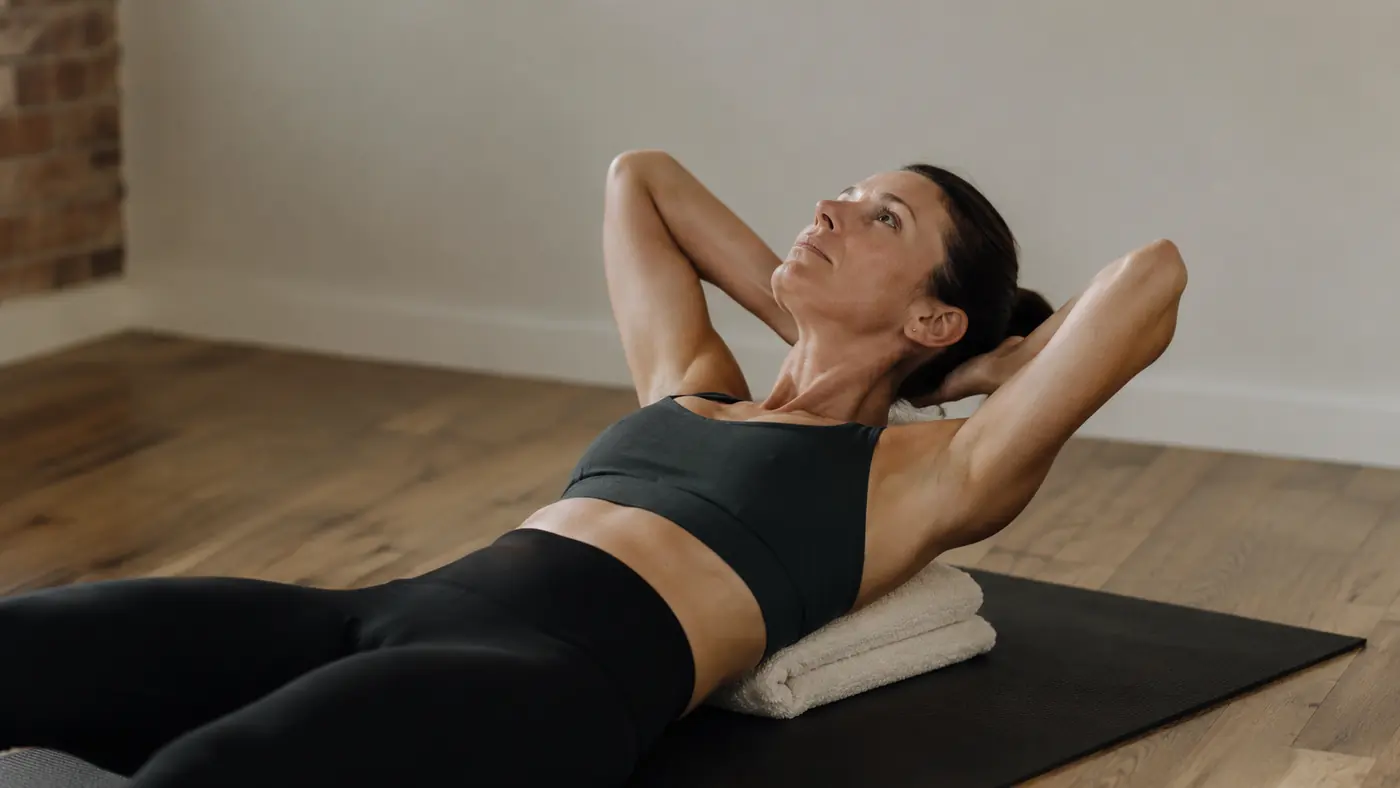
The Part That Actually Mattered: Consistency Over Depth
If I'm honest about the mechanism, I don't think the wheel is doing anything mystical that a towel physically can't replicate given enough patience and the right height adjustments. What I think is actually happening is that the wheel makes a deeper, more passive hold easy enough that I actually do it, consistently, on tired mornings when I'd otherwise have rushed a shallow stretch or skipped it. Manual stretching demands more discipline to get the same depth, and discipline is the first thing that erodes on a long client week.
I see this same pattern in the treatment room constantly. Clients who say stretching 'doesn't work for them' are frequently doing a rushed thirty-second version standing up, nowhere near the depth or duration that actually changes tissue tone. Give someone a tool that makes the correct depth the path of least resistance, and the routine survives contact with a bad week. That's less about the wheel being magic and more about it being a better delivery mechanism for the same underlying stretch.
Who Should Buy Which
If your stiffness lives in the mid-back and shows up downstream as a low back that locks up after long drives or long days, and you already know you're inconsistent with a habit unless something physical prompts you, get the wheel. It's cheap enough to try against a single training block, and the depth it lets you reach beats a towel for anyone dealing with a genuinely stiff thoracic spine. I go through more of the mechanics of why that upstream relationship exists in my three-month review of daily use, including exactly what changed and what stayed the same.
If you're not sure a thoracic tool is even the right category for your stiffness, or you just want to test the concept before spending anything, start with the folded-towel version for a week or two. It's the same movement pattern, just with a shallower ceiling. For the exact positioning cues I use with clients once they've decided to add the wheel, I laid out the full walkthrough in how to relieve thoracic tightness with a yoga wheel, step by step.
There's a middle case too, the traveling client or the athlete with genuinely no shelf space to spare, who still needs something for a stiff mid-back on the road. For that person I'd say run the towel version consistently for a month before writing off thoracic work altogether, then decide whether the wheel's extra depth is worth making room for at home. It's not an either-or forever, it's a question of which one you'll actually keep doing given your own space, budget, and travel schedule.
The towel and the wheel are the same stretch. The wheel is just the version I actually keep doing.
If Your Mid-Back Is Quietly Running Your Low Back, This Is the Fix I'd Test First
After running both side by side, the wheel is what stayed in my rotation. See today's price and current rating on Amazon and decide for yourself.
Amazon Check Today's Price on Amazon →