
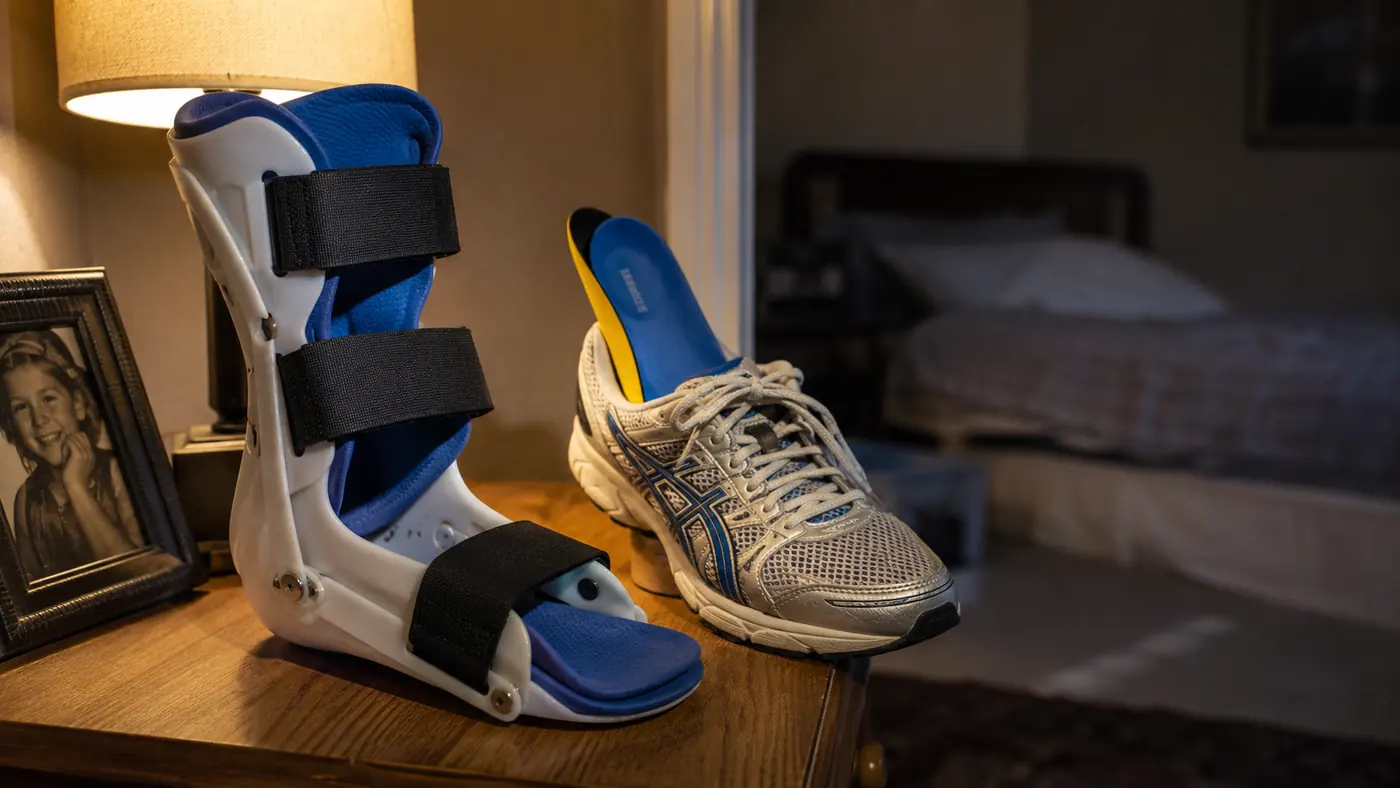
If you searched night splint vs arch support insoles because your heel is throwing a fit the second your foot hits the floor, here's the short answer up front. For that specific problem, first-step morning heel pain, the United Ortho Night Splint wins. I've used both in my own life for the past two years and I recommend both to clients on my table, so this isn't a case of me picking a side I haven't actually tested. My left plantar fascia has been cranky since a half marathon two years ago, and the difference between what these two tools actually do taught me something I now explain to almost every client who asks which one to buy first.
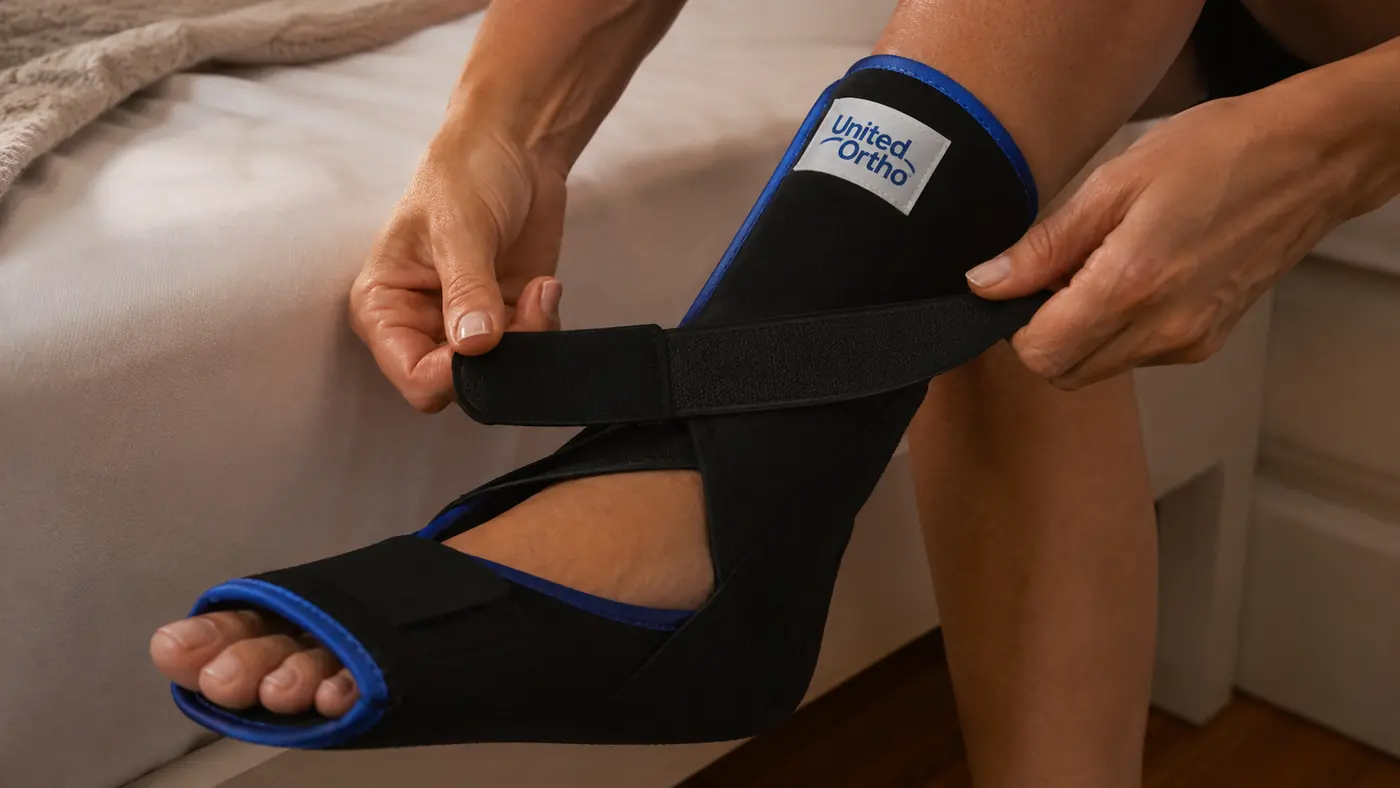
A night splint works while you're asleep. It holds your foot in a stretched, dorsiflexed position for six to eight hours straight so the plantar fascia can't shorten back up overnight, which is exactly why that first step out of bed hurts so much to begin with. Arch support insoles work while you're awake. They cushion and support the arch as you stand, walk, and load the foot through an entire day on your feet. Line them up side by side and you'll see they're solving two different windows of the same complaint. If morning heel pain is the specific thing that sent you looking for this comparison, only one of these two tools is actually built to interrupt it, and by the end of this comparison I want you to understand exactly why, not just take my word for it.
| Spec | United Ortho Night Splint | Arch Support Insoles |
|---|---|---|
| When You Wear It | Overnight, while you sleep | During the day, inside your shoes |
| What It Targets | Holds the plantar fascia and calf in a stretched position for six to eight hours | Cushions and supports the arch while you're standing or walking |
| First-Step Morning Pain | Directly interrupts the overnight tightening that causes it | Doesn't touch it, since you're not wearing them while you sleep |
| Fit | One adjustable strap system, fits right or left foot | Sized to your shoe, sometimes needs trimming to fit |
| Comfort Overnight | Bulky the first week or two, most people adjust | Not designed for sleep, not applicable |
| Comfort During the Day | Not worn during the day | Low profile, disappears inside a running shoe or work boot |
| Setup | Straps adjust in under a minute, no break-in period for the device itself | Some models need trimming or a short break-in period before they feel right |
| Best Paired With | Calf stretches before bed | Supportive footwear you already own |
Where the Night Splint Wins
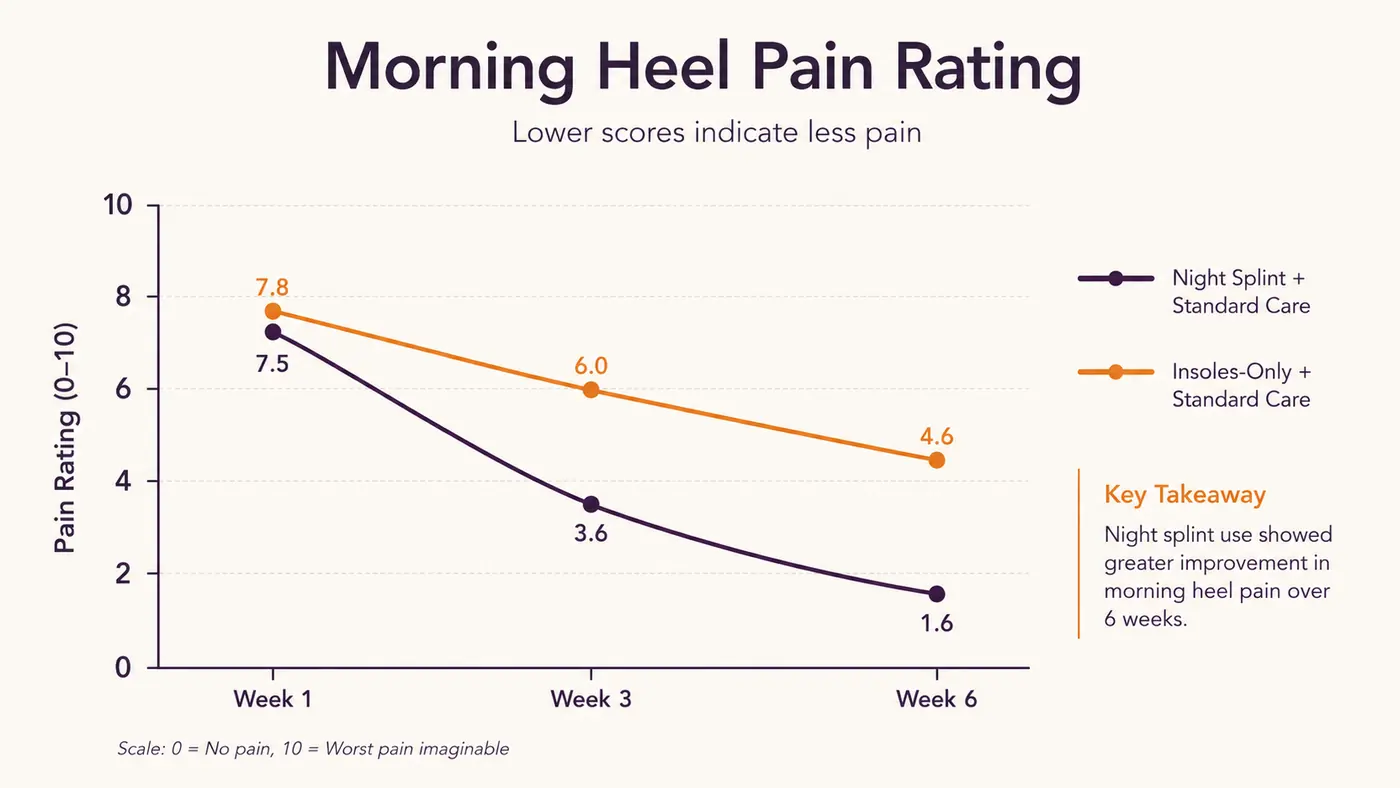
The mechanism is the whole story here. Plantar fasciitis pain spikes first thing in the morning because the fascia contracts and shortens overnight while your foot points down and your calf shortens along with it. The first few steps out of bed re-stretch tissue that had all night to tighten, and that sudden re-stretch is what you feel as that sharp, bruised heel pain. The United Ortho Night Splint interrupts that entire cycle before it starts, because your foot is already held in a gentle stretch the whole time you'd otherwise be tightening up. I strap mine onto my left foot most nights, and within about two and a half weeks the worst of that first-step pain had genuinely eased, not disappeared completely, but noticeably softer than the sharp catch I used to feel walking to the bathroom.
No pair of insoles can do that, because insoles only work while weight is already on the foot, which means the fascia has already gone through its overnight shortening by the time you put your shoes on. That's not a knock on insoles, it's just outside the job they were built for. I go through the full nightly routine, including how I adjusted the strap tension over the first two weeks, in my longer night splint review after sleeping in it every night, if you want the play-by-play instead of the summary.
The other thing the splint has going for it is that it doesn't ask you to do anything. Once the strap is set, you go to sleep and the position holds itself for the whole night, whether you're a restless sleeper or not. Insoles depend on you wearing supportive shoes consistently, all day, every day, which sounds simple until you think about how many hours most people spend barefoot on tile at home, in slippers with zero arch structure, or padding around the kitchen after work. A splint doesn't care what you do during those hours, because its job already happened while you were asleep.
Where Arch Support Insoles Win
None of this makes arch support insoles useless, and I want to be honest about that instead of pretending the splint does everything. Once you're up and moving, a splint comes off and goes back in its drawer, and your foot is on its own for the rest of the day. That's exactly when insoles do their job. If you're on your feet for hours, whether that's a retail shift, a warehouse floor, or in my case standing over a treatment table four days a week, cushioned arch support reduces the cumulative load on the fascia with every single step, and that matters just as much as what happens overnight.
Insoles also win on convenience in a way I won't pretend doesn't matter. You slide them into a shoe and forget about them. There's no strap to adjust, no bulky brace taking up space next to your pillow, and no learning curve for a partner who gets startled awake by a plastic brace under the sheets. If your pain is mild and mostly shows up after long days on your feet rather than as that sharp first step in the morning, insoles alone might genuinely be enough, and I'd rather tell you that than sell you a second tool you don't need.
Most of the arch support insoles I see clients bring in are the semi-rigid kind you drop into an existing shoe, not a custom orthotic molded from a cast of the foot. They range from soft and cushioned, which feels nice immediately but breaks down faster, to firmer models that hold their shape longer but need a week or so before your foot stops noticing them. Neither style will ever replicate what a splint does overnight, but a firmer, semi-rigid pair genuinely earns its keep during a long standing shift, and that's worth knowing before you assume all insoles are the same product with different packaging.
There's also a durability tradeoff worth naming. A good pair of insoles can move between shoes, get trimmed to fit, and generally survive years of daily wear before they pack down and lose their support. A splint only does its job in one place, in bed, for one stretch of hours. If your day involves a lot of standing and very little sleeping in it, an insole is going to log far more hours of actual work over the life of the product, even if it isn't the one solving your specific morning symptom.
Why I Use Both Instead of Picking One
In my own routine I don't actually choose between these two, and most of my clients end up doing the same once they understand what each one is for. The splint goes on my left foot most nights before bed, right there in my nightly routine before I turn off the lamp. During the day, especially on long treatment days when I'm standing on a hard floor for hours, I lean on supportive footwear with real arch structure instead of flimsy flats. The two habits are stacked, not competing, and stacking them closed both windows where my fascia was getting irritated instead of just one.
If you can only start with one, though, start with the one that matches the pain you actually have. If your worst moment is that first step out of bed, an insole sitting in your sneakers by the door isn't touching that moment at all, because you're not wearing your sneakers yet. That's the whole argument for the splint winning this particular comparison. I break down the exact nightly routine, strap tension, and what week the pain actually started shifting, in this step-by-step guide to treating morning heel pain with a night splint.
I'll also say this from the treatment room, not just my own foot: clients who use both together generally report the fastest change in how their morning feels, and clients who only ever add insoles and skip the splint tend to keep reporting that same sharp first step months later, even after their daytime symptoms calm down. That pattern alone is why, when someone asks me to pick just one to start with, I point them toward the splint first and let insoles be the second habit they layer in once the morning pain has eased.
Dreading That First Step Out of Bed? Here's the Tool That Works While You Sleep.
The United Ortho Night Splint holds your foot in a gentle stretch all night, so the fascia never gets the chance to tighten back up before your feet hit the floor. Check today's price and current rating on Amazon.
Amazon Check Today's Price on Amazon →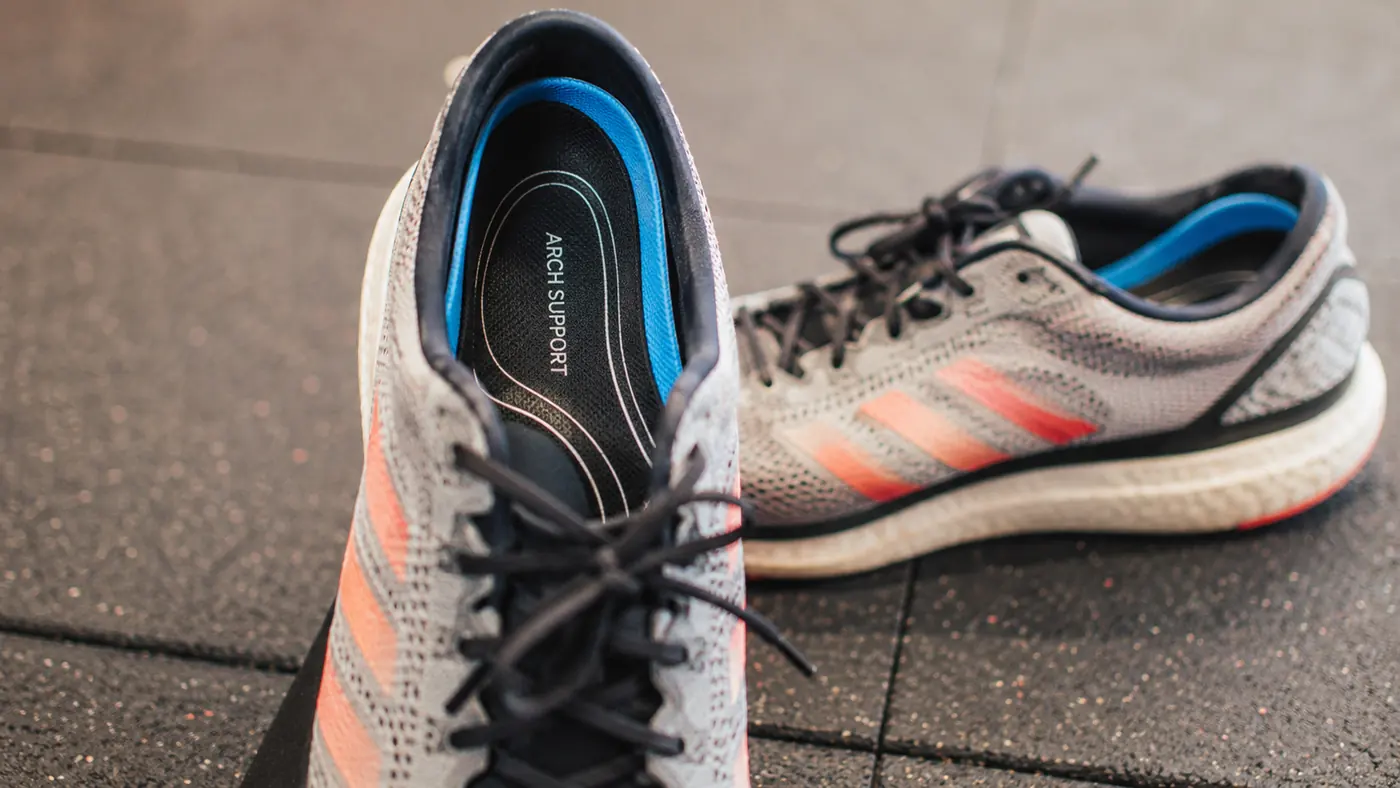
Who Should Buy Which
If your main complaint is that sharp, specific pain in the first few steps out of bed, buy the night splint first. That's the exact symptom it's built to interrupt, and nothing about a daytime insole can reach it since the damage, so to speak, is already done by the time you put your shoes on. Fit the splint to whichever foot is bothering you, mine goes on the left, adjust the strap gradually over the first week or two instead of cranking it tight on night one, and give it real time before judging it. Two and a half weeks is roughly when I started noticing a real difference, not two nights.
If your pain is milder, shows up more as end-of-day fatigue than a sharp morning stab, and you're on your feet for long stretches at work, arch support insoles are the more practical first buy. And if you're dealing with both patterns, which is honestly the most common thing I see on my table, plan on owning both eventually. They aren't competing products fighting for the same shelf space. They're covering two different shifts of the same twenty-four-hour cycle, and treating them as rivals instead of teammates is the mistake I see people make most often when they're shopping for either one.
Morning Heel Pain Is an Overnight Problem. Fix It Overnight.
If that first step out of bed is the pain you're actually trying to solve, the United Ortho Night Splint is built for exactly that window. See today's price and current rating on Amazon.
Amazon Check Today's Price on Amazon →