
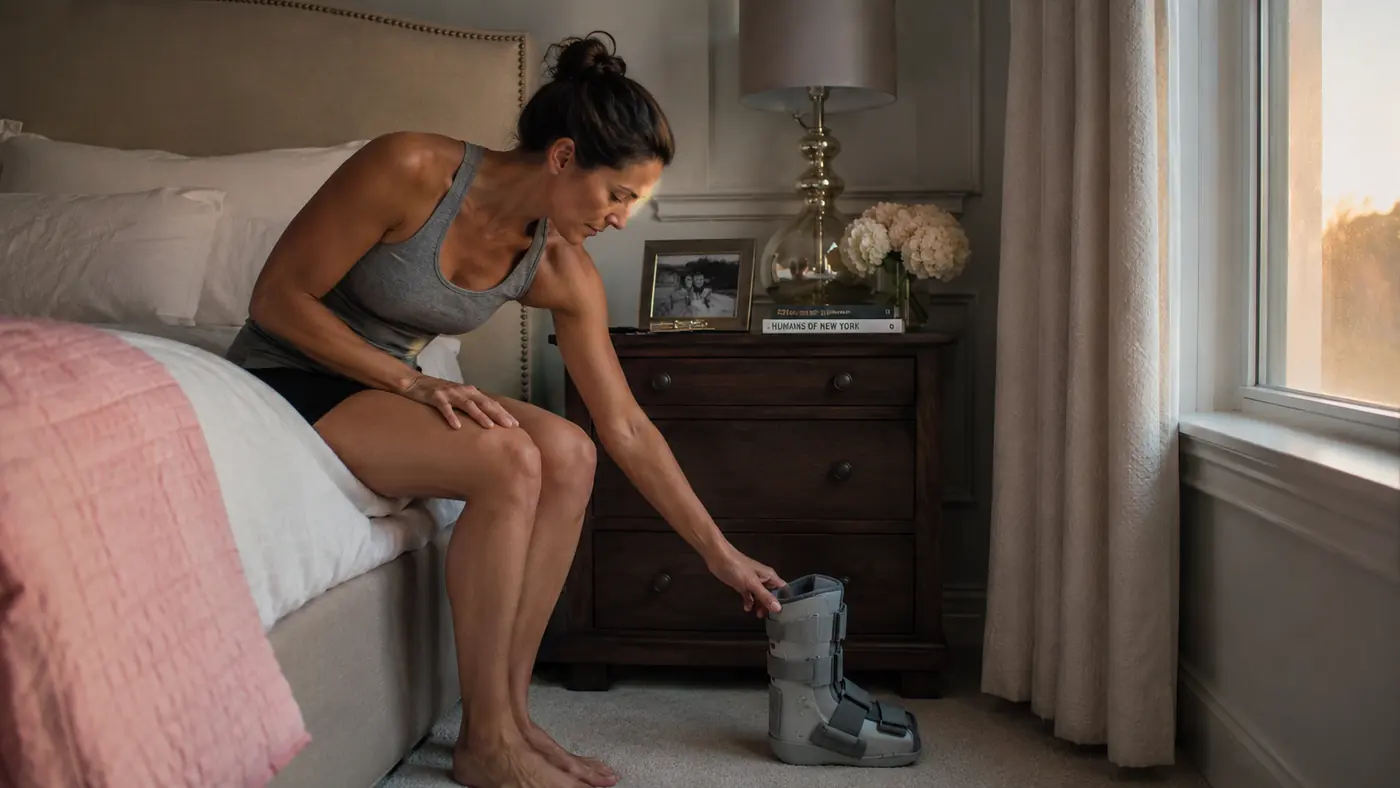
That first step out of bed used to be the worst part of my day. My left plantar fascia has been cranky since a half marathon two years ago, and for a long stretch after that race, my morning started with a limp across the bedroom floor before the tissue would loosen up enough to walk normally. A night splint changed that first step, not by curing anything, but by holding the fascia in a mild stretch overnight instead of letting it shorten up while I sleep, which is exactly what it wants to do and exactly what makes that first step so sharp. I wear the United Ortho night splint on my left foot, and what follows is the actual routine I built around it, mistakes included, not a theoretical one I read somewhere.
I want to be straight about the word 'treat' in that headline. I'm a licensed sports-massage therapist, not a physician, and I am not treating anyone reading this. What follows is a routine, one I use on my own foot and have walked a few clients through when they already had a splint of their own. If your heel pain keeps getting worse instead of easing, or if it's sharp and localized rather than the dull, tight morning ache plantar fasciitis usually produces, that belongs in front of a podiatrist or physical therapist, not a how-to article.
Still Wincing on the First Step Out of Bed? Here's the Tool I Actually Wear.
The United Ortho night splint holds the fascia in a gentle stretch while you sleep instead of letting it tighten back up overnight. Check today's price and current rating on Amazon before you read the full routine below.
Amazon Check Today's Price on Amazon →Step 1: Fit It So It Doesn't Cut Off Circulation
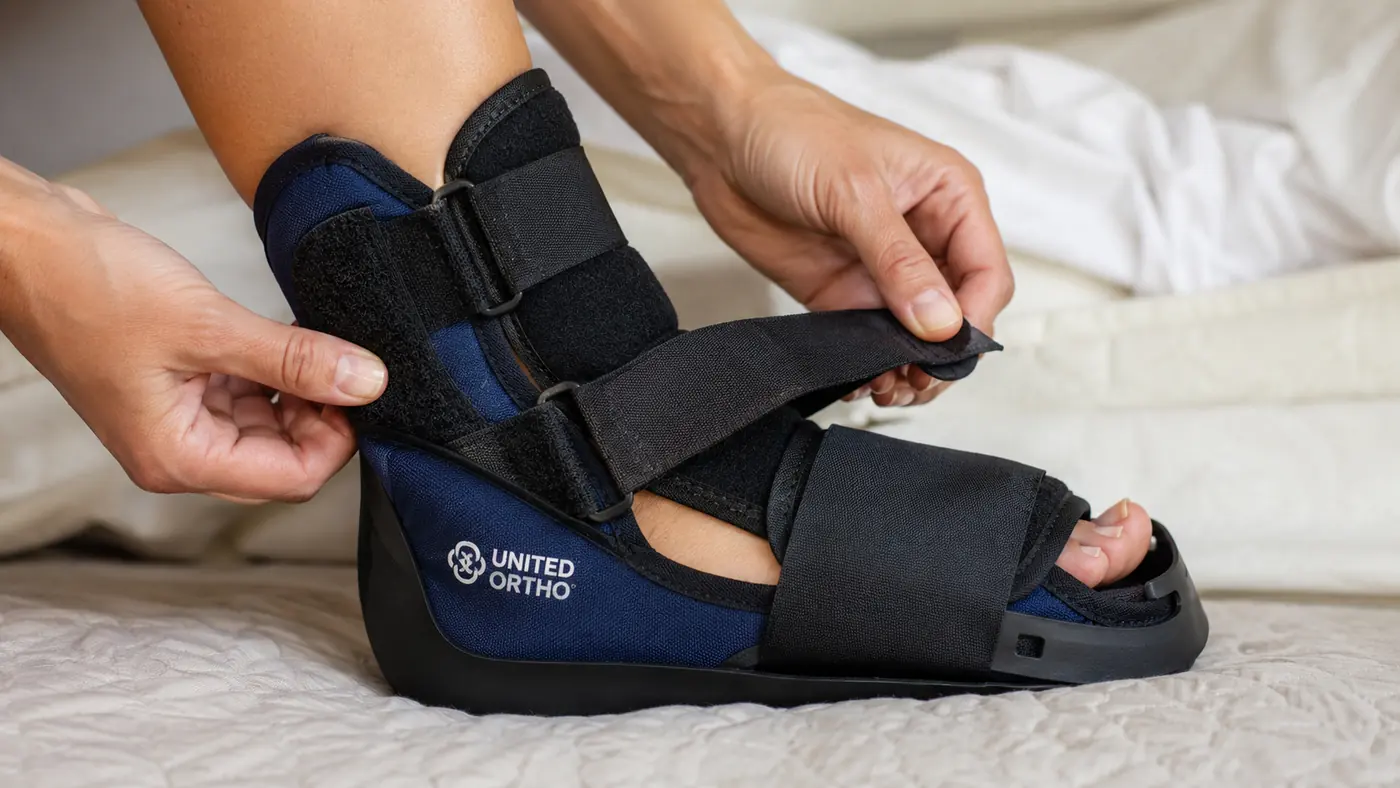
The straps on the United Ortho splint go around the foot, the ankle, and partway up the calf, and the instinct on night one is to cinch every strap down as tight as it will go so the thing can't possibly shift while you sleep. That instinct is wrong. The goal is snug and even, not compressive. After you strap in, wiggle your toes. They should move freely with no tingling, no color change, and no pulsing sensation. If your toes feel cool or numb within a few minutes, loosen the calf strap first, since that's usually the one doing the damage, not the foot straps.
I got this wrong my first two nights. I woke up around 3am with a dull ache behind my left knee and a faint pins-and-needles feeling in my toes, which had nothing to do with the plantar fascia and everything to do with a calf strap I'd tightened like I was securing luggage. I loosened it by about half an inch on night three and never had the problem again. Check the fit every few weeks too, since the foam padding compresses slightly with use and a strap that was snug in week one can end up looser by week six, especially if you're doing what I do and wearing it most nights of the month.
Step 2: Set the Dorsiflexion Angle Low at First
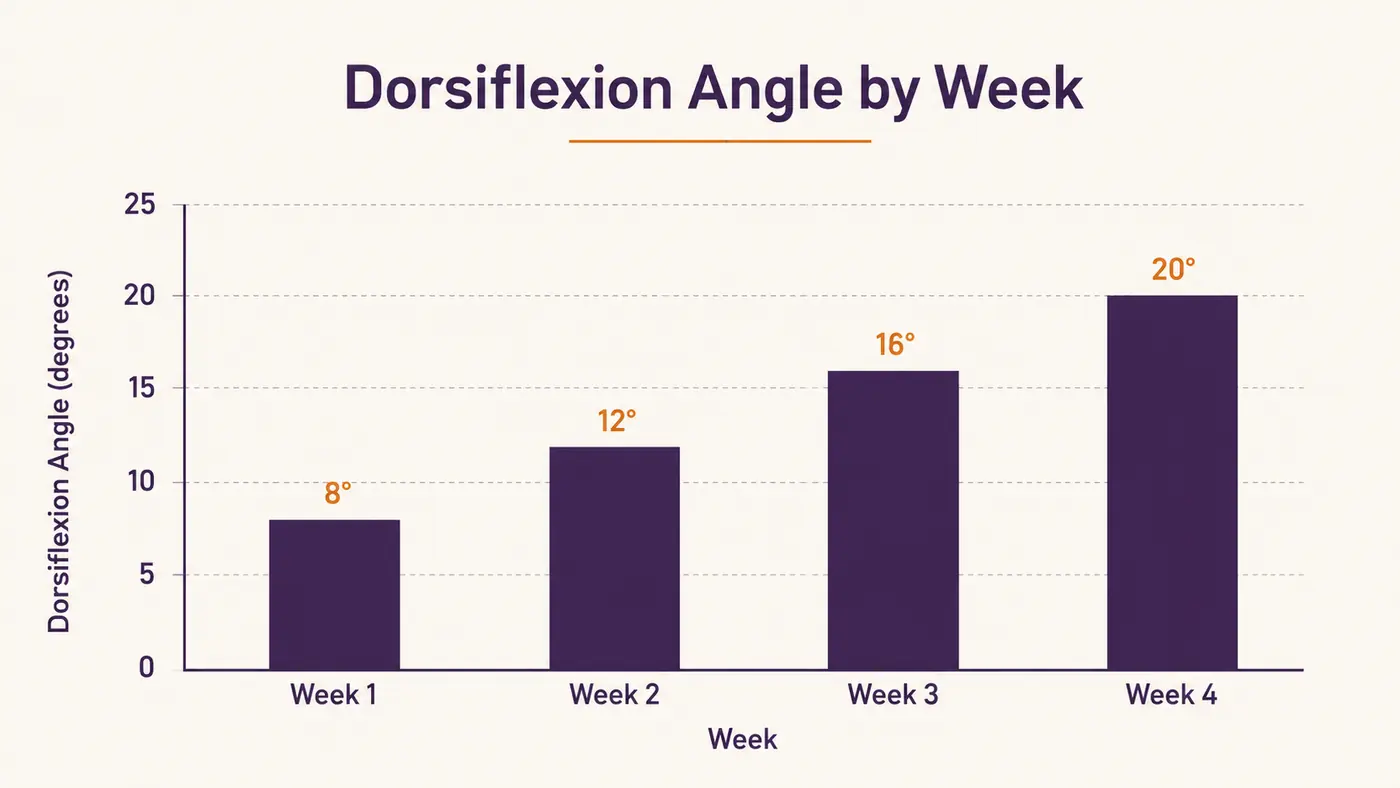
Dorsiflexion just means pulling the foot up toward the shin, and that's the position a night splint holds you in, since it puts a mild, sustained stretch on the plantar fascia and the calf. The United Ortho splint has an adjustable hinge, and the mistake most people make, myself included, is cranking it to the steepest angle right away because more stretch sounds like more progress. It isn't. A tissue that's been irritated for months does not respond well to an aggressive overnight stretch, and a splint that's angled too steep the first week is the single biggest reason people give up on night splints entirely.
I started at close to neutral, barely any pull at all, just enough that I could feel gentle tension through the arch when I focused on it and nothing when I wasn't thinking about it. That's the correct starting point. Over the first two to three weeks, I nudged the hinge a notch steeper every few nights, always checking that the sensation stayed in that same tension range rather than crossing into an ache. By week four I was at a noticeably steeper angle than where I started, and I never once woke up sore from the stretch itself.
The hinge on this splint moves in small, discrete notches rather than a smooth dial, which I actually prefer, since it forces a deliberate choice instead of letting you drift into an angle you didn't mean to set. If a notch ever wakes you up or leaves the arch tender the next morning, that's your body telling you to back off one click, not push through it. Progress here is measured in weeks, not nights.
Step 3: Make the First-Week Sleep Adjustment
Nobody warns you that wearing a rigid brace to bed changes how you sleep, at least for the first week. I'm mostly a side sleeper, and having a hard plastic shell on my left foot meant I couldn't tuck that foot behind my right knee the way I normally do without the brace pressing into my other calf. I ended up sleeping with a thin pillow between my ankles for the first several nights, which kept the splint from digging in and stopped me from waking up to reposition every hour.
A thin sock under the splint helps too, both for comfort against the skin and because it cuts down on the plastic-on-sheets sound that wakes up a lighter sleeper. Give yourself a genuine week before deciding whether the splint is tolerable. My own first three nights were rough enough that I almost quit, and by night seven I barely noticed it was there. If you're still fighting your sleep after two full weeks, the angle is probably still too aggressive or the fit needs another look, not a sign that night splints aren't for you.
Step 4: Build a Morning Routine Around It
The splint does the passive part overnight. What you do in the ninety seconds after you take it off matters almost as much. I don't unstrap it and immediately stand up, because that undoes some of the point of wearing it in the first place. I sit on the edge of the bed, unstrap it, and do a slow set of ankle pumps and circles first, maybe ten of each, while the fascia is still in that lengthened state the splint left it in.
Then I stand up carefully and do a slow calf stretch against the kitchen counter before I do anything else, both legs, thirty seconds a side. My day job has me leaning over a treatment table rather than sitting at a desk, so getting my calves and arches warmed up before I'm on my feet for hours matters more for me than it might for someone with a slower first hour. That two-minute sequence, ankle pumps then a calf stretch, has honestly done more of the work for that first-step pain than the splint alone ever did.

Step 5: Add Support During the Day, Not Just at Night
A night splint only covers eight hours. The other sixteen matter too, and this is where I've watched plenty of people undo their own progress by wearing flat shoes with zero arch support on a hard floor all day and wondering why the splint isn't working fast enough. I switched to shoes with real arch support for my treatment days, since I'm on my feet leaning over a table for hours at a stretch, and I stopped walking barefoot on the tile in my kitchen in the evenings, which used to be a habit.
I also added a short calf and arch stretching sequence mid-afternoon, not just in the morning, because the fascia tends to tighten back up over a long standing day the same way it tightens overnight. If your setup differs from mine, footwear versus a rigid arch support insole, for instance, I wrote a full breakdown of how a night splint compares to arch support insoles for the daytime piece of this, since the two solve different halves of the same problem and most people end up needing both eventually.
Step 6: Taper Off Once Symptoms Actually Ease
Once that first step out of bed stopped being sharp, somewhere around week six for me, I didn't quit the splint cold. I dropped to wearing it every other night for about two weeks, watching for any return of that morning ache on the off nights. When two weeks passed with no regression, I dropped to two or three nights a week for another stretch before stopping entirely.
That gradual step-down matters more than people expect. Plantar fasciitis has a habit of coming back quietly if you go from nightly use straight to nothing, especially after a big training week or a long day on your feet. If symptoms do creep back in during the taper, that's not a failure, it just means you go back to nightly wear for a couple more weeks before trying the taper again. I've had to restart mine twice since that first six-week stretch, usually after a heavier training block or a stretch of long client days, and each time it's settled back down within a couple of weeks.
What Else Helps
The splint was never the whole plan for me, it was the piece that made the mornings tolerable while everything else caught up. Consistent calf and arch stretching, better footwear on standing days, and just paying attention to how a heavy training week affects that left foot the next morning all matter as much as the hours I spend wearing the brace. My long run sits at eight to ten miles on Sundays, and I've learned to warm the calves and arches up thoroughly before I ever leave the driveway on those days, since a cold start on a long run is when that left foot complains loudest afterward.
If you want the longer version of my own timeline with this exact splint, including what a full training block looked like around it and how the pain actually tracked week to week, I laid that out in my full long-term review. It's the messier, more detailed version of the routine I've simplified down for this guide.
The splint didn't fix my foot while I slept. It just stopped my foot from undoing its own progress every single night, which turned out to be most of the battle.
One more honest note before the closing pitch. If you've been consistent with a routine like this for several weeks and the morning pain isn't budging at all, or it's getting sharper rather than duller, stop guessing and get an actual assessment. A night splint is a good tool for a common, garden-variety case of plantar fasciitis. It is not a substitute for someone putting hands and eyes on your foot when something isn't responding the way it should, and no article, mine included, can tell you from a screen whether what you're feeling is ordinary fascia tightness or something that needs imaging.
Six Weeks In, This Is Still the First Thing I Reach For at Bedtime
If mornings start with a limp across the floor, the United Ortho night splint is worth building this exact routine around. Check today's price and current rating on Amazon.
Amazon Check Today's Price on Amazon →