
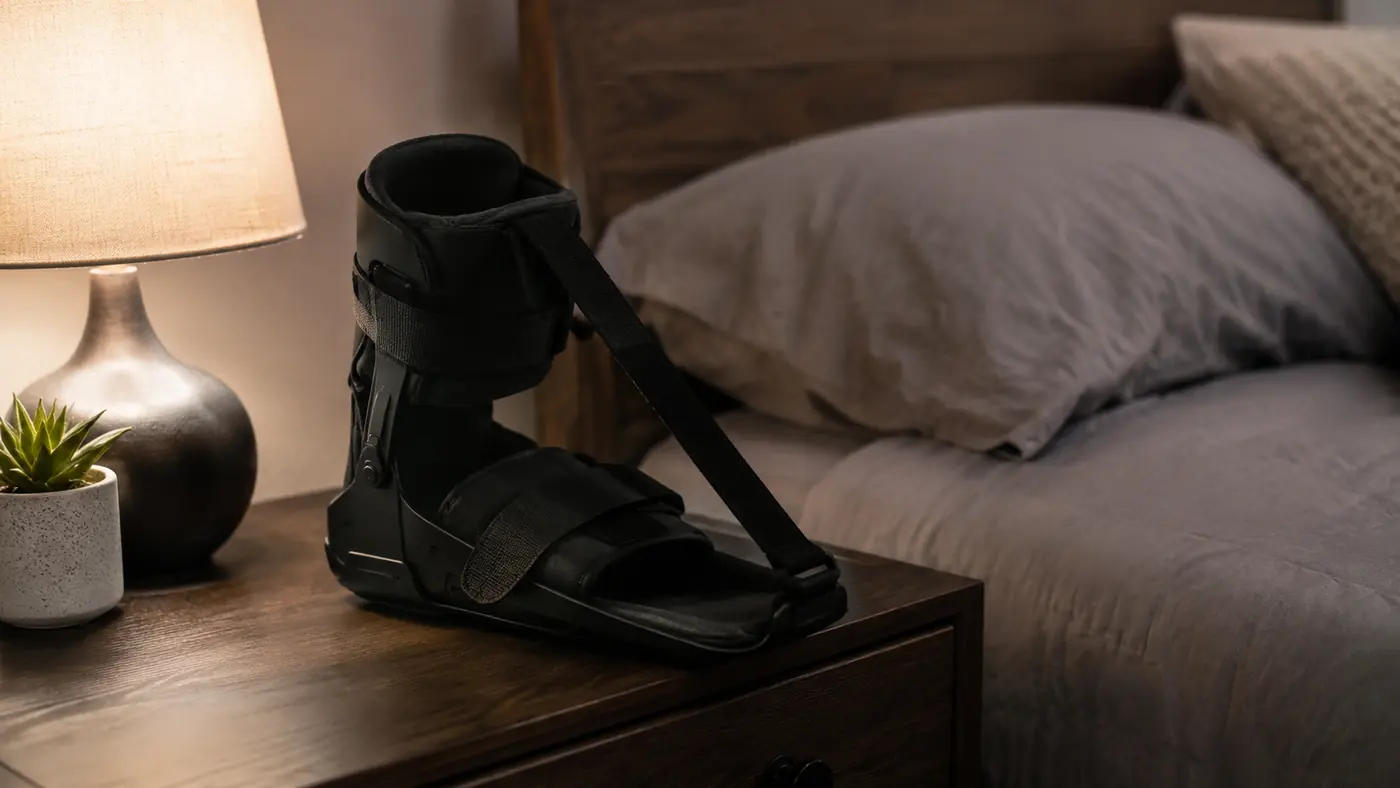
The United Ortho Night Splint sat in its box for two nights before I strapped it onto my left foot, because I've fitted enough of these on clients over the years to be skeptical of anything that promises to fix plantar fasciitis while you sleep. My own left plantar fascia has been cranky since a half marathon I ran two years ago, and mornings used to start with that first step out of bed feeling like I'd landed on a rock. I'm a licensed sports-massage therapist, on my feet leaning over a table four days a week, and running three days a week myself, so a foot that hurts before coffee is a real problem, not an abstract one. I've worn this splint on my left foot most nights since, and here are ten specific reasons it earned that spot instead of getting shoved in a drawer.
None of this is a medical claim, and I'm not diagnosing your foot from here. This is what changed for me, one reason at a time, after enough nights wearing it to trust the pattern instead of one lucky week. I log the fuller six-month version of this in my long-term night splint review, if you want the day-by-day detail.
Sick of the First Step Out of Bed Feeling Like Broken Glass?
The United Ortho Night Splint holds my left ankle and fascia in a gentle stretch overnight so I'm not fighting a tight, cold fascia with my first step. Check today's price and current rating on Amazon.
Amazon Check Today's Price on Amazon →Holds the Stretch I'd Never Do On Purpose
Plantar fascia tightens overnight because the foot naturally points down while you sleep, and mine is no exception. The night splint holds my ankle and toes in a mild dorsiflexion position for hours I'd never spend stretching on my own. I don't have to remember to do it or fight through a stretch while half asleep, the splint just holds the position for me. That passive hold is the whole mechanism, and it's the reason morning stiffness stopped being the worst part of my day.
Took the Edge Off That First Step Out of Bed
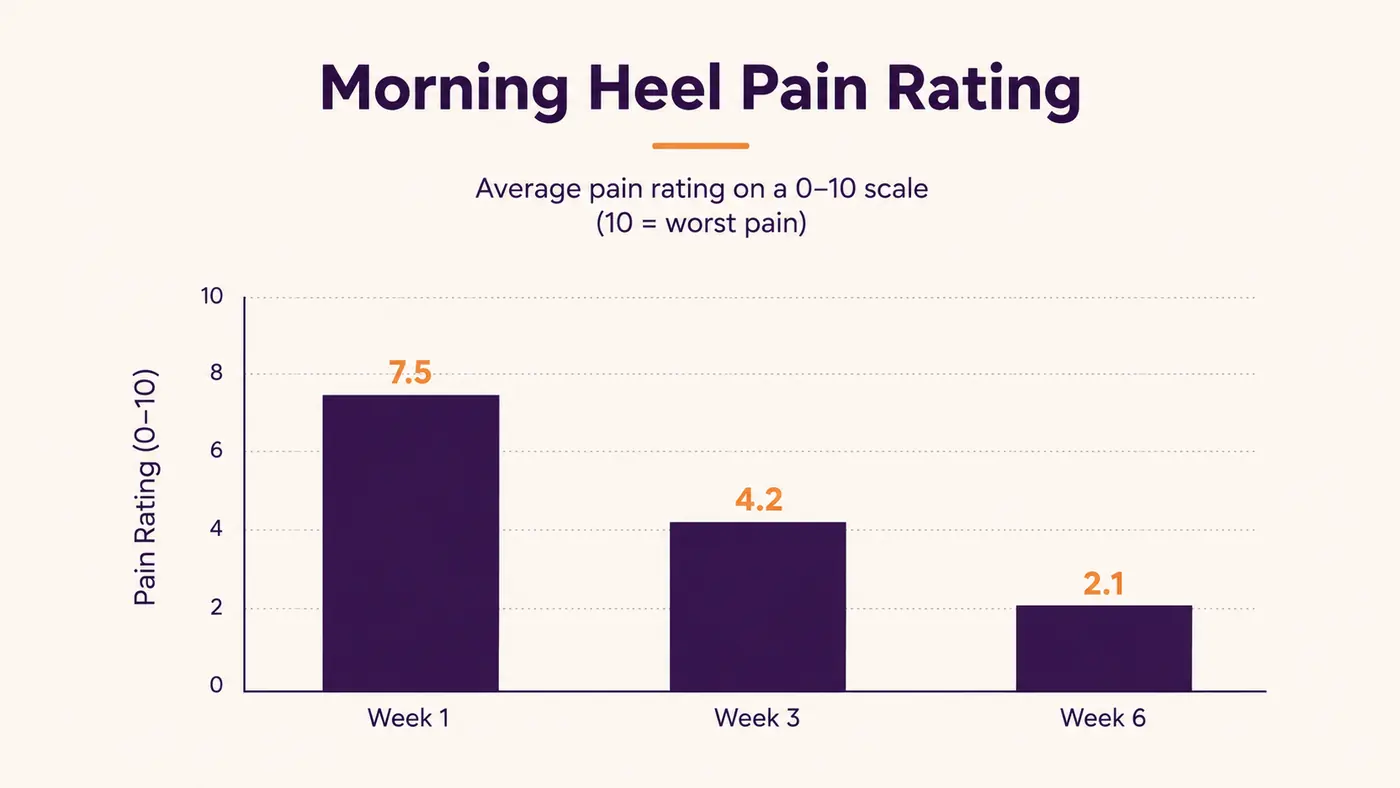
The first step out of bed used to be the worst moment of my whole day, worse than anything during an actual run. Within about three weeks of wearing it most nights, that first step stopped feeling sharp. It's not gone entirely on a bad week, but it eased from something that made me wince to something I barely register most mornings. If you know exactly which step I mean, that's the one this splint is built for.
Adjustable Enough to Fit My Narrower Left Foot
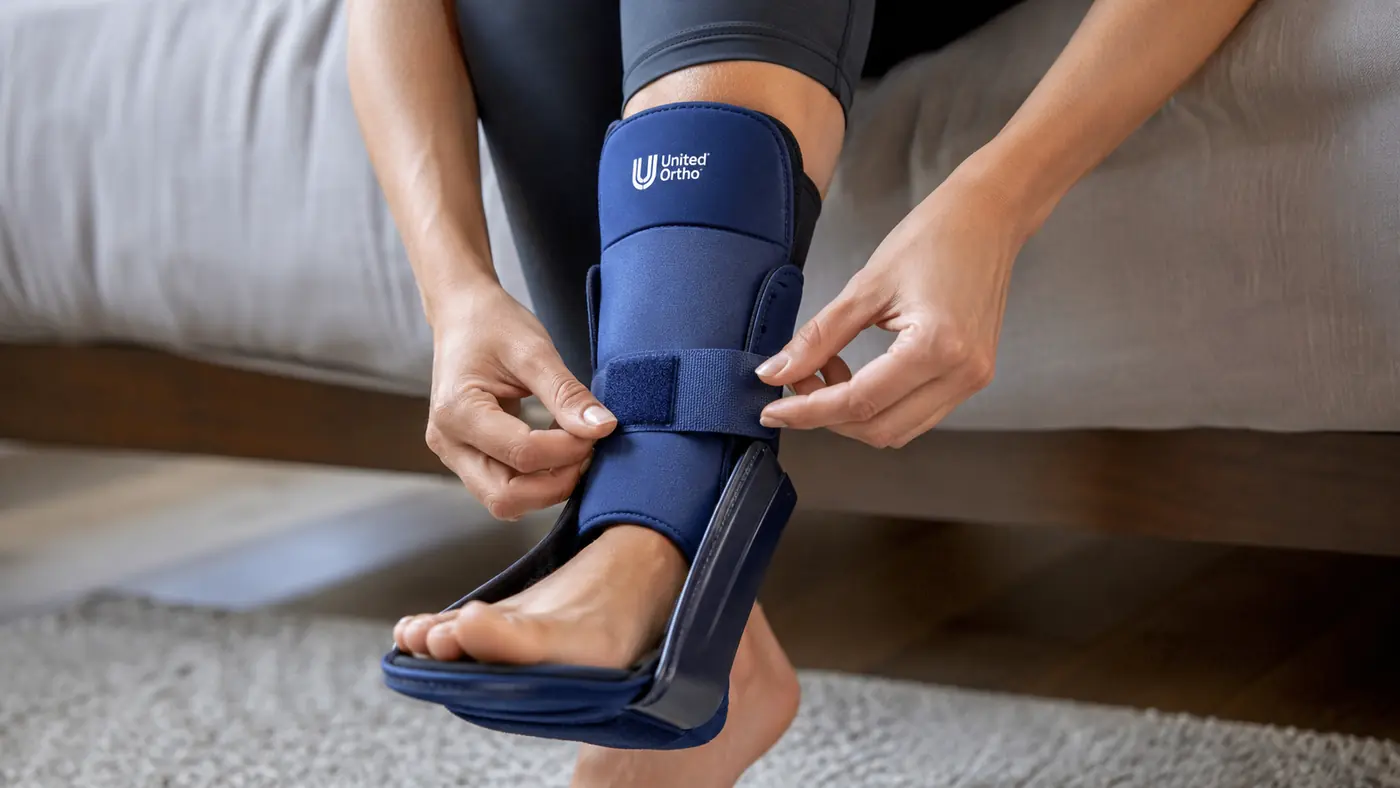
It's built to fit either foot, and the straps adjust enough that it didn't dig into my ankle the way I worried a one-size brace would. My left foot runs a little narrower than my right, and I could cinch the straps down without the shell shifting around in my sleep. I've fitted enough clients with different foot shapes to know a splint that doesn't adjust well just ends up in a drawer by week two.
Works While I'm Asleep, Not Cutting Into Training Time
Between lifting three mornings a week, running three days a week, and four days on my feet at the table, I don't have spare minutes for another stretching routine. The splint does its job while I'm already unconscious. That's the real appeal for anyone whose schedule is already full, it's recovery time that doesn't compete with anything else on the calendar.
Let Me Dial In the Angle Instead of Forcing a Hard Stretch
My ankle was tighter than I expected the first night, so I started with the strap looser and worked toward a fuller dorsiflexion angle over about two weeks. Being able to adjust that gradually mattered, since I've seen clients quit a splint entirely after one night of overdoing it. Easing into the angle kept me wearing it consistently instead of dreading it.
The Rigid Shell Stops My Toes From Curling Under
Left to my own devices in my sleep, my foot points and my toes curl, which is exactly the position that keeps the fascia short and cranky. The splint's rigid shell physically won't let that happen. It's a small thing, but it's the difference between a stretch that holds for eight hours and one that undoes itself the moment I roll over.
Packs Flat Enough for Continuing Education Trips
I travel a few times a year for continuing education courses, and gear that doesn't pack easily gets left behind. This splint folds down flat enough to slide into a duffel bag without eating up half the space. I learned the hard way, on a week I left it home, that skipping even a few nights brought the old first-step pain right back within days.

Simple to Put On After a Long Treatment Day
By the end of four straight client sessions, I don't have patience for complicated gear. This one goes on in under a minute, one strap at a time, with a clear enough fit that I don't have to think about it. On the nights I'm most tired, which are exactly the nights I need it most, the low effort is what actually keeps it in rotation.
Quieted a Compensation Pattern Creeping Into My Stride
I noticed I'd started favoring my left foot slightly during the worst weeks, landing softer on that side on my long Sunday runs. That kind of compensation has a way of showing up somewhere else eventually, usually the opposite hip or knee. Once the morning pain eased, my stride evened back out, which I could feel by around mile four instead of limping through the first mile of every run.
Amazon Even out your stride before something else pays for it →
Cheap Enough to Test Against a Real Training Block
I don't put a lot of stock in gear that promises results with no real cost to trying it. This one is worth the money against a full training block, and if it hadn't worked I wouldn't have lost much testing it. Two years of a cranky fascia is a long time to keep guessing, and this is the one thing that actually moved the needle for me.
What I'd Skip
I'd skip any night splint that's a soft sock-style wrap with no rigid support built in, since those don't hold dorsiflexion the way a hard shell does, they just apply light pressure that stretches out by two in the morning. I'd also skip a splint that only comes in one bulk size with straps that don't actually cinch down, because a loose splint slides around all night and you wake up having barely worn it at all. And I wouldn't bother with one that needs a manual to figure out, because gear that's confusing at eleven at night after a long day just does not get worn. Simple, adjustable, and rigid enough to actually hold the position, that's the whole spec sheet that matters. I get more specific about the fit and the strap adjustment in my honest review of this exact splint, including the one week it slid loose on me.
It didn't fix my fascia overnight. It just stopped my own sleeping foot from undoing the day's progress.
Two Years of a Cranky Left Foot, and This Is What Finally Changed the Mornings
The United Ortho Night Splint is still part of my nightly routine, strapped onto my left foot before I turn off the light. Check today's price and current rating on Amazon.
Amazon Check Today's Price on Amazon →