
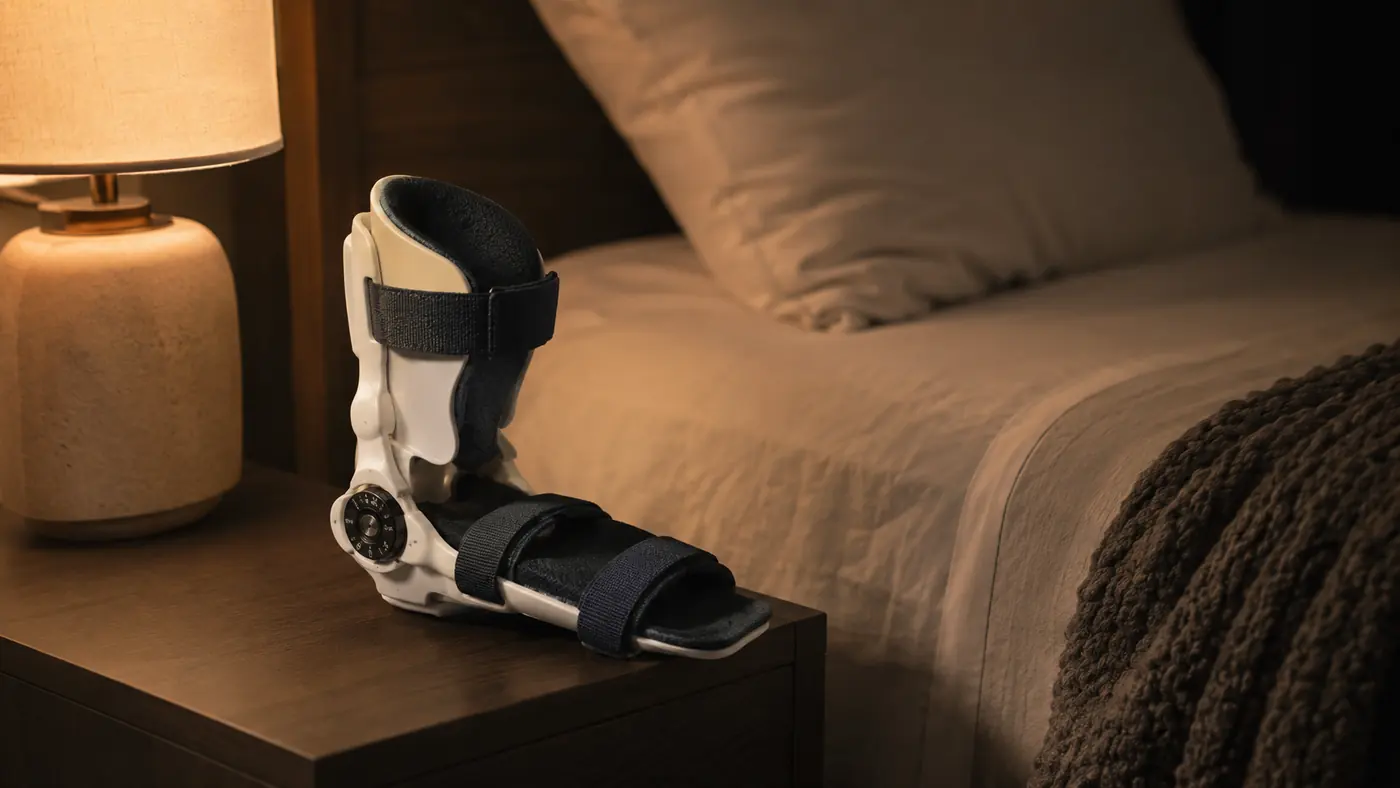
The United Ortho Night Splint showed up on my porch on a Tuesday, and it sat unopened on my dresser for almost a week. I'm a licensed sports-massage therapist, and I've had a lot of clients hand me a plastic brace they bought off a late-night ad and ask why it isn't working. I didn't want to be that person for my own foot. My left plantar fascia has been cranky since a half marathon two years ago, the kind of thing that flares after long treatment days and never fully goes away, and I was genuinely skeptical that strapping my ankle into a rigid brace overnight was going to do anything my stretching routine hadn't already done. But the first-step pain in the morning had gotten bad enough that I finally buckled it on before bed. This is what actually changed over the following weeks, tracked the way I'd track it for a client, not rounded up to make a better story.
I'm a former collegiate 800m runner, mid-pack, no records, nothing that ever made a program page, and now I spend four days a week leaning over a massage table and five days a week trying to keep my own body upright under that same posture. My long run is eight to ten miles most Sundays, and that left heel has been the one thing that quietly complains about it every single week since that half marathon. If you want the mechanism behind why a night splint works on fascia the way it does, I get into that below. If you just want to know whether it's worth the drawer space, keep reading, because I'm going to tell you exactly where it earned its spot on my nightstand and where it fell short.
The Quick Verdict
A genuinely useful overnight tool for the sharp first-step pain that comes with a cranky plantar fascia, though it took real patience before bed and it never touched the ache that shows up later in a long run.
Amazon Check Today's Price →That First Step Out of Bed Shouldn't Feel Like Stepping on Glass. Here's What I Started Doing About It.
The United Ortho Night Splint is the last thing I put on before I turn off the lamp now. Check today's price on Amazon and see the current rating for yourself.
Amazon Check Today's Price on Amazon →How I've Used It
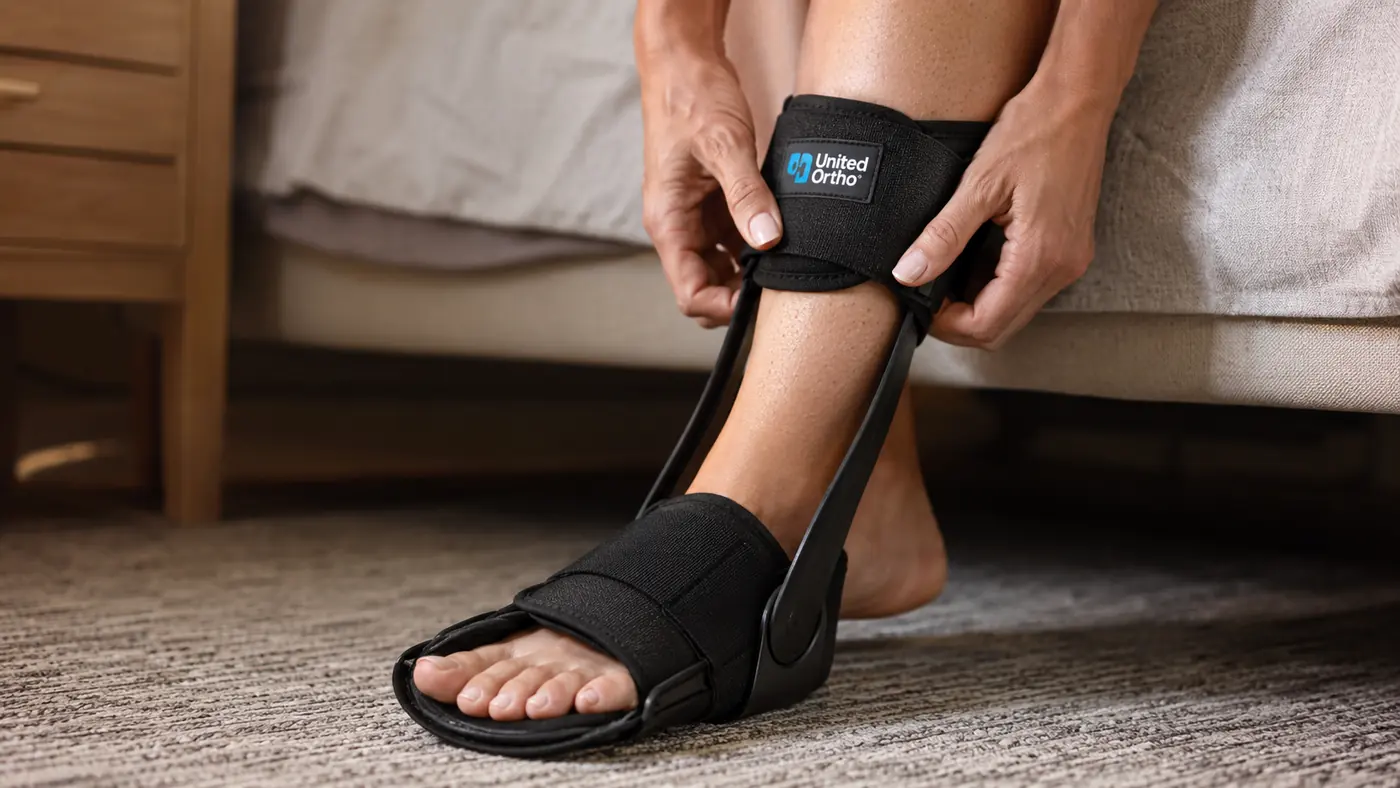
My routine is unglamorous. Every night, right before I turn off the lamp, I sit on the edge of the bed and strap the splint onto my left foot and calf. It holds the ankle at roughly a neutral angle, foot flexed up instead of pointed down the way it drifts under a blanket, which keeps the plantar fascia and the achilles in a mild stretch for hours instead of shortened all night. I sleep on my back most nights anyway, so the shape of it under the sheet hasn't been the fight I expected. Side sleeping is a different story, and I'll get to that.
The first week, I didn't wear it a full eight hours. I'd wake up around 2am, unbuckle it, and go back to sleep without it, mostly because the strap felt tight in a way I wasn't used to and I woke up more from the novelty of it than from real discomfort. By the second week I was wearing it a full night most nights, adjusting the straps looser than the instructions suggested because a plantar fascia that's already irritated doesn't need an aggressive stretch, it needs a consistent mild one held over time.
I keep it on the nightstand now, not in a drawer, for the same reason I keep other recovery tools within arm's reach in my spare bedroom. If it takes more than ten seconds to find, I don't reach for it on a tired night, and a night splint that doesn't get worn doesn't do anything for anyone.
Why I Was Skeptical at First
I see clients in the treatment room who've bought a brace, worn it for three nights, felt nothing dramatic, and shoved it in a closet. I almost did the exact same thing. My honest expectation going in was that a rigid overnight brace would be uncomfortable enough that I'd stop wearing it within a week, and that even if I stuck with it, a plastic and foam shell wasn't going to touch tissue that's been irritated for two years.
What changed my mind wasn't a dramatic first night. It was that the discomfort I expected never really showed up. The brace is bulkier than I pictured, but it isn't painful, and once I stopped cranking the straps tight like I was bracing a sprained ankle and started treating it as a gentle overnight hold, it stopped feeling like a medical device and started feeling like a habit, closer to wearing a retainer than wearing a cast.
What's Actually Happening to the Fascia Overnight
Here's the mechanism, explained the way I'd explain it to a client on the table, not a marketing page. A lot of the sharp pain people feel with their first steps in the morning comes from the plantar fascia shortening overnight while the foot points down under a blanket, then getting yanked back to length the instant weight goes through it standing up. That sudden stretch on cold, shortened tissue is what produces that glass-underfoot feeling for the first ten or fifteen steps.
A night splint holds the foot at that flexed angle for hours instead of letting it shorten, so the tissue is already close to its working length by the time you stand up. It's a low-load, long-duration stretch, the same principle I use in the treatment room when I hold a gentle stretch on a tight muscle for two or three minutes instead of bouncing through it for ten seconds. The difference with the splint is duration measured in hours, not minutes, which is something you genuinely cannot replicate awake.
I want to be clear about what this is and isn't doing. It isn't healing the fascia and it isn't resolving whatever caused mine to get irritated after that half marathon two years ago. It's managing the specific mechanical setup that produces the worst version of the pain, the first-step spike, by not letting the tissue shorten in the first place.
Weeks One Through Six: What Actually Changed
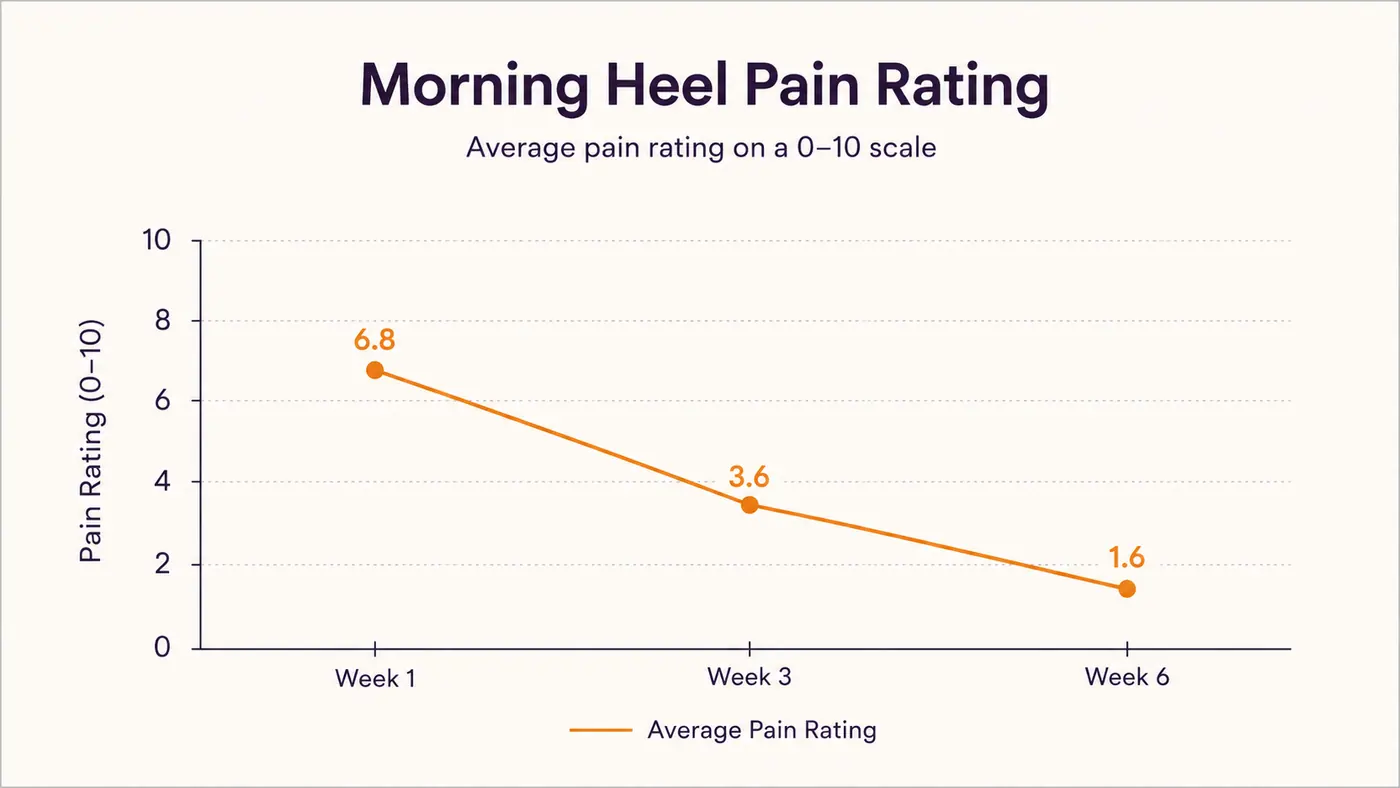
Week one, honestly, nothing. I woke up sore, the strap felt strange, and I questioned whether I'd wasted a drawer's worth of space on this. I kept a rough one to ten rating of my first ten steps out of bed each morning, mostly out of habit from tracking client progress, and week one hovered around a six or seven most days, which was about where I'd been for months before the splint showed up.
By week three, that rating had dropped to a three or four on most mornings. The sharp, glassy quality of the pain was mostly gone. What was left felt more like ordinary stiffness, the kind I associate with any tissue that's been quiet for eight hours, not the specific fascia pain that's been flaring since that half marathon. I noticed I wasn't limping to the bathroom anymore, which sounds small until you've done it every morning for two years.
By week six, mornings were consistently a two or three, and the days I skipped the splint, which happened a handful of times when I traveled for continuing education without packing it, the old first-step pain came right back within a night or two. That on-and-off pattern told me more than any single good week could have. This wasn't coincidence lining up with the splint. It was the splint doing something specific that stopped the moment I stopped wearing it.
What It Didn't Touch
Here's where I have to be honest, because I see clients make this leap and I don't want you making it too. The night splint did essentially nothing for the ache that shows up in the same foot later in a long run, usually somewhere past mile six on my Sunday runs. That's a different load pattern entirely, repeated impact through a fascia that's already sensitized, and an overnight brace has no mechanism for touching that. If your plantar fascia only bothers you mid-run and your mornings feel fine, this tool is solving a problem you may not actually have.
It also didn't do anything for my lower back, which locks up after long drives and long treatment days, or my neck and upper traps from leaning over the table all day. That's not a criticism of the splint, it was never built for either of those, but I know how easy it is to buy one recovery tool and quietly hope it fixes everything else that's bothering you. It won't, and I'd rather tell you that now.
For a closer look at how this compares to the other common approach, propping the arch up from below all day instead of stretching the fascia overnight, I wrote a full breakdown in night splint versus arch support insoles, because the two aren't solving the same part of the problem and I think most people buy the wrong one first.
What I Considered Instead
Before I committed to sleeping in this thing every night, I looked at just doing calf and fascia stretches before bed, no brace at all, since that costs nothing and it's the first thing I tell a client with a tight budget to try. The stretches helped in the moment, but the effect was gone by morning almost every time, because eight hours of sleep with the foot pointed down undoes a two-minute stretch pretty quickly. There's a longer list of exactly where a splint pulls ahead of stretching alone and where stretching alone is genuinely enough in ten reasons a night splint helps with plantar fasciitis, if you want the fuller comparison.
I also thought about just toughing out the first-step pain and hoping it faded on its own the way some minor tightness does. Two years of it fading and coming back on its own was proof enough for me that waiting wasn't a strategy, it was just how I'd been living with it.
Comfort, Fit, and Six Weeks of Actual Sleep
The straps are adjustable enough that I could loosen the fit considerably from where it ships, which mattered a lot for an already-sensitive foot. The shell is rigid across the sole but padded where it contacts skin, and after six weeks of nightly use I haven't had any skin irritation, which was one of my bigger worries going in given how much of the day I already spend standing.
Side sleeping is the honest weak point. On the nights I roll onto my left side, the brace presses against the mattress in a way that wakes me up more than I'd like, and I've ended up sleeping more on my back or right side than I used to as a workaround. It's a real tradeoff, not a dealbreaker, but I'm not going to pretend six weeks of adjusting how I sleep cost nothing.
What I Liked
- Cut my morning first-step pain rating from a six or seven down to a two or three within six weeks
- Straps loosen enough to make the overnight hold genuinely comfortable once dialed in
- No skin irritation after six weeks of nightly use
- The relief pattern reversed and returned when I skipped nights, which confirmed it was actually doing something
- Cheap enough to try against a genuinely stubborn, years-old flare
Where It Falls Short
- Did nothing for the ache that shows up mid-run, only the first-step morning pain
- Side sleeping is genuinely disrupted, I had to adjust my sleep position
- First week felt like a waste before any change showed up
- Bulkier under the sheets than I expected from photos
It didn't heal a two-year-old flare. It stopped my fascia from shortening every single night, which turned out to be most of the fight.
Who This Is For
This is a good fit if your worst pain is specifically that first-step, glass-underfoot feeling in the morning, and it's been sticking around for weeks or longer rather than a day or two. It's also worth trying if you sleep on your back or stomach most nights, since the side-sleeping tradeoff is real. If you're the kind of person who'll actually put something on before bed every night rather than a few times a week, this earns its spot on the nightstand the way it earned mine.
Who Should Skip It
If your foot pain shows up mid-run or mid-walk rather than first thing in the morning, this brace is solving a different problem than the one you have, and I'd point you toward looking at footwear and loading patterns instead. If you're a committed side sleeper who knows you won't tolerate a brace under the sheets, skip it and look at daytime options instead. And if anything about your foot pain feels sudden, swollen, or off in a way that doesn't match ordinary morning stiffness, that's a conversation for a foot and ankle specialist, not something to strap a brace onto and hope for the best.
Six Weeks Later, It's Still the Last Thing I Put on Before the Lamp Goes Off
If your mornings start with that same sharp, first-step heel pain, the United Ortho Night Splint is worth testing against your own routine. Check today's price and current rating on Amazon.
Amazon Check Today's Price on Amazon →