
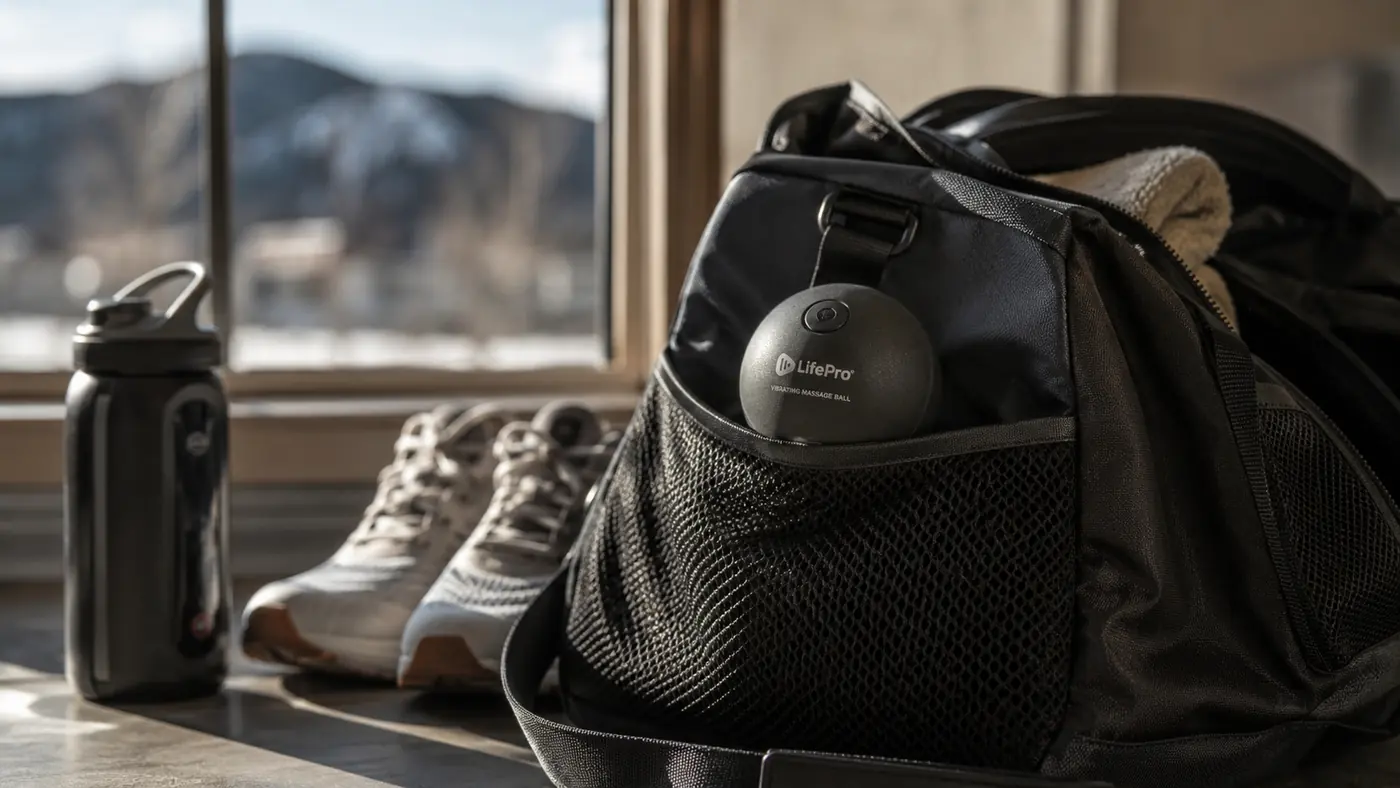
The LifePro Vibrating Massage Ball has lived in the side pocket of my gym bag for months now, and I want to get one thing out of the way before anything else: it is not the miracle upgrade over a plain ball that some of the marketing around it suggests. I'm a licensed sports-massage therapist and a former collegiate 800m runner, mid-pack, no records, so take the credentials for what they are and not more. I use this ball on my calves and glutes after runs, three mornings a week when I lift, and some evenings when my lower back locks up after a long day leaning over a treatment table. I already wrote the long-term tracking piece on this ball, month by month, and you can read that here if you want the full arc. This is the other version. This is battery life, noise, and whether the vibration actually reaches anything real, without rounding any of it up.
I'll admit I went into this one already a little skeptical, because vibration is one of those features that sounds impressive on a product page and does almost nothing in practice on some tools. So I started keeping a note on my phone, every time I charged it, every time it surprised me with noise at an inconvenient hour, every time I reached for it and then set it back down because it wasn't the right tool for what was actually sore. Here's what that log actually says, several months in.
The Quick Verdict
A genuinely useful trigger-point tool that reaches muscle faster than a plain ball, with a battery claim that's optimistic and a noise level that's louder than the listing implies.
Amazon Check Today's Price →Tired of Grinding an Elbow Into Your Own Calf and Getting Nowhere? This Is What Actually Changed That.
The LifePro Vibrating Massage Ball is the one I actually reach for after a run now, not because it's perfect, but because it works faster than the plain ball it replaced. Check today's price and current rating on Amazon.
Amazon Check Today's Price on Amazon →How I've Used It
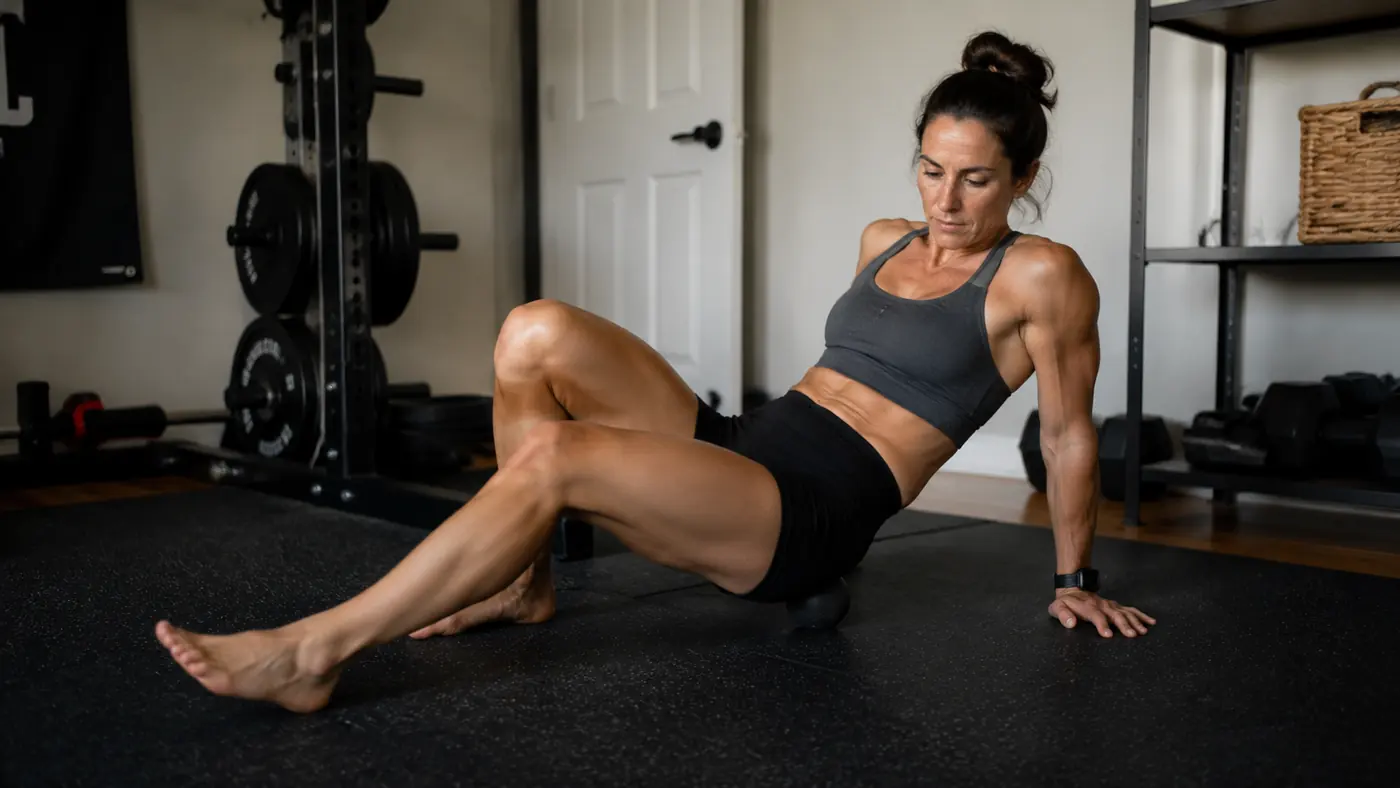
My long run sits at eight to ten miles every Sunday, and my calves are the first thing to complain about it, usually somewhere around mile six on a dry, high-altitude day. The LifePro ball rides in my gym bag specifically for that, and for my glutes, which tighten up on the same runs in a way that a static stretch never quite reaches. Three mornings a week I lift in my spare bedroom, rubber mat, half rack, shelf of recovery tools along the wall, and the ball comes off that shelf before I start, mostly for glute activation rather than recovery in that context.
The evening use is different and honestly the one I didn't expect going in. My lower back locks up after long drives and long treatment days, four days a week leaning over a table will do that to anyone, and some nights after client notes on my laptop at the kitchen counter I'll sit on the floor and work the ball along the muscle just off my spine, low and slow, low speed setting, ten minutes at most. My neck and upper traps get the same treatment some evenings, though I'm more careful there because the ball is a blunter tool near the neck than most people expect.
What I don't do is use it directly on my arch. My left plantar fascia has been cranky since a half marathon two years ago, and vibration through a hard plastic shell against an already irritated tendon has never felt like a good idea to me, professionally or personally. I mention this because I see people assume a vibrating ball is the answer for everything sore, and it isn't. More on that in a minute.
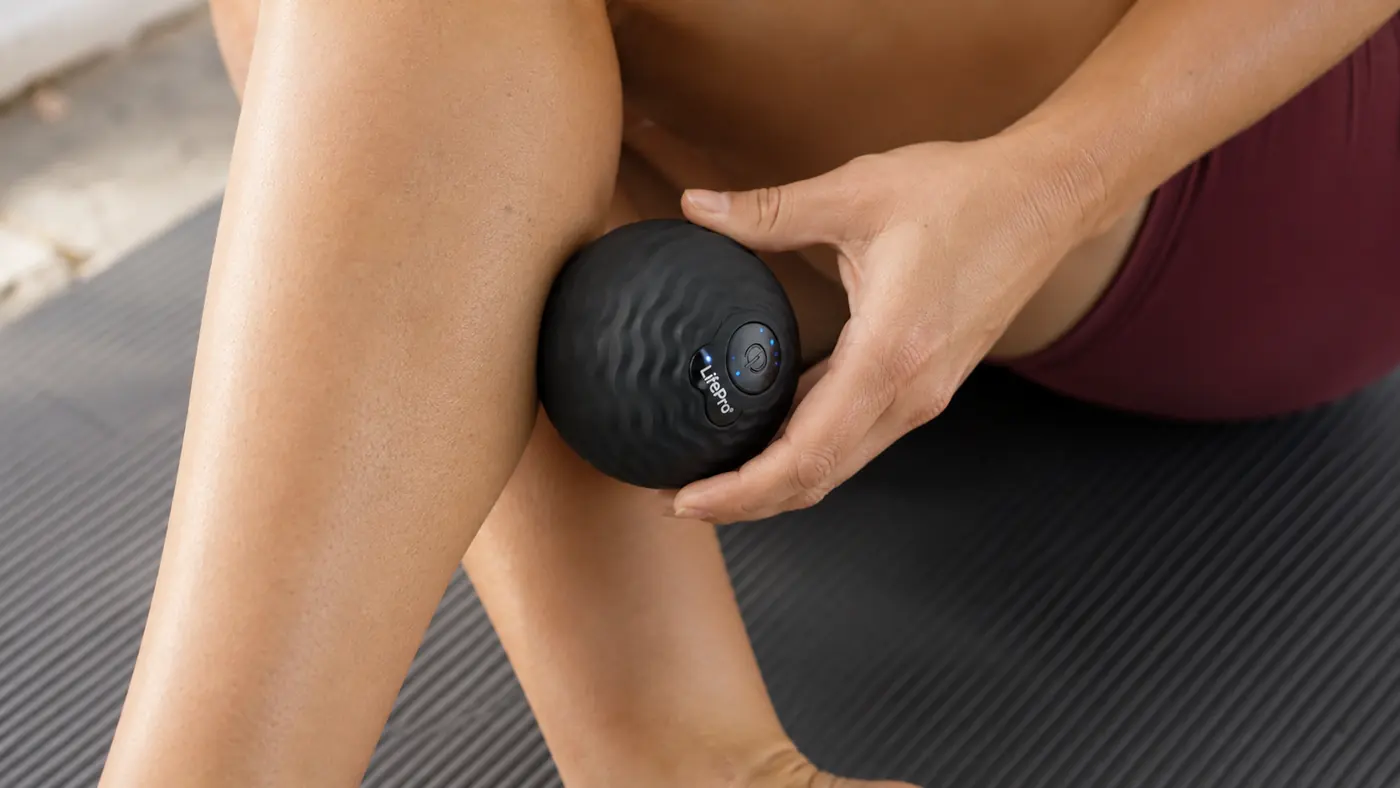
The controls themselves are simple enough that I don't think about them, which matters more than it sounds. A single button on top cycles through the four speeds, tap once for low, tap again to step up, hold it down to shut off. There's no companion app, no bluetooth, nothing else to charge or pair. For a tool I'm reaching for with tired hands after a long run, I want exactly that: one button, four settings, done.
Battery Life, Actually Tracked
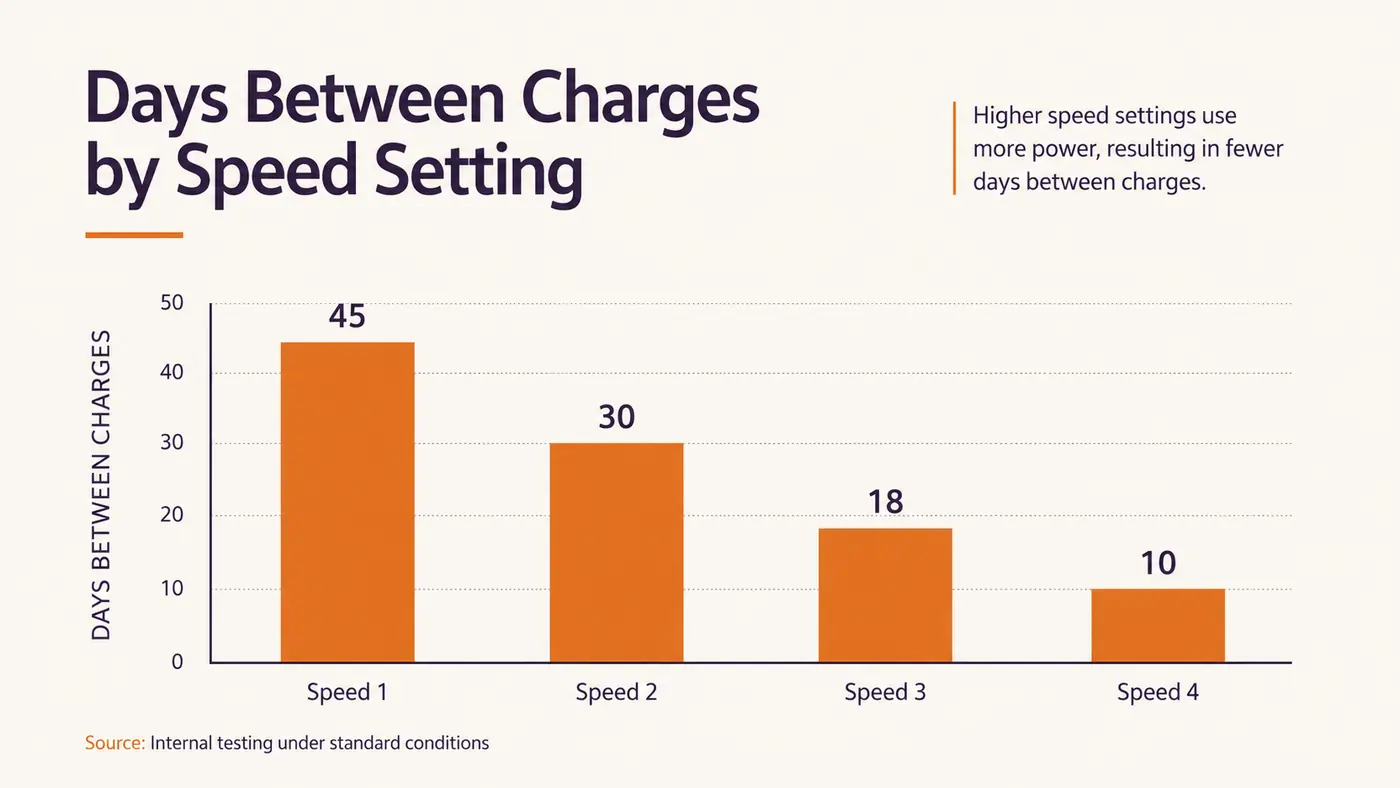
This is the section I wish existed before I bought mine, because the listing gives you a runtime figure and nothing about how that number changes depending on which of the four speeds you actually use. I charge it with the included USB-C cable, and for the first month I just charged it whenever the light blinked low, no real tracking. Starting month two I wrote down the date every single time it went on the charger, out of pure curiosity about whether the number on the box held up in the real world.
On the lowest speed, the one I use for the slow evening back work, I got close to ten days between charges most of the time. On the highest speed, the one that actually gets used for maybe ninety seconds at a time when I want a stronger hit on a stubborn calf knot, the battery drained roughly twice as fast, closer to four or five days of my normal mixed use before it needed the cable again. That's not a controlled lab test, it's one ball, one person's actual routine, but it lined up closely enough across three separate months that I trust the pattern more than I trust the single number printed on the packaging.
The charge indicator is a small light near the button that shifts from red to green as it fills, and it's honest about itself, it doesn't pretend to be full when it's actually at half. I've unplugged it early more than once and the color told me the truth instead of guessing off the box's two-hour full-charge claim, which in my log runs closer to two and a half hours from fully dead to green.
The practical takeaway: if you plan to live on the highest setting because that's the one that feels most impressive in the store or in a five-star review, budget for charging it far more often than the listing implies. If most of your use is going to be lower and slower, like mine, the runtime is genuinely solid and I've never once had it die mid-session.
The Noise Nobody Mentions in the Listing
Nobody warned me about this and it's probably the single biggest surprise across the whole time I've owned it. On the lower two speeds it's quiet enough to use while half asleep, a low hum you'd barely notice over a podcast. On speed three and especially speed four, it is genuinely loud, loud enough that I think twice about using it before six in the morning given how thin the walls are in my place, and loud enough that a client waiting in the next room at the clinic asked what the buzzing sound was the one time I forgot to leave it in my bag.
For context on what loud actually means here: on speed one, it's quieter than a box fan on low. On speed four, it's closer to a stick blender running through a dish towel, a sound that carries through a closed door without much trouble. If your living situation or workspace means every noise gets noticed, plan your sessions around that instead of assuming you'll be able to sneak it in during a quiet moment.
It's not a dealbreaker for me because most of my sessions run on speed one or two anyway, but if you're picturing something you can quietly work into a calf while on a work call with your camera off, that's only true at the lower settings. Crank it up and everyone in the room knows exactly what you're doing.
Whether the Vibration Reaches Anything Real
This is the part I care about most professionally, because vibration as a feature gets sold as if it automatically means deeper tissue work, and mechanically that isn't quite right. What vibration actually seems to do, based on what I feel in my own tissue and what I've watched in clients who use similar tools, is more about the nervous system than raw mechanical depth. It appears to dampen the pain signal enough that I can sink into a spot with less guarding from the muscle, which lets me get to a trigger point faster than I could with a plain, static ball where my own bodyweight is doing all the work.
Compared to a plain lacrosse ball, which I used for years before this, the difference shows up mostly in how fast a spot releases rather than how hard the ball is pressing. A plain ball against a stubborn calf knot might take two or three minutes of patient, uncomfortable holding before it lets go. This one, on speed two or three, tends to get there faster, often inside a minute, probably because the vibration takes the edge off the discomfort enough that I don't tense back against it the way I do with a static ball.
I've watched this play out with a couple of clients who bought their own after a session with me, both runners with the same calf tightness I deal with. Neither reported it replacing the actual table work we do together, and I wouldn't want it to. What they both said, independently, was that it made the five minutes before a run or the five minutes after feel less like a chore, which is really the whole point of a home tool. It isn't supposed to replace a therapist. It's supposed to make the days between sessions less miserable.
What it does not do is substitute for actual sustained pressure work on the kind of dense, fibrous tissue you get in a truly locked-up glute or a tight IT band. On those spots I still end up leaning my full bodyweight into it the same way I would with any static ball, and the vibration becomes almost background noise at that point rather than the main event. I'd rather tell you that honestly than let you think this ball does something a plain one physically cannot.
Where It Falls Short
The handle design is a real tradeoff. It gives you leverage a plain round ball doesn't have, which is genuinely useful for reaching your own glutes and lower back without contorting yourself, but the handle also means the ball itself sits slightly farther from your hand than a palm-sized ball would, and on smaller trigger points, like the ones between shoulder blades, I sometimes find myself wishing for more precision than the shape allows.
There's also a grip-fatigue issue nobody mentions. Working the ball into your own upper traps or between your shoulder blades means holding the handle at an awkward angle longer than feels comfortable, and my forearm has cramped mid-session more than once trying to reach a spot my own arm wasn't really built to reach easily. That's not really the ball's fault, it's just physics, but it's worth knowing before you assume you'll be able to hit every knot on your own back solo.
The surface has picked up a faint rubbery smell faster than I expected given how often I wipe it down, and after a few months of near-daily use I noticed the vibration motor runs slightly warmer on speed four than it did when it was new, nothing alarming, but noticeable if you're paying attention the way I tend to. And the honest disappointment for some buyers: if you're expecting something that reaches the kind of deep, sustained pressure a dense IT band or a genuinely stubborn glute needs, the vibration is a nice-to-have on top of the pressure work, not a replacement for it. People who buy this expecting the vibration alone to do the job on their toughest spots tend to come away underwhelmed, and I understand why.
What I Liked
- Vibration genuinely speeds up how fast a stubborn calf or glute knot releases compared to a plain static ball
- Lower two speeds are quiet enough for early morning or shared-space use
- Handle gives real leverage for reaching your own lower back and glutes solo
- Battery life is solid on the lower speeds, close to ten days between charges in my log
- Cheap enough to try against what a professional session costs
Where It Falls Short
- Speeds three and four are loud enough that others in the room will notice
- Battery drains roughly twice as fast on the highest speed versus the lowest
- Handle shape sacrifices some precision on small, specific trigger points
- Vibration doesn't replace sustained pressure work on genuinely dense tissue like a tight IT band
- Motor runs slightly warmer after months of near-daily high-speed use
It didn't make my hands work harder. It made the tissue let go faster, and that's a different kind of relief than pure pressure ever gave me.
Who This Is For
This suits anyone who already uses a static ball or a lacrosse ball and finds themselves impatient with how long a stubborn spot takes to release, especially calves and glutes after running, or a lower back that locks up from long stretches of driving or standing. If quiet isn't a priority and you're comfortable using the higher speeds without worrying who hears it, you'll get the most out of what this ball actually does well. For the full walk-through of exactly which trigger points respond best and how to find them, I put together a step-by-step guide that goes muscle by muscle.
Who Should Skip It
If you need something you can use silently before six in the morning without waking anyone, plan on living on the lower speeds only, or look elsewhere. If your main problem area is something delicate like an already irritated plantar fascia, I'd skip using any vibrating tool directly on it and talk to whoever is treating you instead. And if you're hoping vibration alone will resolve a truly dense, chronic knot without any real pressure behind it, this won't be the fix you're picturing. I'd rather you know that now than be disappointed after buying it expecting more than a ball, vibrating or not, can actually deliver.
Months In, It's Still the One That Comes Out of My Gym Bag First
The vibration won't replace real pressure work on your toughest spots, but for calves, glutes, and a locked-up lower back, it releases faster than a plain ball ever did for me. Check today's price and current rating on Amazon.
Amazon Check Today's Price on Amazon →