
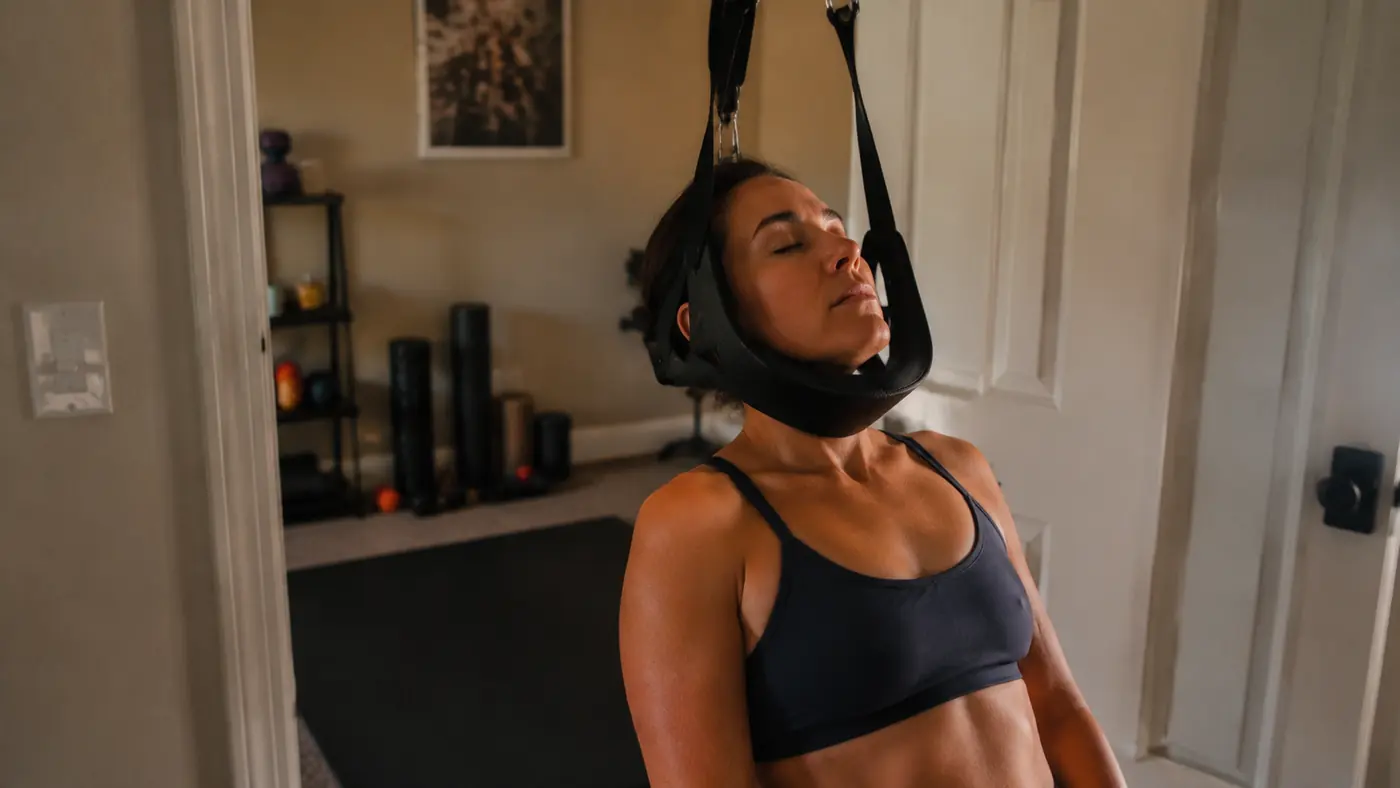
Short answer first, since I know that's what most people scrolling this want. For actual cervical traction, the kind that opens space between the vertebrae instead of just cushioning the curve of your neck, I reach for The Original Neck Hammock over a foam neck stretcher pillow every time. I say that as someone who spent money on both before I ever wrote a word about either one.
I'm a licensed sports-massage therapist, and my own neck and upper traps get sore from leaning over a treatment table four days a week. My clients call that same forward-head pattern tech neck when it comes from a screen. I get it from the table, they get it from a phone or a monitor, the tissue does not care where the load came from. Both tools claim to fix it. Only one of them actually pulls traction through the joint, and that difference matters a lot more than the marketing on either box lets on.
I bought both of these with my own money before I ever thought about writing this comparison, mostly out of curiosity about whether the cheaper, simpler option could do the same job as the strap-and-door setup. I ran them side by side for a stretch of evenings, not as a formal study, just my own training log the way I track everything else. What follows is what actually happened, not what either box promised.
| The Original Neck Hammock | Foam Neck Stretcher Pillow | |
|---|---|---|
| Mechanism | Door-anchored strap system that suspends and lightly pulls the head, true axial traction | Curved foam block you lie back over, mostly passive positioning and gravity |
| Traction force | Adjustable pull through your own body weight and recline angle | Fixed, whatever the foam shape gives you, no way to increase it |
| Setup | Loops over any standard interior door, takes under a minute once you know the height | No setup, just lie down on it wherever there's floor space |
| Session length | 10 to 15 minutes, most people cannot tolerate real traction much longer than that | Can stay on it 20 to 30 minutes since there is no real load to fatigue out of |
| Portability | Folds flat, fits in a gym bag, needs a door on the other end | Bulkier foam block, doesn't pack flat, doesn't need anything but floor |
| Learning curve | Genuinely awkward the first two or three sessions while you find your angle | Zero learning curve, you lie down and you're using it correctly |
| Best for | Real end-range cervical extension and true decompression through the segments | Passive resting position and mild upper-back opening, nothing that pulls through the joint |
How I Actually Compared Them
My evenings follow a pretty fixed pattern. I lift three mornings a week, run three times a week, and take a long run on Sunday, usually eight to ten miles on dry trail out here. By the time evening rolls around I'm often at the kitchen counter finishing client notes on my laptop, and that's exactly the posture that leaves my neck and traps tight on top of whatever the treatment table already did to me earlier in the day. That's the window I tested both tools in, not a rested morning, but the actual end-of-day state most people are dealing with when they go looking for something like this.
I gave the stretcher pillow a real chance first, five straight evenings, ten to fifteen minutes each, lying back over it on the mat in my spare bedroom. It felt fine in the moment. My shoulders dropped, my breathing slowed, and I'd usually drift a little. But nothing carried over. The next evening my neck felt exactly like it had the night before, same tightness, same starting point, like the session had never happened once I stood back up.
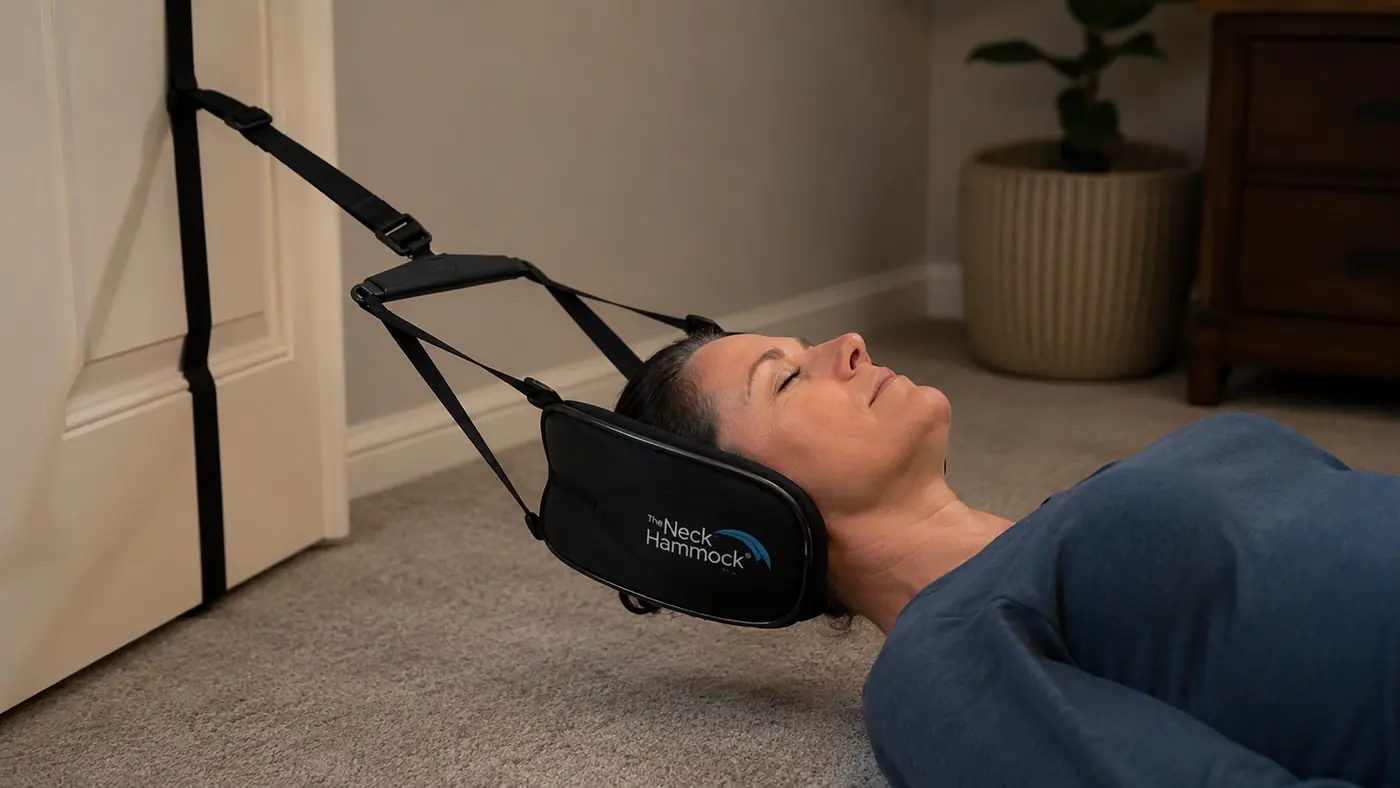
Then I switched to the hammock for the following two weeks, same time of evening, same fifteen-minute window, anchored off the same spare bedroom door. The first few sessions were rougher, mostly because I was still adjusting strap length and hadn't found my angle yet. But by the second week I noticed something the pillow never gave me: my neck felt looser the next morning, not just during the session itself. That carryover, session to session, is the whole reason I ended up trusting the hammock over the pillow, and it's the piece that convinced me the mechanism difference on paper actually shows up in real life.
Where The Original Neck Hammock Wins
The reason the hammock wins on mechanism is simple anatomy. When you're suspended in the straps and lean your head back into them, you're getting actual axial traction, a gentle pull along the length of the cervical spine that creates a small amount of space between the vertebrae. That's a completely different input than resting your neck on a curved piece of foam. A foam pillow can support a lordotic curve and let tight muscles relax into gravity, which isn't nothing, but it is not decompression. It's positioning. I explain that distinction to clients constantly, because the two get marketed as if they do the same job and they don't.
The hammock also lets you adjust the load. I anchor mine off my spare bedroom door most evenings, and depending on how my neck feels after a long treatment day, I control how far I recline and how much of my body weight goes into the pull. Some nights I barely lean back. Other nights, after a day of heavier clients, I go further into it. A stretcher pillow gives you one shape and one intensity. You either fit it or you don't, and there's no dial to turn if today calls for more or less than yesterday.
The tradeoff, and I want to be honest about this because I don't sell anything by pretending a tool has no downside, is that the hammock takes real learning. My first two sessions were awkward. I couldn't find the right door height, the straps felt strange under my jaw, and I came away from session one wondering if I'd wasted my evening. By session four it clicked, and now it takes me under a minute to set up and get into position. If you want a full walk-through of exactly how I dialed that in, I wrote a separate piece on how to relieve tech neck with the neck hammock that covers the door height and strap-length details step by step.
Where The Neck Stretcher Pillow Wins
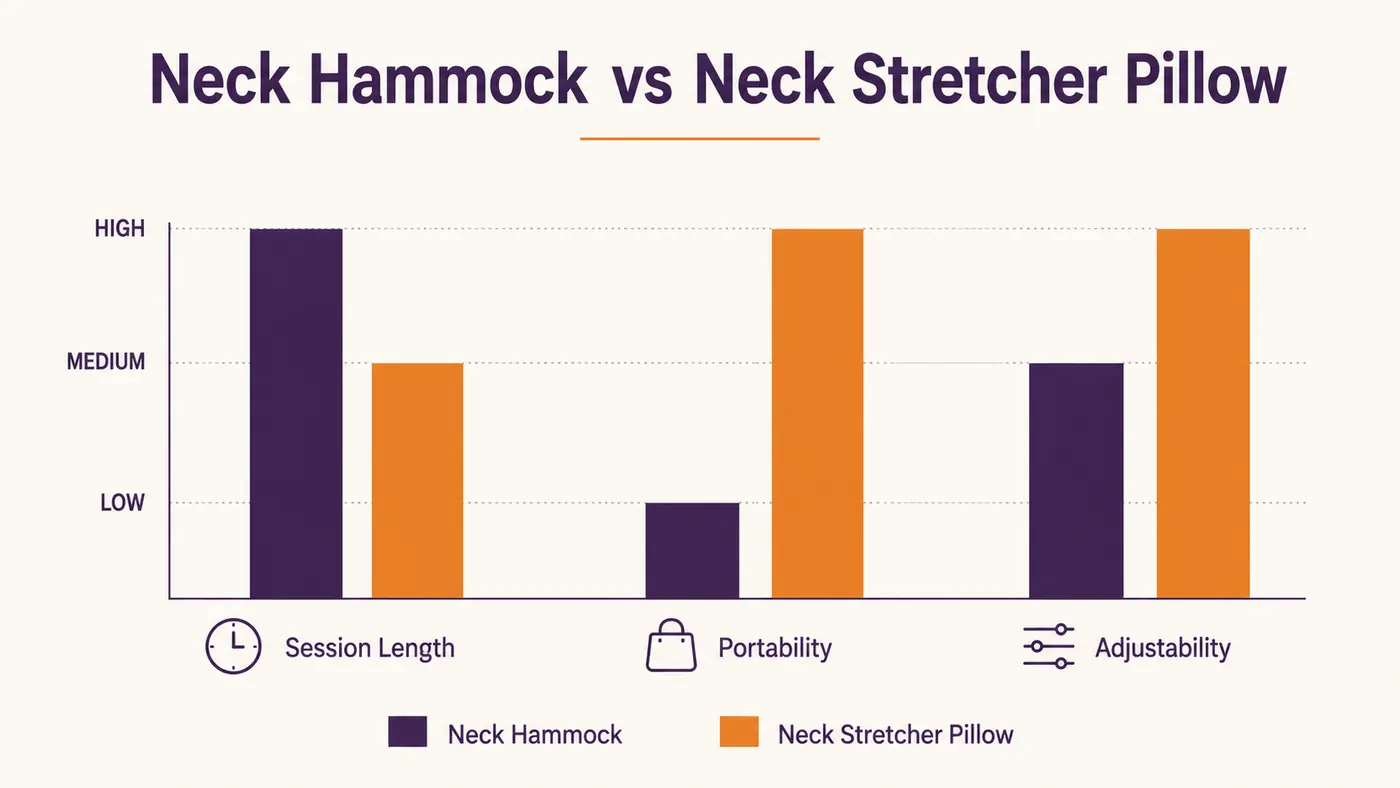
I'm not going to pretend the foam stretcher pillow is useless, because it isn't. Its real advantage is that there's nothing to learn and nothing to set up wrong. You lie back over the curve, your upper back and neck settle into it, and within a minute or two most people feel their shoulders drop and their breathing slow down. For someone who just wants five minutes of passive rest before bed, with zero risk of using the tool incorrectly, that simplicity is genuinely appealing. There's a reason it's a common first purchase for anyone starting to deal with neck tension. It's forgiving in a way real traction tools aren't.
It also wins on tolerance time. Because there's no real pulling force involved, you can stay reclined on a stretcher pillow for twenty or thirty minutes without your neck muscles getting tired of resisting a load, since they're not resisting anything. The hammock, by contrast, is not something most people, myself included, want to sit in for more than about fifteen minutes. Real traction fatigues the small stabilizing muscles around the cervical spine, and pushing past that point stops being useful and starts being uncomfortable for no added benefit.
Where it falls short is the part that matters most if your goal is actually easing tech neck rather than just resting for a few minutes. A curved foam block cannot create traction on its own. Gravity pulling your head back over a fixed shape is a different mechanical event than a strap system pulling axially through the joint, and clients who describe real relief from cervical tension are almost always describing the second kind, not the first. I keep a neck stretcher pillow out of my own recovery shelf on purpose. It's a fine passive-rest product, but it's a different category of tool than what I actually reach for when my neck and traps are genuinely locked up after a long day at the table.
If Your Neck Only Half-Relaxes on a Pillow, You Might Need Real Traction, Not Just Positioning
The Original Neck Hammock is the tool I actually anchor off my own door most evenings, not a foam block I rest on. Check today's price and current rating on Amazon.
Amazon Check Today's Price on Amazon →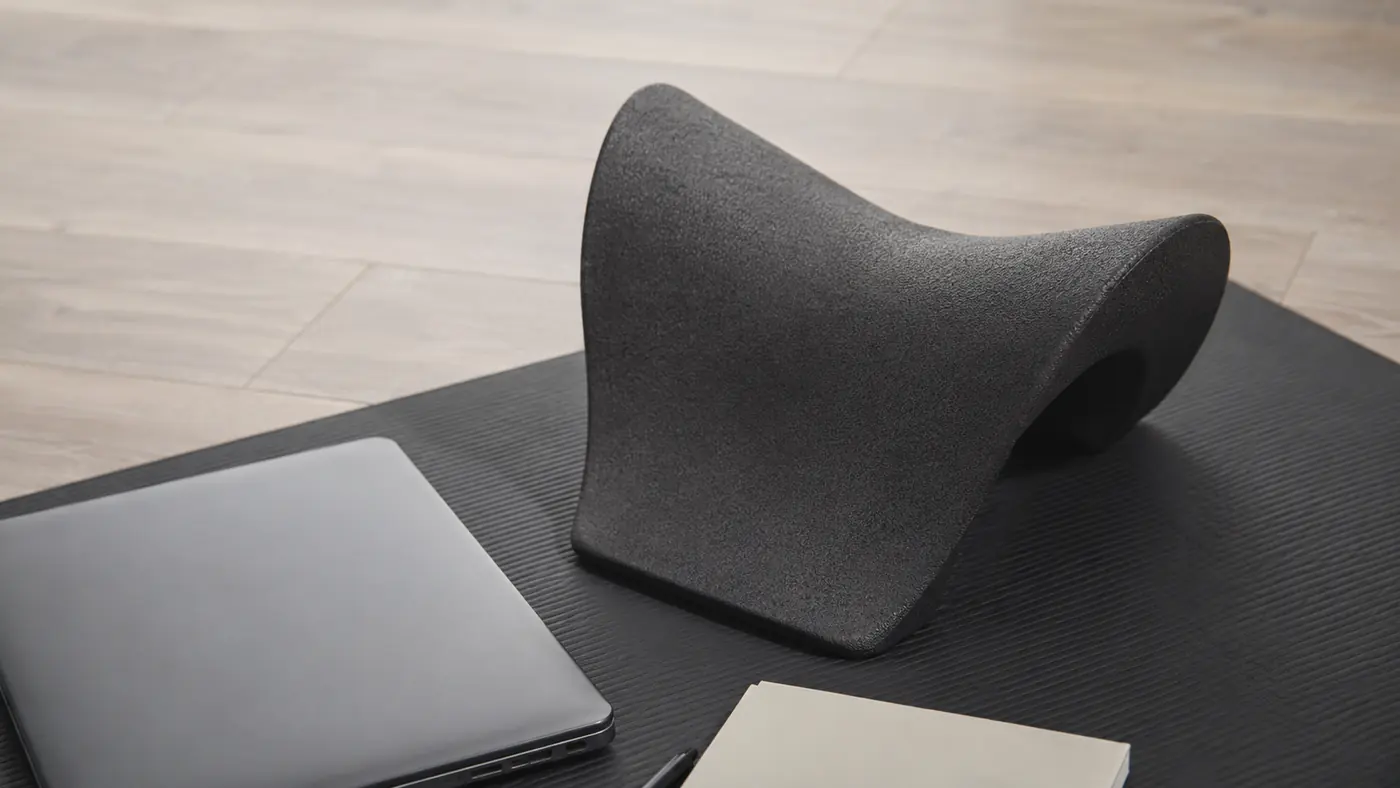
Who Should Buy Which
If your neck and upper traps feel genuinely compressed, the kind of tight where turning your head has a limit before it catches, I'd go with the neck hammock. That's the pattern that responds to actual decompression, not just a few minutes of passive rest, and it's the same pattern I deal with myself most evenings after leaning over a table all day. Set it up on a door in a quiet room, give yourself three or four sessions before you judge it, and read through the setup piece I linked above so you're not fumbling with strap length the way I was in week one.
If you just want something low-effort to unwind on for twenty minutes while you watch something or wind down before bed, and you're not chasing a real decompression effect, a foam neck stretcher pillow will do that job fine and there's no wrong way to use it. Just don't expect it to touch the same kind of tightness the hammock does. I've had clients bring in both, expecting them to be interchangeable, and they're not. One is a rest position. The other is a mechanical pull through the joint. For a deeper look at what months of consistent use with the hammock actually changed for me, day to day, I wrote the full account in my long-term neck hammock review.
One more honest note before you decide. If money is tight and you just need something tonight, the stretcher pillow costs less shelf space and less trial and error, and it's not a bad place to start while you save up for the hammock or decide whether cervical traction is even something you'll stick with. I'd rather you use a foam pillow consistently than buy the hammock and let it sit folded in a drawer because the setup felt like too much on a tired night. Consistency beats mechanism every time, and I've watched plenty of clients prove that with tools far more expensive than either of these.
Between a Rest Position and Real Traction, I Know Which One My Own Neck Needs
The Original Neck Hammock is the one that hangs off my spare bedroom door, not the foam version. Check today's price and current rating on Amazon before your next long treatment day catches up with you.
Amazon Check Today's Price on Amazon →