
Every massage table has an evil twin, and mine is a laptop I open on the kitchen counter most nights to finish client notes. I lean over other people's necks and shoulders four days a week, and then I lean over a keyboard for another hour after dinner, and my own neck has been paying the toll for that combination longer than I'd like to admit. My clients call the pattern tech neck. I get the exact same forward-head posture from a massage table instead of a screen, and the tissue does not care which one put it there.
The Original Neck Hammock has hung off the door of my spare bedroom for a while now, and it's become the thing I reach for on the evenings when my neck and upper traps feel like they've been pulled forward all day and refuse to sit back where they belong. This is the routine I actually use, the setup mistakes I made early on, and the honest limits of what a door-anchored neck hammock can and can't do for you. I'm a licensed sports-massage therapist, not your doctor, so treat this as a real-world routine, not a substitute for someone examining your actual neck.
Tired of Catching Yourself Hunched Forward by Mid-Afternoon? Here's the Nightly Reset That Actually Undoes It.
The Original Neck Hammock is the tool I hang off my own spare bedroom door most evenings. Check today's price and current rating on Amazon before you build the routine below.
Amazon Check Today's Price on Amazon →Step 1: Door Setup and Anchor Safety
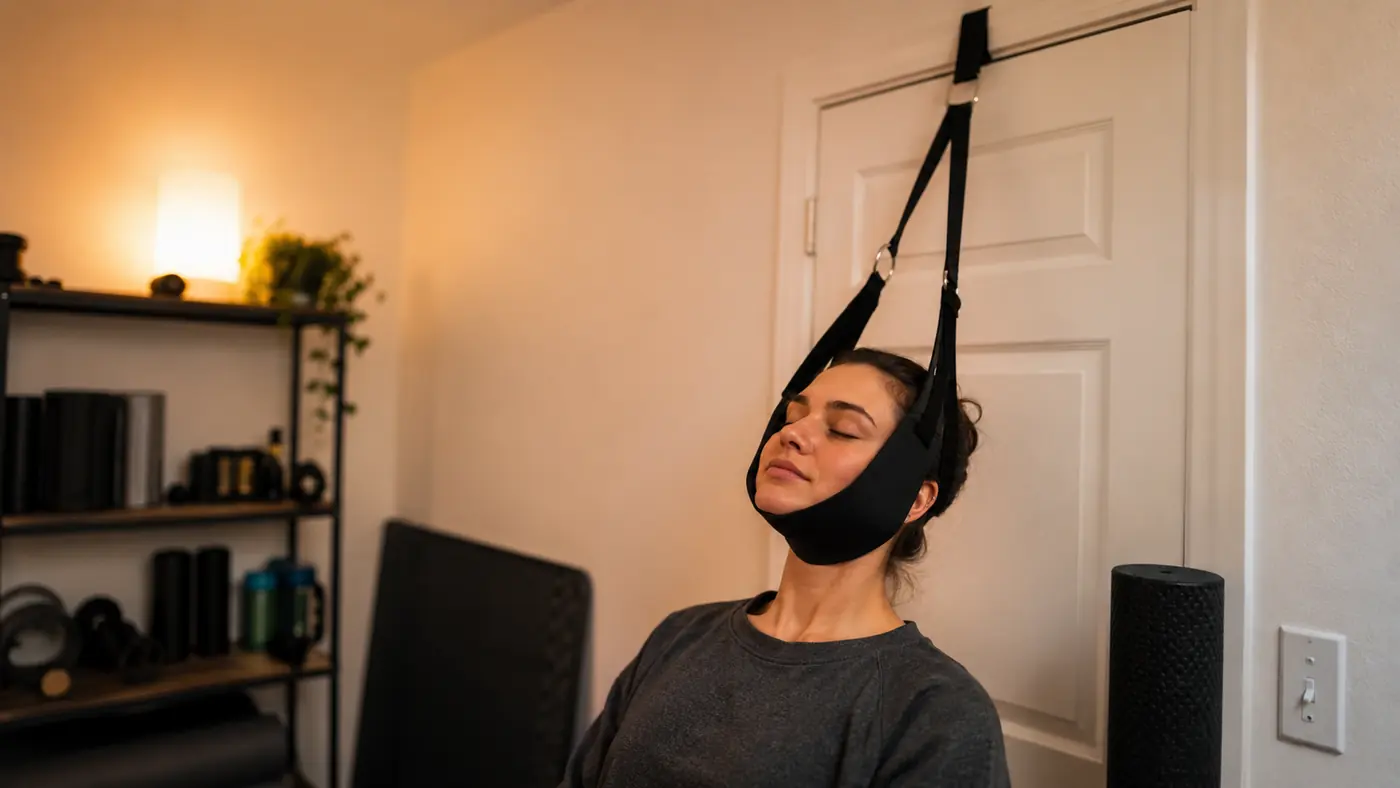
Setup matters more than people expect from something this simple. A neck hammock anchors over the top of a closed door, and the first thing I check every time is that the door itself is solid enough to trust with my body weight pulling against it. My spare bedroom door is a plain hollow interior door, and even that holds fine, but I close it fully, I make sure the hinges aren't loose, and I confirm nobody's about to walk through it from the other side mid-session. A door that swings open under load is the fastest way to turn a relaxing ten minutes into a fall.
Not every door works. French doors, sliding doors, and anything with a lock mechanism low on the frame aren't a good anchor point, and I skip using it on any door I haven't personally walked through and checked for wobble first. My spare bedroom door is nothing special, a builder-grade hollow door like a lot of houses have, but it's hung well and doesn't rattle in the frame, and that's really the bar you're checking for, not whether the door looks sturdy.
I also lay a folded towel or a thin mat under where my head and shoulders will end up, mostly because the first couple of times I used it my head settled slightly lower than I expected once the sling took my weight, and a hard floor under an unprepared skull is not where you want to discover that. Before I ever let the sling take my full head weight, I do a slow test pull lying down, checking that the strap length feels right and that the door isn't creaking or shifting under the tension.
There's a category of person who shouldn't be doing this at all, and I say that as the practitioner in the room who's supposed to know better than to skip it. If you've had a cervical fusion, a diagnosed disc herniation, osteoporosis, a recent neck injury or whiplash, uncontrolled high blood pressure, a history of stroke, or you're pregnant, this isn't something to self-start off an article, mine included. Talk to your doctor first. I'm not diagnosing anyone reading this, and door-anchored traction is a genuinely different load on your spine than a stretch, so the stakes for getting it wrong are higher than they look.
Step 2: Head Placement
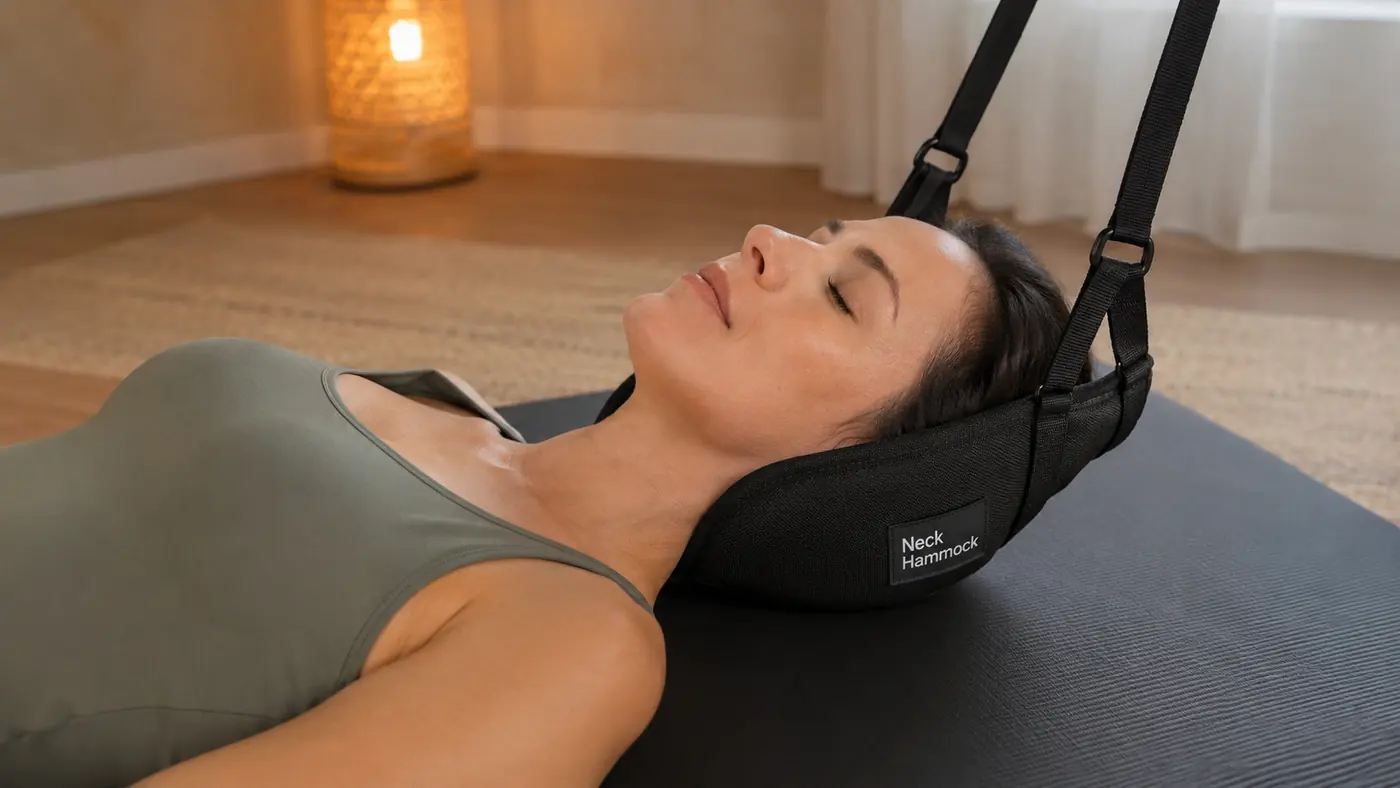
Once the door and anchor check out, head placement is where most people either get real relief or talk themselves out of the whole thing in the first session. The sling should cradle the base of the skull and jaw, not pinch under the chin or dig into the ears. I adjust mine so my chin has a slight, comfortable tuck rather than being jammed toward my chest, because a jammed chin turns a traction session into a jaw ache instead of a neck release.
I lie down for this rather than sitting, mostly because sitting makes it too easy to let my shoulders creep up toward my ears, which defeats the point. Flat on my back, knees bent, feet on the floor, I let the door take the strap's tension gradually rather than dropping my full head weight into the sling all at once. The first sensation should be a mild, even pull along the back and sides of the neck, nothing sharp, nothing radiating anywhere.
If you feel numbness or tingling running down an arm, into a hand, or across your face, that's a stop-immediately signal, not a push-through-it signal. Same with any sharp, localized pain, dizziness, or a headache that shows up as soon as the tension increases. Those sensations mean back off the strap, come out of the sling, and don't repeat the session until you've talked to someone qualified to look at your actual neck, which isn't me typing this from a dry, high-altitude spare bedroom in Colorado.
Step 3: Session Length
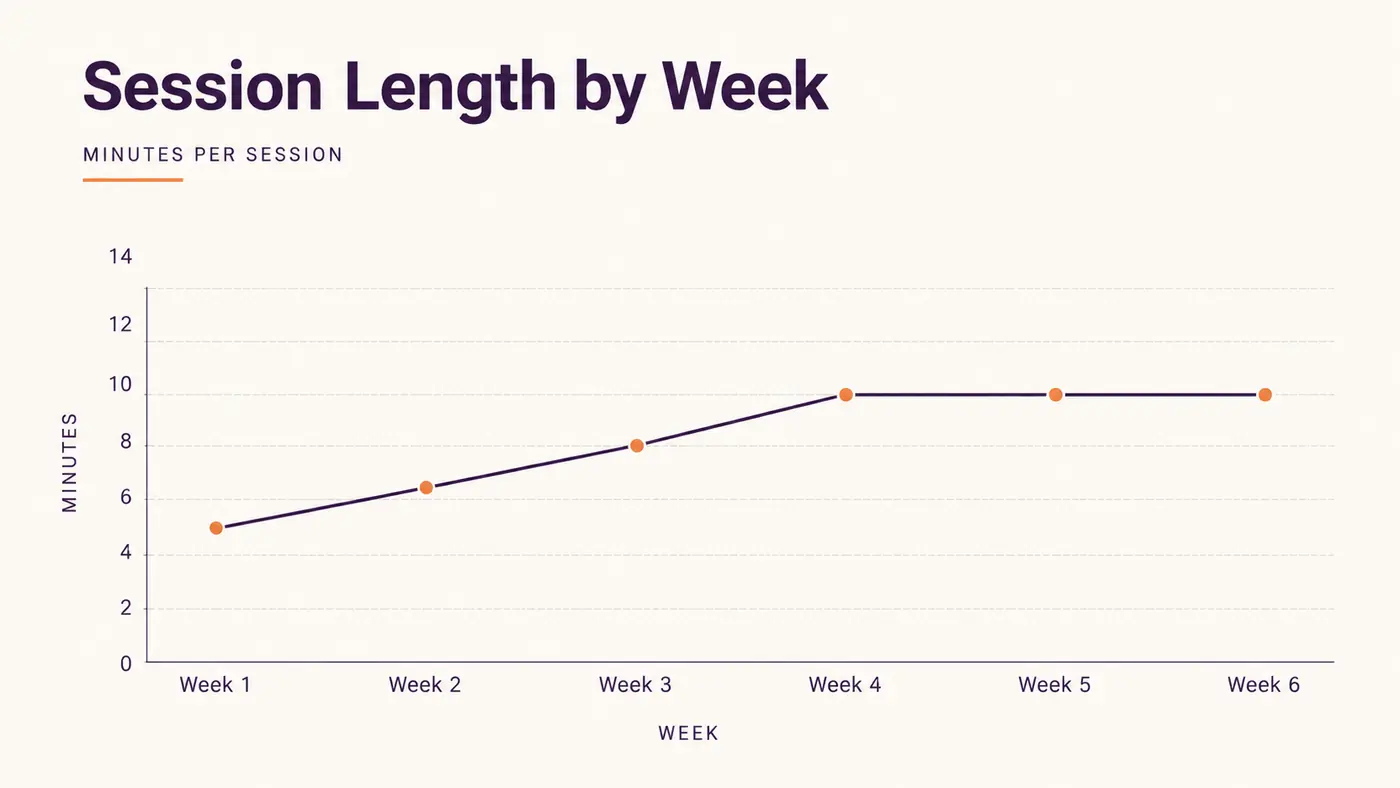
My first session was five minutes, and that was plenty. I've read enough client charts to know that more tension for longer isn't automatically better for a joint that's used to carrying a ten-pound head all day, so I started conservative on purpose. Five minutes let me learn what the sling actually felt like without committing to a full session in a position I hadn't confirmed was right for me yet.
By the end of the first week I was comfortable at eight to ten minutes, and that's roughly where I've settled for most evenings now, three or four nights a week rather than every single night. I don't chase longer sessions for their own sake. A ten-minute session with good head placement does more for my neck than twenty rushed minutes with my chin jammed and my shoulders up around my ears.
How you know you're ready for more time isn't a stopwatch, it's how the next morning feels. If I wake up the day after a session with my neck feeling looser rather than the same or worse, that's the signal I can add a minute or two the next time. If it feels no different, I hold at the same length for another few sessions before touching the dial again.
Step 4: Breathing and Relaxing Into It
The part almost nobody gets right the first time is the breathing, and it's the part that actually determines whether the session does anything. If you hold your breath and brace against the pull, your neck muscles stay switched on and fight the traction the whole time, which means the tissue never actually lengthens. I breathe slow and low into my belly, four counts in, six counts out, and I actively think about dropping my shoulders away from my ears with every exhale.
I tell my clients the same thing about any passive stretch on my table: the tool does maybe half the work, and how much you let go does the other half. With the neck hammock specifically, the first minute or two is usually where I notice myself still guarding, jaw clenched, shoulders tight, and it isn't until I consciously release that the actual traction sensation shows up as something closer to relief than effort.

Step 5: What to Do After
Coming out of the sling, I don't jump straight up. I slide the strap loose, let my head settle back onto the towel for a few breaths, then roll onto my side before sitting up, the same cue I give clients coming off my table after any neck work. Standing up too fast from a decompressed neck can leave you lightheaded, and there's no reason to rush a routine that's supposed to be the calm part of your evening.
Once I'm up, I do a few slow, gentle head turns each direction and a couple of easy chin tucks, nothing aggressive, just checking in with how the neck feels now compared to before the session. Most evenings that's it. On the rare night when something feels off rather than eased, I skip the routine the next night and pay attention to whether it settles on its own before I try again.
I also drink a full glass of water afterward, mostly out of habit from how I close out any manual session with a client. Dehydrated tissue doesn't glide as well under load, and staying ahead of that seems to matter more for my neck than for almost anything else I do in the evening.
Step 6: How to Progress Over Weeks
The first two weeks, I kept everything short and infrequent on purpose, five to eight minutes, three nights a week, mostly to see how my neck responded over a few days rather than judging it off one session. That patience mattered more than I expected. Tissue that's been sitting in a forward-head position for years doesn't need to be convinced in one sitting, it needs consistency.
By week three or four I'd moved to eight to ten minutes most evenings I'd trained or had a long day at the table, and that's roughly where I've stayed since. I don't keep pushing the clock upward every week looking for a bigger effect. If a session ever feels less comfortable than the one before it rather than more, that's my cue to pull back to a shorter duration for a few sessions rather than assume more will fix it.
Around week six I stopped tracking it formally and it just became part of the evening the same way brushing my teeth is, three or four nights, eight to ten minutes, done before I ever pick the laptop back up. If your schedule gets busy and you drop to once a week, don't expect the same carryover. Consistency is doing more of the work here than any single session ever will.
What Else Helps
The neck hammock has never been the only thing doing the work. On the mornings after a rough evening at the table, I still lean on the same routine I wrote up after several months of near-nightly use, and on the weeks I skip it entirely, the forward-pull pattern creeps back within a few days, which tells me it's genuinely doing something rather than just feeling nice in the moment. I also compared it head to head against a cervical pillow-style stretcher a client swore by, and wrote up exactly where each one wins if you're trying to decide between the two before you buy either.
None of this replaces actual movement during the day. I still try to break up long stretches leaning over a client or over notes with a minute of standing up straight and rolling my shoulders back, because ten minutes in a hammock at night can't undo eight hours of forward lean on its own. The hammock is the reset, not the whole plan, and I tell clients the same thing when they ask if a single tool is going to solve a posture pattern that took years to build.
The hammock didn't fix my neck in one session. It gave the same forward-pull pattern I see in clients every week somewhere to unwind for ten honest minutes a night.
Same Nightly Ten Minutes I Actually Keep Doing
If your neck and upper traps are stuck in that same forward-pull pattern by the end of the day, The Original Neck Hammock is worth building this routine around. Check today's price and current rating on Amazon.
Amazon Check Today's Price on Amazon →