
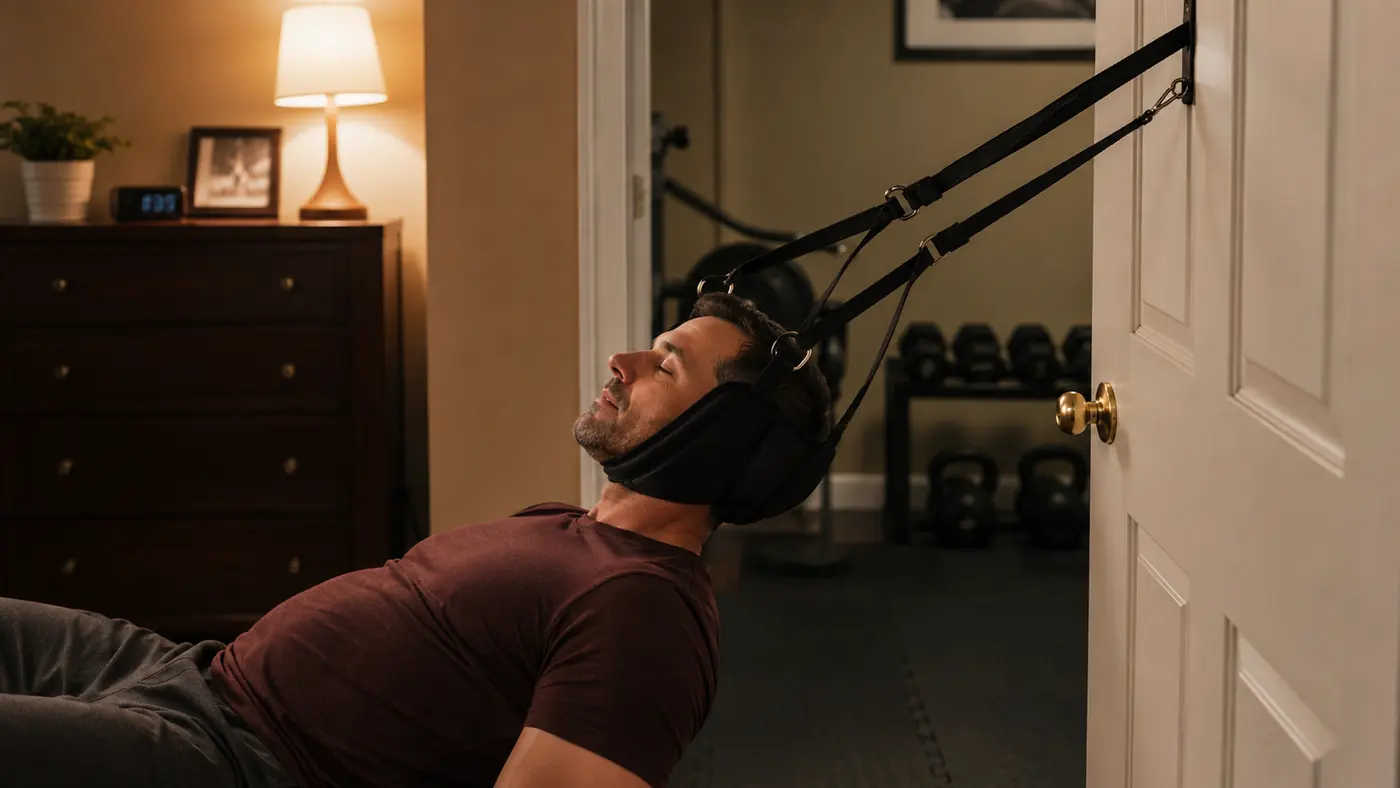
The Original Neck Hammock sat unopened on my kitchen counter for almost a week before I hung it off my spare bedroom door. I'm a licensed sports-massage therapist, and cervical traction is one of those categories I've always been careful about, both for clients and for myself. But my own neck and upper traps had been locking up harder than usual after a stretch of back-to-back treatment days, so I finally strapped in for a ten-minute session one evening after finishing client notes at the kitchen counter. Six weeks later, here's exactly what changed, what didn't, and where I'd tell you to be genuinely careful.
I'm a former collegiate 800m runner, mid-pack, no records, no championships, who now leans over a massage table four days a week and trains five. That posture, head down, shoulders rounded forward, chin creeping toward the table, is the exact pattern my clients describe when they blame their desk job for tech neck. I don't sit at a desk. I get it from the table during the day and from typing up notes on a laptop most evenings, and I've learned the tissue genuinely does not care where the forward-head position came from. It responds the same way either way.
The Quick Verdict
A legitimately useful evening tool for forward-head tension when I respected the resistance settings, but it demands real caution and it is not for everyone's neck.
Amazon Check Today's Price →Neck Locking Up by the End of Every Day? Here's What I Started Hanging Off My Door.
The Original Neck Hammock is the ten-minute evening habit that finally got between my shoulder blades and the base of my skull. Check today's price on Amazon and see the current rating for yourself.
Amazon Check Today's Price on Amazon →How I've Used It
My setup is unremarkable, which is the whole point. The hammock hangs off the top of my spare bedroom door, the same room with the rubber mat, the rack, and the shelf of recovery tools I've built up over the years. Most evenings, after I've finished typing up client notes on my laptop at the kitchen counter, I go back there, loop the strap over the door, settle my head into the cradle, and lie back for about ten minutes while the resistance bands take the weight of my head off my neck.
I started conservative on purpose. The unit ships with multiple resistance bands so you can control how much traction force you're actually applying, and my first week I used the lightest one and kept sessions to five minutes, not the full ten. I've seen clients get overzealous with traction devices and end up sore in a way that has nothing to do with progress, so I wanted a real baseline before I trusted it with more time or more resistance.
By week three I'd moved up one resistance level and stretched sessions to the full ten minutes most evenings, though not every single night. I skipped it on nights I was too tired to set it up properly, and I want to be honest about that inconsistency rather than pretend I hit six weeks of a perfect streak, because I didn't, and the results below reflect a realistic routine, not a lab protocol.
What Cervical Traction Is Actually Doing
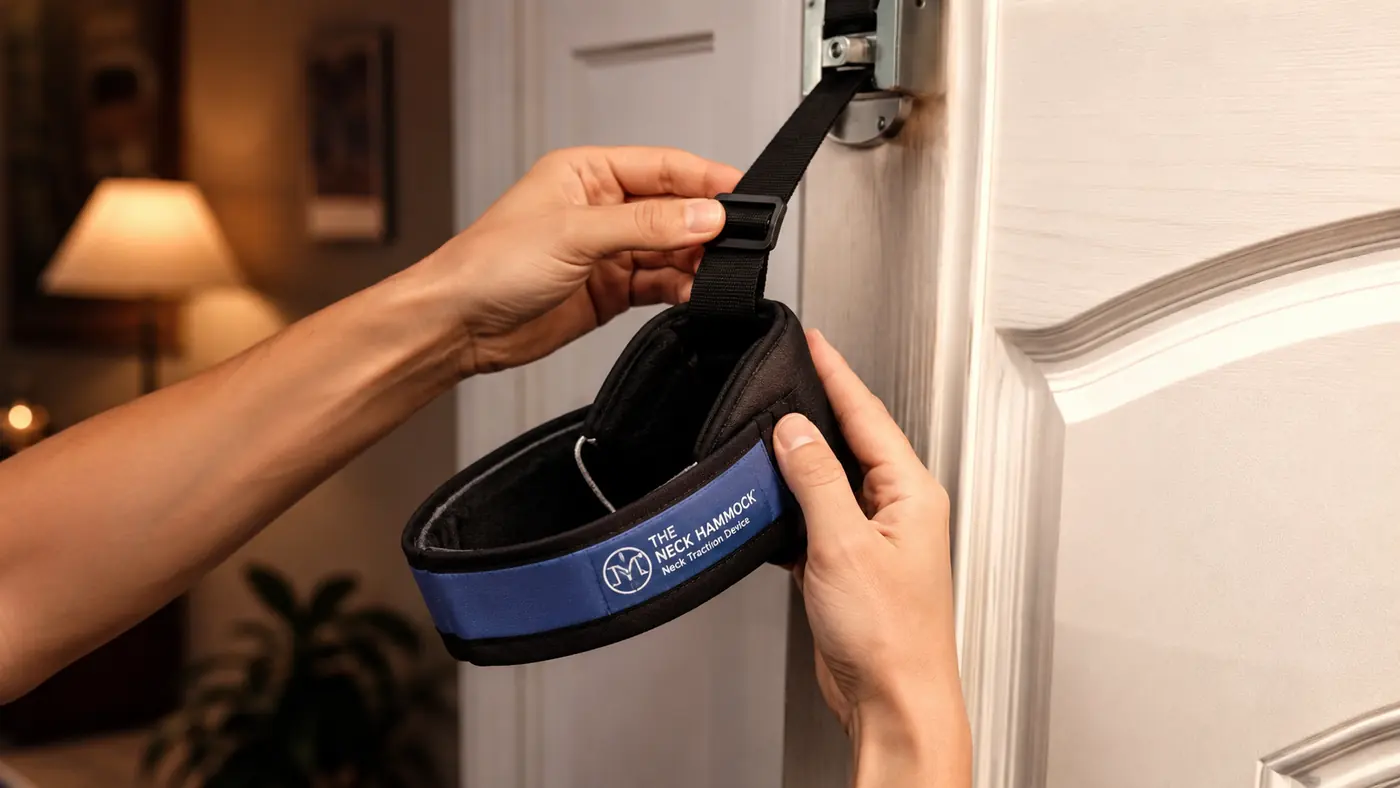
As a practitioner, I want to explain this plainly instead of leaning on marketing language. The hammock anchors over a door and uses elastic resistance to gently unweight the head from the cervical spine while you're reclined. In practice that means less compressive load moving through the neck for the length of the session, along with a passive stretch through the suboccipitals, the upper traps, and the levator scapulae, the same muscles I spend a lot of my working day releasing by hand on other people.
It is not doing anything structural. It is not decompressing a disc in any lasting way, and it is not correcting posture on its own. What it's doing, at least in my case, is giving those chronically shortened neck and upper-trap muscles ten minutes of unweighted, passive length that they don't otherwise get during a day spent leaning forward over a table or a laptop.
That distinction matters because I see people expect a traction device to fix a structural problem, and that's not a realistic bar for any tool like this to clear. What a realistic bar looks like is a muscle group that gets a genuine break from being shortened all day, on a predictable schedule, for weeks in a row.
Six Weeks: What Changed and What Didn't
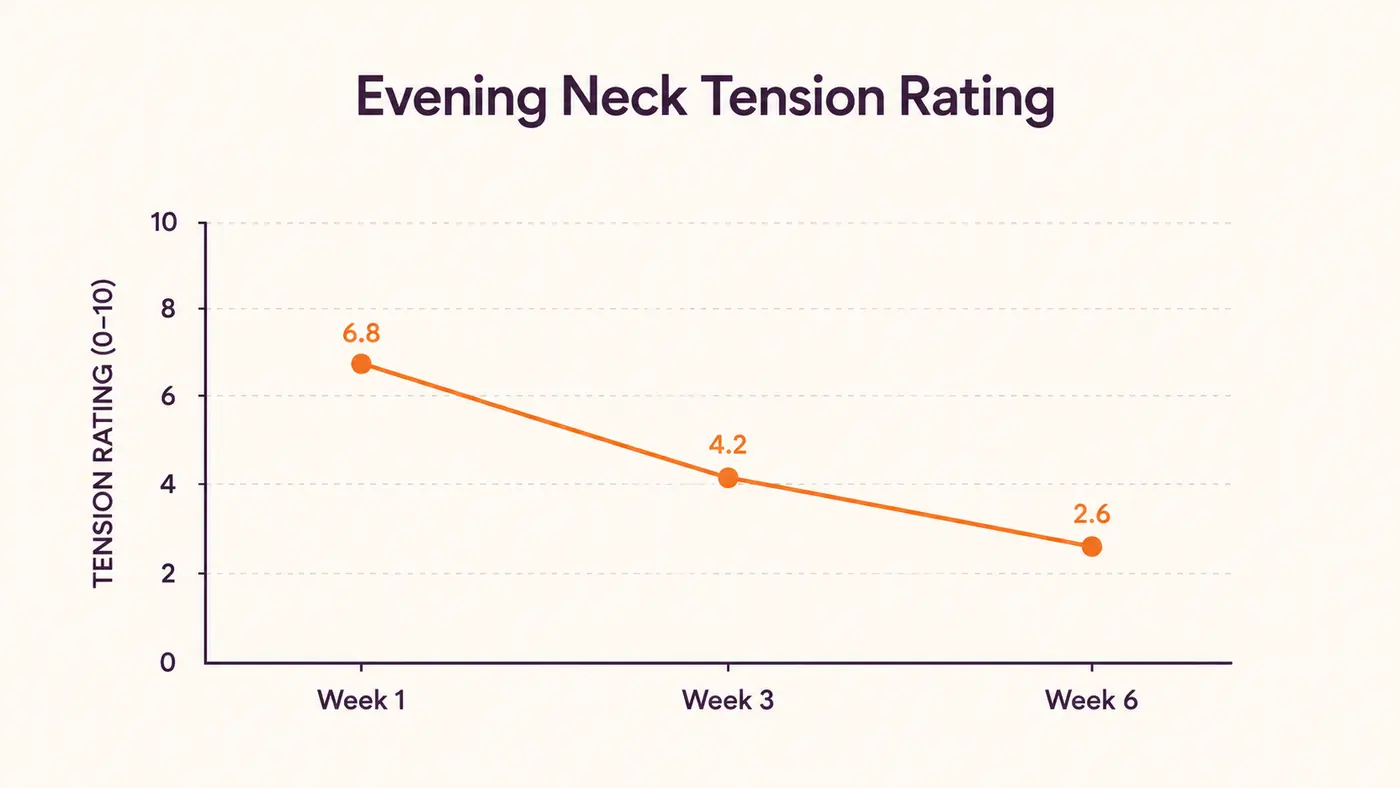
Week one was uncomfortable in a way I half expected from any new traction device on a body that spends its days hunched over a table. My upper traps felt tender for the first two sessions, not injured, just tender, the way a muscle feels after it's been stretched somewhere it hasn't gone in a while. By day four that tenderness was gone and the sessions had started to feel genuinely relaxing instead of unfamiliar.
By week three, I noticed the difference outside the spare bedroom. The tight, almost crunchy feeling at the base of my skull that used to show up by the end of a long treatment day was showing up later, sometimes not until the fifth or sixth client instead of the third. I also noticed I was catching myself rounding forward over notes at the kitchen counter and correcting it faster than before, though I can't say for certain how much of that was the hammock and how much was simply paying closer attention because I was tracking this.
By week six, the clearest change was first thing in the morning. My neck used to feel stiff for the first few minutes after waking, especially after a heavy treatment day the day before. That morning stiffness eased noticeably, though it didn't disappear completely, and on weeks where I skipped several evenings in a row, it crept back within a couple of days. That tells me the effect is real but it's not permanent, it needs the routine to keep showing up.
The Tech Neck Connection
This product markets itself heavily around tech neck, and I want to be straight with you about what that phrase actually means. Tech neck is forward-head posture, full stop. It shows up in people staring down at a phone or a monitor for hours, and it shows up in me from leaning over a massage table all day and finishing notes on a laptop at the kitchen counter most evenings. I get it from the table, you probably get it from a screen, and the tissue does not care which one put it there.
That's actually why I think this tool worked reasonably well for me even though I'm not the desk-job customer it's usually pitched at. The muscular pattern is identical regardless of the cause. If your forward-head posture is coming from hours at a monitor, the same shortened upper traps and suboccipitals are the ones getting a break during a session, and I'd expect a similar response, though obviously I can only speak to my own body and my own routine here.
Safety Limits I Want You to Actually Read
This is the section I'd want a client to read before trying any cervical traction device, and I'm not going to soften it. Anything applying force near the neck deserves real caution, and I started at the lightest resistance for a reason. If you have a history of cervical disc herniation, spinal fusion, osteoporosis, or any diagnosed neck condition, talk to your doctor before you try a device like this at all. I'm not qualified to tell an internet stranger their specific neck is safe for traction, and I wouldn't trust anyone who claimed they could from a review.
During a session, stop immediately if you feel numbness, tingling, sharp pain, or dizziness, and don't jump straight to the strongest resistance band because it feels tempting. I'd also say skip it entirely if you're prone to lightheadedness lying reclined, or if you've had a recent neck injury that hasn't been evaluated. None of this is meant to scare you off the product, it's meant to make sure you use it the way I did, cautiously, starting light, and paying attention to what your own body tells you session to session.
I also don't use it as a substitute for actual assessment. If a client came to me with real neck pain rather than the ordinary end-of-day tightness I'm describing here, my first move would be an evaluation, not a recommendation to hang a traction device off a door. This tool eased a specific, common, non-diagnosed kind of tightness for me. It is not a treatment plan.

What I Considered Instead
Before I opened this, I looked hard at a cervical support pillow instead, since that's the lower-effort option a lot of people reach for first. I go into the real differences in a full neck hammock versus neck stretcher pillow comparison, but the short version is that a pillow is passive and works while you sleep, while the hammock is active and asks for ten dedicated minutes. Both have a place, they're just not solving the exact same problem the same way.
I also thought about just doing manual self-massage on my own upper traps and suboccipitals instead of buying a device at all, since that's genuinely free and it's what I'd suggest first to a client on a tight budget. It helped, but it never gave me the same passive, hands-off unweighting that lying in the hammock does, and on a tired evening it was much easier to skip a self-massage than to skip a session once the hammock was already looped over the door and ready to go.
What I Liked
- Noticeably delayed the end-of-day tightness at the base of my skull within three weeks
- Fits on a standard door, no extra floor space needed in a small spare bedroom
- Multiple resistance bands make it easy to start conservative and progress slowly
- Ten minutes fits into an evening routine without feeling like a chore
- Cheap enough to try against a real six-week block
Where It Falls Short
- First few sessions were genuinely tender before my neck adjusted
- Effect faded within a couple of days whenever I skipped several evenings in a row
- Not appropriate for anyone with a diagnosed neck or disc condition without medical clearance
- Setup on the door strap felt fiddly the first several times
I get tech neck from a massage table, you probably get it from a screen, and the tissue does not care which one put it there.
Who This Is For
This fits anyone carrying ordinary, non-diagnosed tightness through the neck and upper traps from hours spent leaning forward, whether that's a monitor, a phone, or in my case a massage table and a laptop at the kitchen counter. It's a good match if you already have a consistent evening routine and want a specific ten-minute habit for the neck rather than a general stretch. For a longer breakdown of exactly where it helps, I laid out ten specific reasons it eases tech neck section by section.
Who Should Skip It
If you have any diagnosed neck condition, a history of disc issues, or you feel numbness, tingling, or dizziness during a session, this isn't the tool to push through on your own. Talk to a doctor first, and don't take my six weeks as a green light for a neck situation that's different from mine. And if you know a device like this will sit on a shelf after the first uncomfortable session instead of becoming a habit, save the money and stick with a stretch you'll actually do consistently.
Six Weeks In, It's Still the Last Thing I Do Before I Close My Laptop Each Night
If forward-head tightness is showing up by the end of your day the same way it was showing up in mine, The Original Neck Hammock is worth testing against your own evening routine, carefully and starting light. Check today's price and current rating on Amazon.
Amazon Check Today's Price on Amazon →