
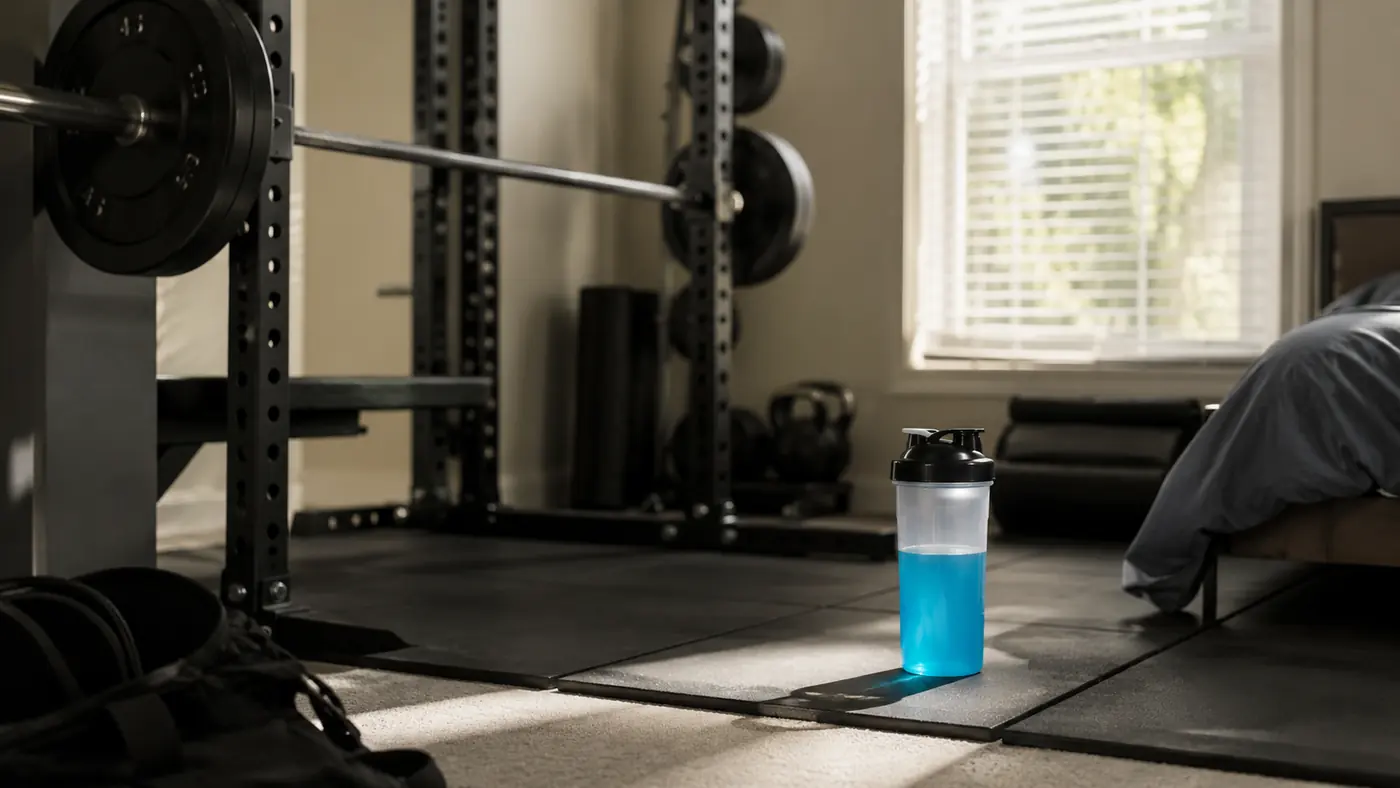
People land on an article titled how to reduce muscle soreness with BCAA expecting a scoop of powder to be the answer. I mix Xtend Sport BCAA in a shaker most mornings I lift, and I like the habit, but I want to be honest with you before we go any further. No powder waiting at the bottom of a shaker cup fixes soreness on its own. Soreness gets managed, mostly, by boring fundamentals: enough protein spread across the day, fluid and electrolytes through the session itself, a real warm-up and cool-down, protected sleep, and loading your training in a way that doesn't spike volume out of nowhere. The powder is one small supporting habit that sits inside that routine. It is not the mechanism, and I would rather tell you that now than have you disappointed in two weeks.
I'm a licensed sports-massage therapist, and I was a collegiate 800m runner before that, mid-pack, no records, nothing to brag about. Between the two, I've spent a lot of years watching people, myself included, blame or credit a supplement for something that was actually decided by sleep, hydration, and how their training block was built. So this is the actual five-step routine I use and walk clients through, in order, with the Blue Raspberry Ice tub of Xtend sitting exactly where it belongs in step two, not step one.
Looking for the Shortcut? There Isn't One, But Here's the Drink That Makes the Real Routine Easier to Actually Do.
Xtend Sport BCAA is what I mix in a shaker and sip through my own lifting sessions. Check today's price and current rating on Amazon before you build the routine below.
Amazon Check Today's Price on Amazon →Step 1: Get Your Total Protein Right First
Before anything else on this list, I look at whether someone is actually eating enough protein spread across the day, not just after a workout. A single post-training shake or scoop doesn't matter much if the other four meals that day were an afterthought. What I see over and over in clients, and in myself on busy weeks, is protein loaded almost entirely into one meal, usually dinner, with breakfast and lunch running light. Tissue repair doesn't work off one big deposit, it works off a steadier supply through the day.
I'm not going to hand you a specific gram target here, because that number depends on your body, your training load, and honestly your goals, and I'm not your dietitian. What I will say is the practical version I use myself: aim for a source of protein at three or four points across the day rather than one, and treat that as the actual foundation everything else in this article sits on top of. If that piece isn't in place, nothing downstream, including a shaker of BCAA powder, is going to move much.
This is also the step people skip because it's unglamorous. There's no product to buy for it, no chart to watch trend upward, just eggs at breakfast instead of just coffee, or a protein source at lunch instead of skipping straight to a granola bar between clients. It's the least exciting step in this whole routine and also the one I'd fix first if I could only fix one thing.
Step 2: Drink Through the Session, Not Just Before or After
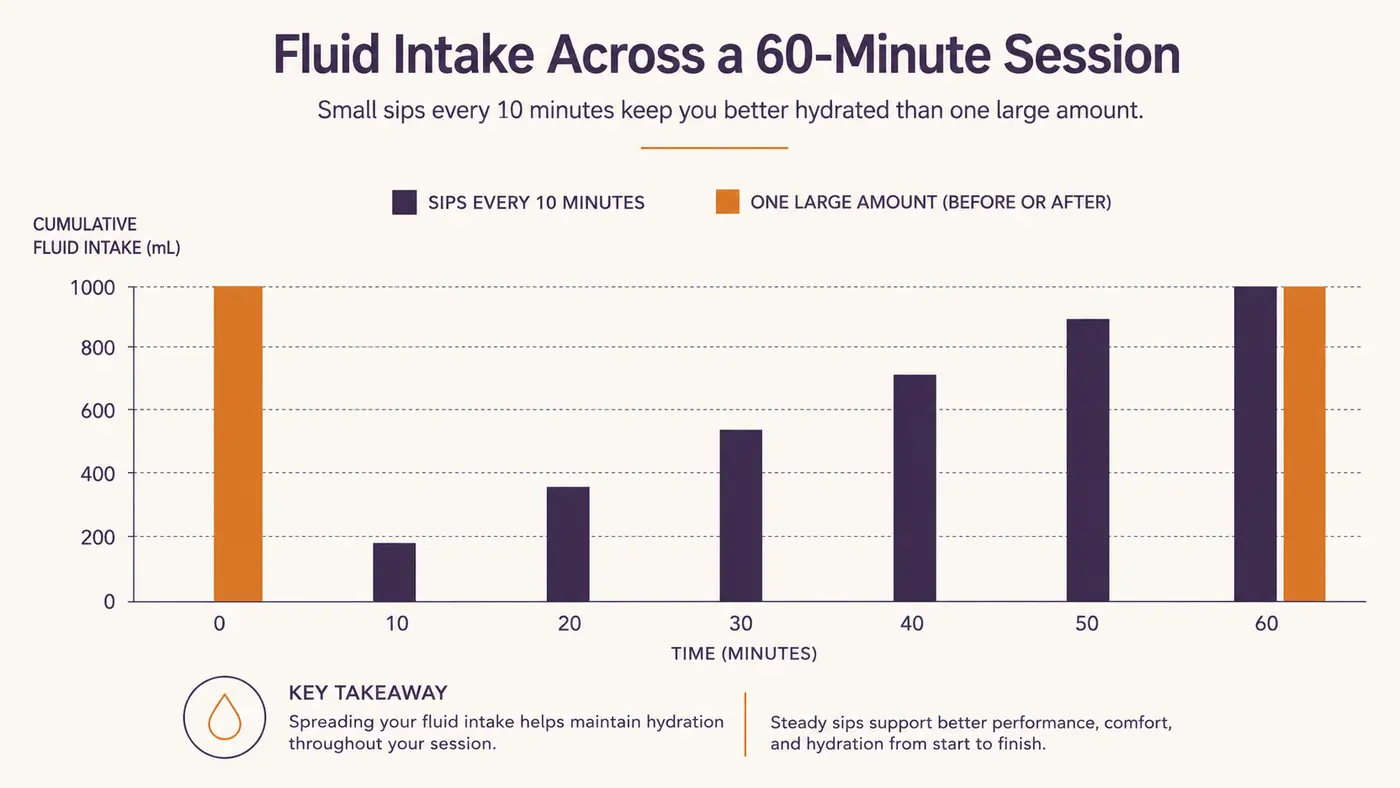
This is where the powder actually earns its spot in my routine, and it's worth being specific about why. Most people either chug water before a session and call it done, or they wait until they're already thirsty mid-workout to think about fluid at all. Neither is great. Sweat losses through a training session, especially somewhere as dry as Colorado, add up steadily, and tissue that's short on fluid and electrolytes doesn't move or recover the way well-hydrated tissue does. Spreading intake evenly across the session beats front-loading it or backloading it.
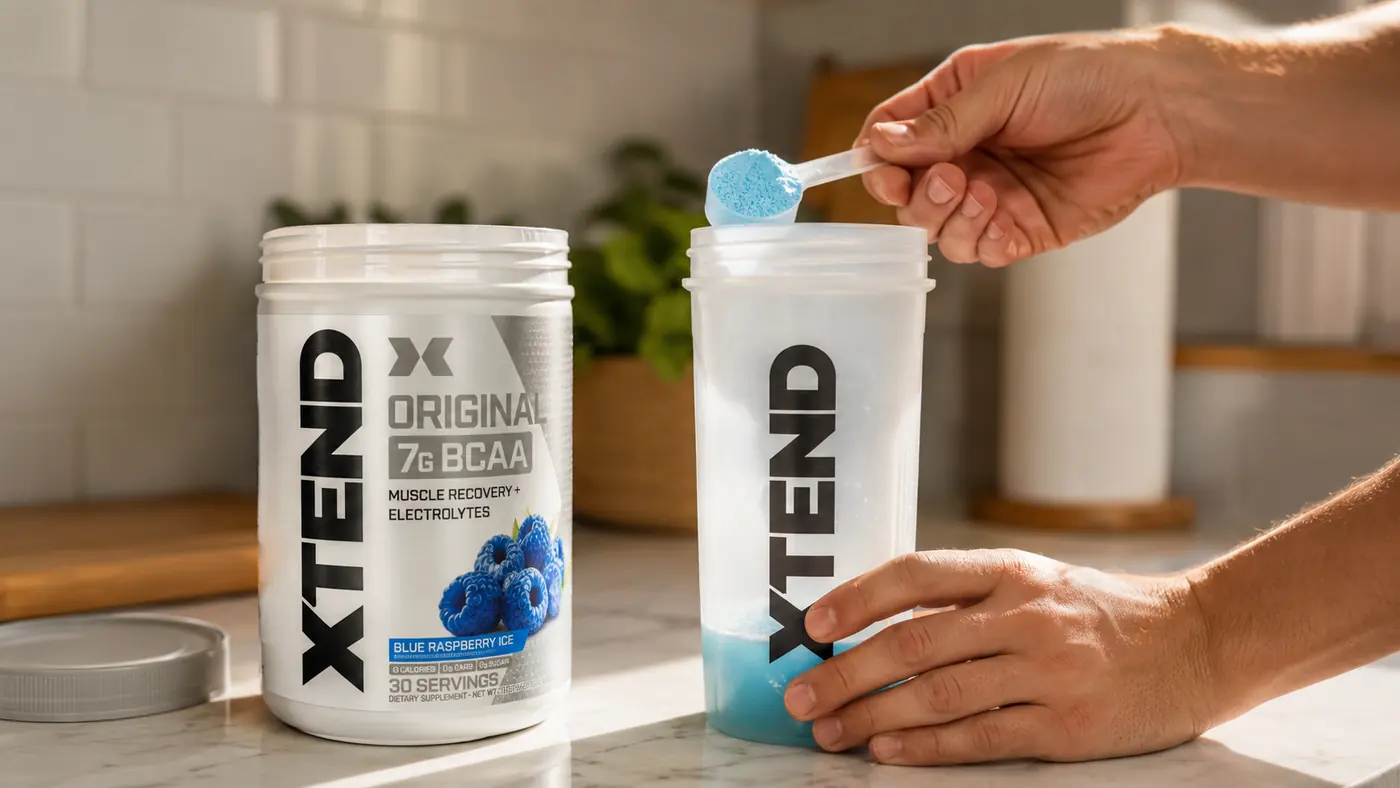
In practice, my version of that is a shaker of Xtend Sport BCAA in Blue Raspberry Ice, mixed before I start lifting and sipped steadily through the session rather than gulped in one go at the end. I lift three mornings a week, and the shaker sits on the shelf next to my mat the same way the yoga wheel does, ready to grab instead of something I have to remember to prep. The honest reason it works for me isn't some special property of the amino acids in it, it's that the flavor makes me actually drink through a session instead of forgetting fluid entirely until I'm already dragging.
I want to be direct about what I'm not claiming. I'm not telling you the BCAA content is what reduces your soreness the next day. I don't have a study to hand you and I'm not going to pretend I do. What I can tell you from my own log and from what I see in clients is that people who actually stay ahead of fluid and electrolyte losses through a session tend to feel less wrecked the next day than people who show up dehydrated, and a drink that tastes good enough to sip consistently is a real, practical lever for making that happen. If plain water works just as well for you, that's genuinely fine. The mechanism here is consistency, not the specific powder.
I'd also flag the obvious safety note here, since I'd rather say it plainly than assume it's understood. If you're on medication, managing a kidney or liver condition, pregnant, or nursing, talk to your doctor before adding any powdered supplement to your routine, BCAA powder included. I'm a massage therapist, not a physician, and nothing in this article, or on the label of any tub on my shelf, is meant to stand in for that conversation.
Step 3: Warm Up on Purpose and Cool Down Before You Leave
This is the step most people cut first when they're short on time, and it's usually the wrong one to cut. A real warm-up gets blood moving into the tissue you're about to load, gradually, instead of asking cold muscle to handle a heavy first set. I don't mean five minutes on a bike watching your phone. I mean a few minutes of movement that mimics what you're about to do, lighter loads first, building up, so the tissue is actually ready for the work rather than surprised by it.
The cool-down gets skipped even more often, mostly because the workout feels done the second the last set is finished and everyone wants to move on with their day. I give myself five minutes at the end, easy movement, some slow breathing, before I walk out the door. It's not glamorous and it doesn't feel like it's doing much in the moment, but the sessions where I skip it entirely are the same sessions where I notice more stiffness walking to my car.
I notice the payoff of this step most on the mornings I go straight from a long treatment day into a lift. My own shoulders and low back are already carrying a day's worth of leaning over a table, and skipping the warm-up on those days is exactly when something in my hip or low back tends to complain loudly by the second set. A slower ramp costs five extra minutes and buys me a session that doesn't end with me limping to the car.

Step 4: Protect the Actual Recovery Window, Which Is Sleep
If I had to pick the single biggest lever for how sore I feel the day after a hard session, it wouldn't be anything I drink or eat, it would be sleep, and it's the one I personally fight with the most. Most evenings I'm at the kitchen counter finishing client notes on a laptop, and it is very easy to let that stretch later than it should, which eats directly into the window where tissue actually gets to repair itself.
I'm not going to lecture anyone about a perfect sleep routine, because I don't have one myself. What I do try to protect is a hard stop on the laptop, some kind of cutoff where the notes wait until morning instead of eating into the next few hours. On weeks where that slips, I notice it directly in how my lower back feels after long treatment days, and in how much slower my legs feel warming up for my next run. Nothing in a shaker cup makes up for a short night. That's just the honest order of priorities.
Step 5: Load Progressively, and Move Easy the Day After
A huge amount of avoidable soreness isn't really about recovery at all, it's about how training got loaded in the first place. Jumping from three sets to six sets of something in one week, or adding a new movement pattern and going hard at it the first time out, is a reliable way to feel wrecked for days, no matter what you drink around it. I run three times a week with one long run on Sunday, eight to ten miles, and I keep that pattern steady rather than swinging volume around week to week based on how motivated I feel.
The other half of this step is what happens the day after something genuinely hard. I don't go fully sedentary. Easy movement, a walk, a light spin on the bike, some gentle mobility work, tends to leave people feeling better the next day than lying completely still does. It doesn't need to be intense, and it definitely shouldn't be another hard session stacked on top of the last one. Think of it as keeping blood moving through the tissue rather than training again.
There's a difference worth naming here too. Muscle soreness that eases over a day or two is normal and expected. Sharp, localized pain, a joint that won't bear weight, or something that gets worse instead of better each day you train is a different problem, the kind my own left plantar fascia taught me not to push through. If that's what you're feeling, that's not a soreness question anymore, and it's worth getting looked at rather than trying to out-drink or out-stretch it.
What Else Helps
I get asked a lot whether BCAA powder specifically, versus a full EAA blend, makes a real difference here, and I wrote up the honest comparison in BCAA versus EAA powder if you want the longer answer. Short version, the fundamentals above matter more than which amino acid blend is in your shaker. If you're curious how this particular tub has held up for me over months of actual use rather than just this routine on paper, I also wrote a full long-term review after months of drinking it through my own sessions, including the flavor fatigue and mixing quirks nobody mentions upfront.
None of this replaces actually eating enough, sleeping enough, or building your training volume sensibly. If any one of those five steps is missing, no drink is going to make up the difference, and I'd rather you fix the free stuff first and add a supporting habit like this one second.
The shaker never fixed my soreness. It's the thing that made me actually drink through a session I was already going to do anyway.
The Shaker I Actually Keep Filling Before I Lift
If you're building the routine above and want a fluid habit you'll actually stick with through a session, Xtend Sport BCAA in Blue Raspberry Ice is what's on my shelf. Check today's price and current rating on Amazon.
Amazon Check Today's Price on Amazon →