
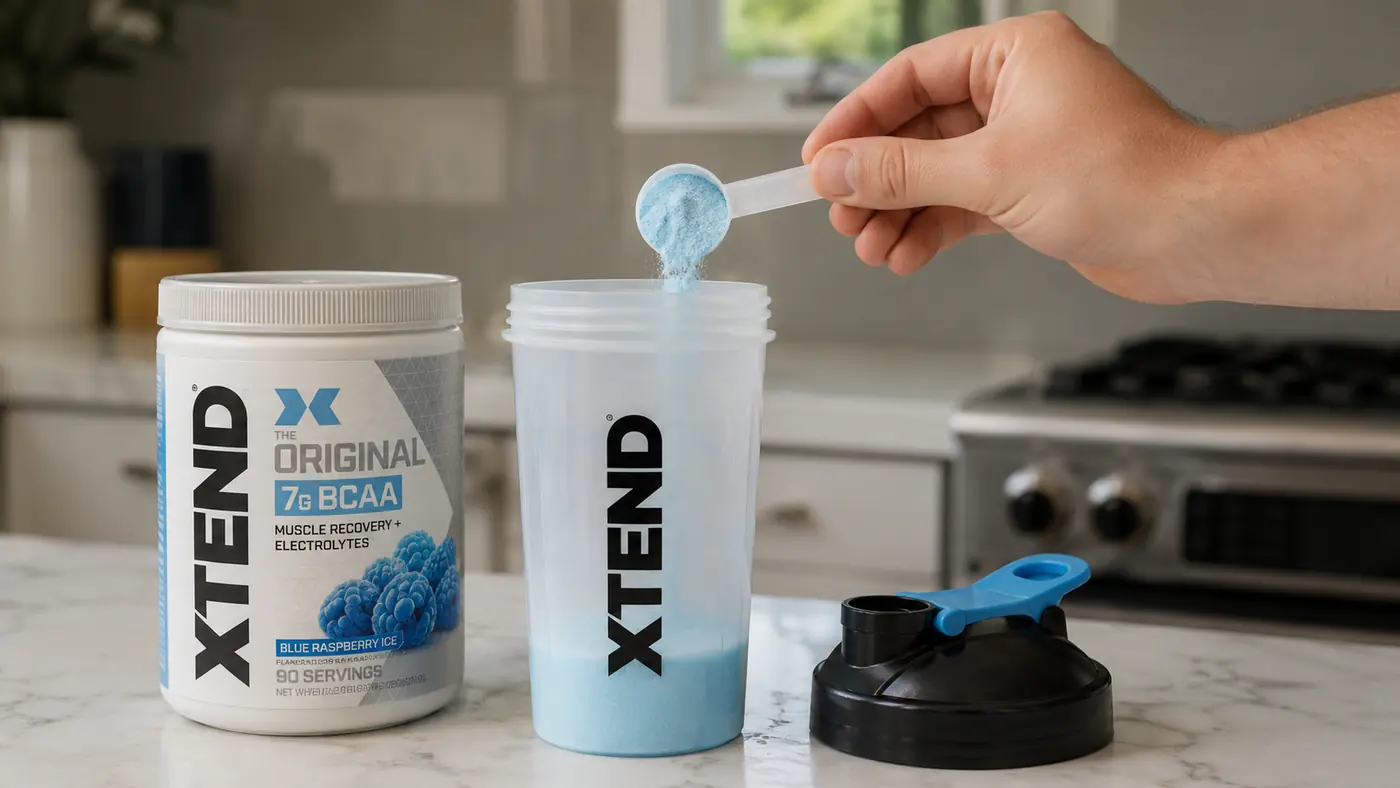
A tub of Xtend Sport BCAA showed up in my kitchen at the start of a new training block, Blue Raspberry Ice, the flavor my training partner had been talking up for months. I'm a licensed sports-massage therapist and a former collegiate 800m runner, mid-pack, no records, no championships, and I've been skeptical of powder tubs since long before I had letters after my name. I mixed the first scoop in my shaker bottle before a Monday morning lift, mostly because the tub was already sitting on the counter and I didn't have a good reason not to. A full training block later, here's what actually happened, and just as important, what I can't honestly tell you it did.
I want to be upfront about something before I go any further. This is a training log, not a lab. I'm not going to tell you Xtend built muscle, prevented an injury, sped up healing, or erased soreness, because I don't have the evidence for any of that and neither does anyone selling a tub of it. What I can tell you is what changed about my training-session habit over three months of sipping this instead of plain water, and where I think the actual evidence on BCAA powders lands, because as a practitioner I get asked about this stuff constantly and I owe you a straight answer, not a marketing one.
The Quick Verdict
A training-session drink I genuinely look forward to and that helped me actually finish my water for the day, not a recovery or performance fix, and I'm not going to pretend it is one.
Amazon Check Today's Price →Tired of Choking Down Plain Water Mid-Lift? This Is the Only Shaker Bottle I Actually Reach For Now.
Xtend Sport BCAA in Blue Raspberry Ice is what's in my shaker three mornings a week. Check today's price on Amazon and see the current rating for yourself.
Amazon Check Today's Price on Amazon →How I've Used It
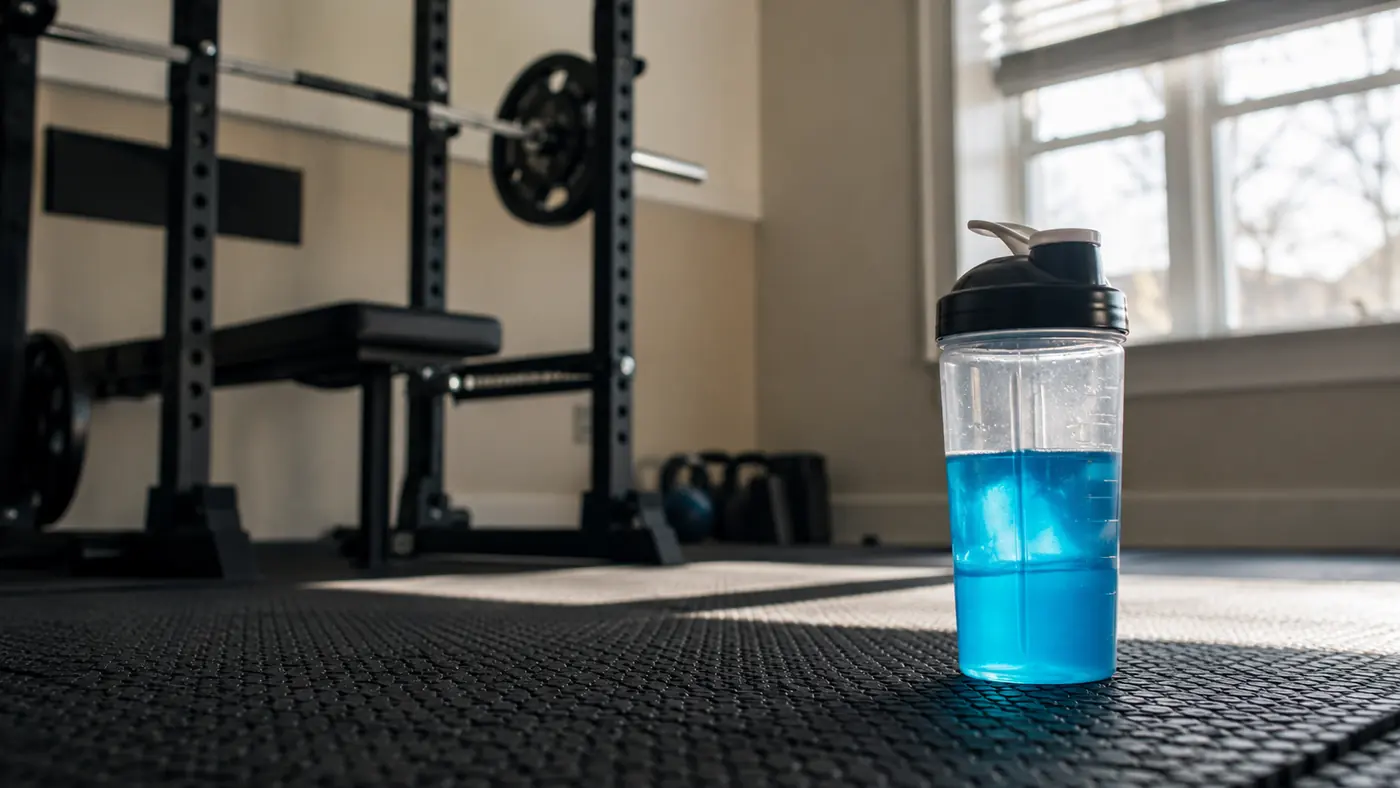
My routine with this is almost embarrassingly simple. Three mornings a week, before I lift, I mix a scoop into my shaker bottle with cold water and sip it through the session, right there in my spare bedroom with the rubber mat and the half rack. I don't chug it beforehand and I don't save it for after. It sits on the floor next to the bar and I take a pull between sets, the same way I'd sip a plain bottle of water, except I actually want to.
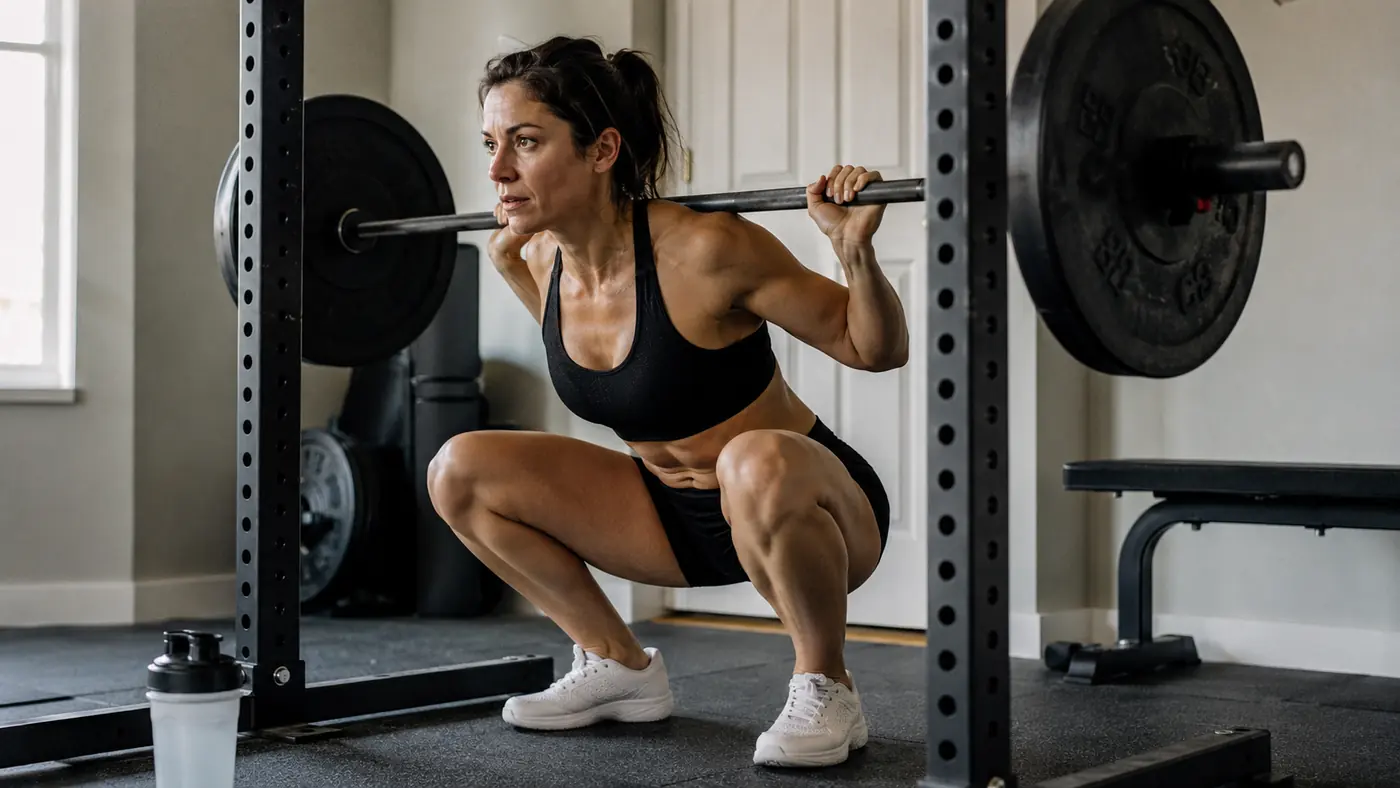
That last part matters more than it sounds like it should. I am historically bad at drinking enough during a lifting session. I'll set a bottle down, get absorbed in a set of squats or deadlifts, and come up forty minutes later having taken maybe three sips the whole time. Flavor is what fixed that for me, not any ingredient inside the tub. Blue Raspberry Ice tastes like something I want in my mouth, so I actually pick the bottle up between sets instead of leaving it sweating on the mat.
On the two lifting days I skip it, usually because I'm out the door early for a client appointment before my session, I default back to plain water and I notice a difference, though it's a behavioral one, not a physical one. I simply drink less. There's no ritual pulling me back to the bottle every couple of sets, so by the end of the session I've gone through maybe a third of what I would with a flavored mix in hand. That gap alone told me more about why this stuck than anything printed on the label.
I keep the tub on the same shelf as the rest of my recovery stuff, and the scoop lives inside it so there's no extra step between finishing a warmup and having a mixed bottle ready. If a tool requires me to hunt for a scoop or dig through a drawer, I stop using it within two weeks. This one stayed in rotation because it's genuinely low friction, and by month two it had become as automatic as putting my lifting shoes on.
What the Evidence Actually Says About BCAAs
I get asked about branch chain amino acid powders by clients on my table more than almost anything else, and I try to give the same honest answer every time. The research on isolated BCAA supplementation is genuinely mixed. Some smaller studies show a modest effect on markers like perceived exertion, others show little to nothing once total daily protein intake is accounted for, and there isn't a strong consensus that sipping BCAAs during a workout outperforms simply eating enough whole protein across the day. I'm not a researcher and I'm not going to cite a specific study and pretend it settles anything, because it doesn't.
What I do know from working on bodies for a living is that whole protein intake, the actual meals and grams across a day, matters far more than what's dissolved in a shaker bottle during forty-five minutes of lifting. If someone's diet isn't hitting enough protein overall, a BCAA powder isn't going to close that gap, and I tell clients that directly when they ask whether they should add one before fixing their meals first. This isn't a swap for food and it was never marketed to me as one, so I don't treat it as one.
I also want to be clear about what's actually in the tub, since the label leans on words like recovery and hydration the way most sports nutrition packaging does. It's amino acids, electrolytes, and flavoring, nothing exotic and nothing I'd call concerning for a healthy adult, but nothing magic either. If a client asked me whether the electrolyte content alone justified this over a plain electrolyte drink, my honest answer is that either one will help you drink more if the flavor works for you, and the flavor is doing more of that work than the ingredient panel is.
So where does that leave a tub of Xtend on my shelf. Honestly, in the same place as a flavored electrolyte drink or a cup of coffee before a session, a training-session ritual I've come to enjoy rather than something I'm counting on for a physiological edge. If you want the deeper side by side on aminos, I compared this against a full spectrum essential amino acid powder in Xtend BCAA versus EAA powder, and the differences in formulation surprised me more than I expected going in.
What a Full Training Block Actually Changed
Week one was mostly about remembering to mix it. I forgot the scoop twice, drank plain water once out of habit, and generally treated the whole thing as an experiment I wasn't sure would stick. By week three the routine had settled in enough that skipping it on a rushed morning actually bothered me a little, the same low-grade annoyance I get when I forget my lifting belt.
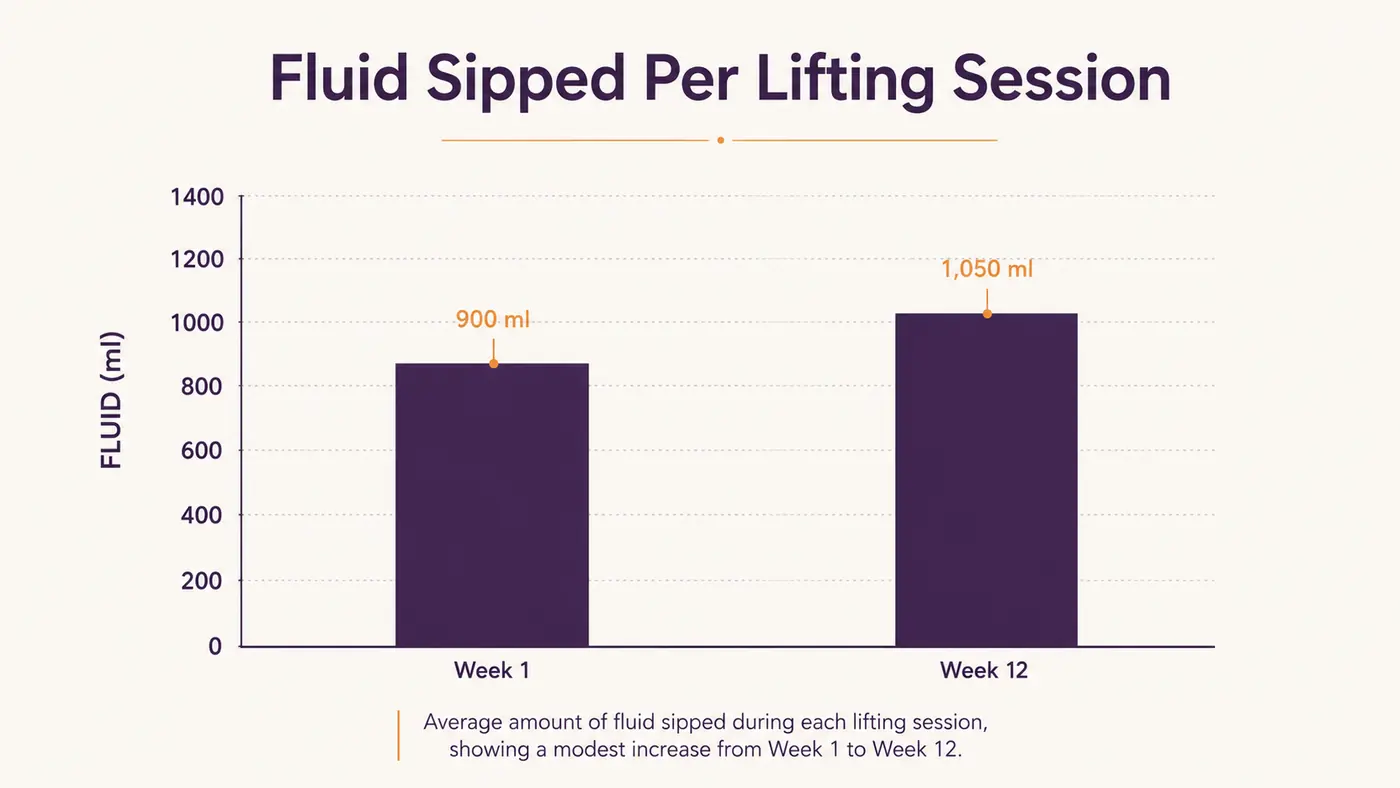
By month two, the thing I noticed most wasn't anything inside my body, it was my behavior. I was consistently finishing a full bottle during a session instead of leaving half of it flat and warm on the mat. My general daily fluid habits improved a little too, mostly because starting the day with a bottle I actually wanted set a better tone than starting with one I was avoiding. I logged roughly how much I was drinking during sessions for a few weeks out of curiosity, and the difference between week one and week twelve was real, even if it's a behavior change and not a physiological one.
Around week eight I ran a small, informal test on myself out of curiosity, alternating two weeks with the powder and two weeks with plain water, paying attention to nothing except how much I actually drank and whether I noticed anything different the next day. My hydration habit was clearly better on the powder weeks. Everything else, how my legs felt the next morning, how heavy the bar felt on a given day, looked the same across both stretches, which lined up with what I'd expect given how mixed the actual research is.
By month three, I'll admit the novelty had worn off some. It became background, the way a habit does once it's no longer a decision. I didn't notice anything I'd confidently attribute to the BCAAs themselves, no clear difference in how my legs felt the day after a heavy squat session compared to training blocks where I skipped it entirely. I'm not going to manufacture a before and after I didn't actually experience just because I'd like this section to sound more dramatic.
Taste, Mixability, and the Blue Raspberry Ice Question
Blue Raspberry Ice is the reason I stuck with this tub specifically, and it earns the reputation my training partner gave it. It's sweet without tipping into artificial sugariness, and the cooling note is subtle rather than the numbing menthol thing some flavored powders lean on too hard. Mixed cold with a shaker ball, it dissolves fully within a few shakes, no gritty layer sitting at the bottom by the time I'm halfway through a bottle, which has been a real problem with other powders I've tried over the years.
It does stain a little if you leave it sitting in a plastic bottle too long between washes, a faint blue tint I've had to scrub out a couple of times. Small annoyance, not a dealbreaker, but worth knowing before you commit to using the same bottle daily for months the way I did. I also found the sweetness gets a little much if I mix it stronger than the recommended scoop, so I stick to package directions rather than doubling up hoping for more of an effect, because more powder isn't going to buy me anything the evidence supports anyway.
Where It Fits With My Other Chronic Stuff
I should be honest about what this tub did not touch. My lower back still locks up after long drives and long treatment days exactly the way it always has, and my left plantar fascia, cranky since a half marathon two years ago, didn't notice a scoop of BCAA powder existed. Neither should it. Those are tissue and mechanical issues, and nothing in a shaker bottle was ever going to reach them, and I'd be misleading you if I implied otherwise.
What it did do, plainly, is make one specific window of my week, the forty-five minutes I spend lifting three mornings, a little more pleasant and a little better hydrated than it used to be. That's a smaller claim than most of what gets written about BCAA powders, but it's the honest one, and it's the reason it's stayed on my shelf through an entire training block instead of getting shoved in a cabinet after the first tub ran out.
What I Liked
- Blue Raspberry Ice actually got me to drink water consistently during lifting sessions
- Dissolves cleanly with a shaker ball, no gritty residue by the second half of a bottle
- Fits easily into an existing gym bag or kitchen counter routine
- Held up in flavor and mixability across a full training block, no batch inconsistency
- Cheap enough per serving to try against your own training block
Where It Falls Short
- The independent evidence for BCAA powders specifically is mixed at best, whole protein intake matters more
- I noticed zero measurable difference in soreness or next-day training compared to blocks without it
- Stains the inside of a plastic shaker bottle if left sitting too long between washes
- Sweetness becomes overwhelming if you mix it stronger than the recommended scoop
It didn't change my recovery. It changed whether I actually drank the water in my hand, and honestly that's worth something on its own.
Who This Is For
This is a good fit for anyone who, like me, is bad at drinking enough during a workout and needs flavor to make that habit stick. If you already eat enough whole protein across the day and just want a training-session drink you'll actually look forward to instead of forcing down plain water, this earns its spot in a gym bag or on a kitchen shelf. For a broader look at where lifters build a habit around a tub like this, I put together a longer list of reasons people reach for BCAA powder, though I'd read it with the same skeptical eye I'm asking you to bring to this review.
Who Should Skip It
If you're hoping a scoop of this is going to build muscle, prevent an injury, or fix soreness faster, skip it, because that's not what the evidence supports and it's not what I experienced. It also isn't a substitute for actually eating enough protein, and if your diet is the real gap, fix that first before adding a flavored powder on top of it. And if plain water already works fine for you during a lift, you don't need this, save the money and the counter space for something that solves an actual problem you have.
A Full Training Block Later, It's Still the Bottle I Actually Want to Drink From
If plain water during a lift is a habit you keep losing, Xtend Sport BCAA in Blue Raspberry Ice is worth testing against your own training block. Check today's price and current rating on Amazon.
Amazon Check Today's Price on Amazon →